No-Knead Dutch Oven Bread
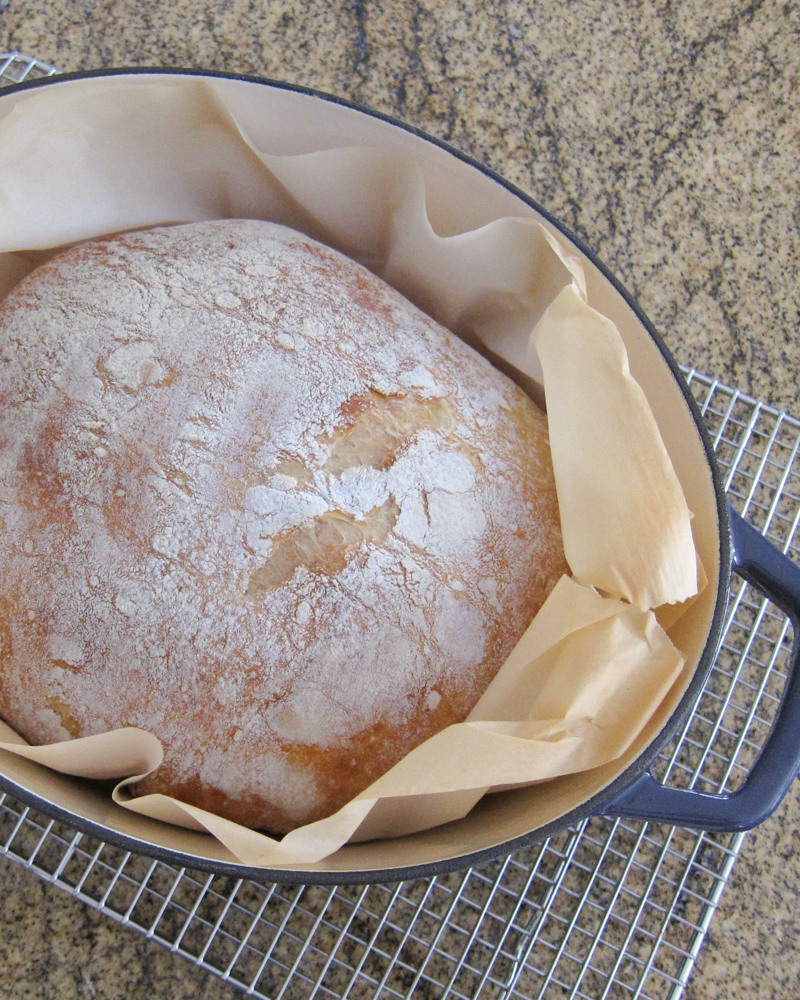
This no-knead loaf is baked to perfection in a Dutch oven. The bread takes about 3 hours and 15 minutes rising and baking time.
This post may contain affiliate links. See our Privacy Policy.
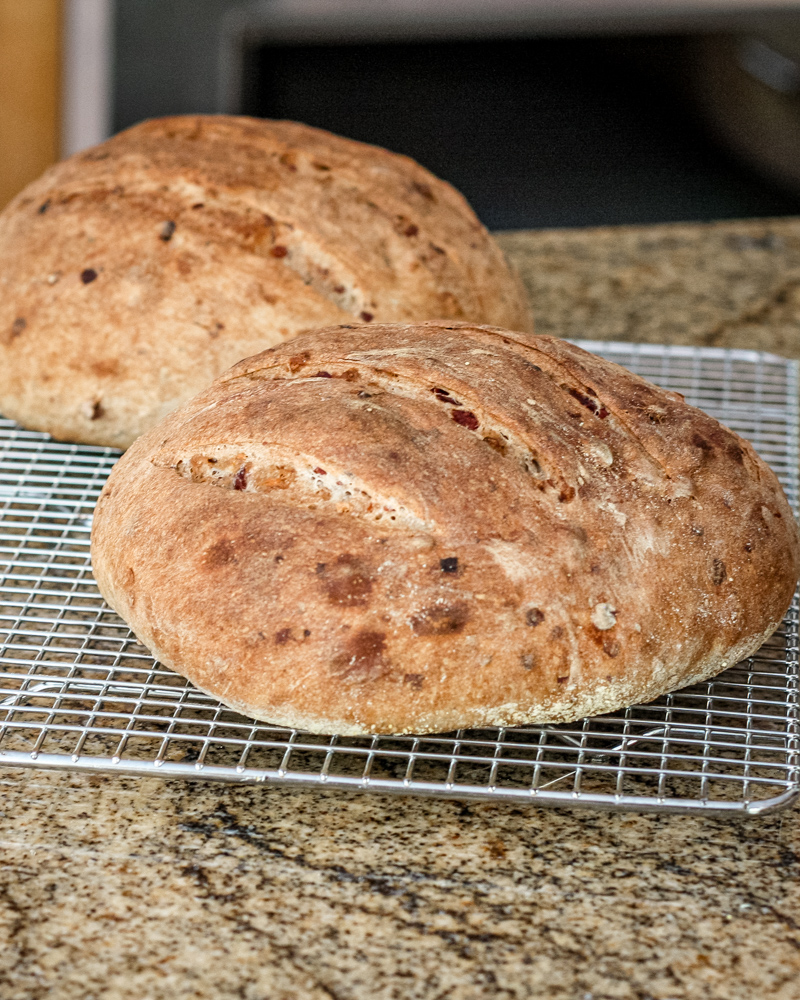
This no-knead Dutch oven bread is the easiest bread you’ll ever make—all you need is a bit of time and 5 ingredients! The bread takes about 3 hours and 15 minutes to proof and bake, and there’s little work involved. You don’t even need a mixer. It’s almost entirely hands-free. A brief mix and with time to rise, you’ll have a fabulous loaf of homemade Dutch oven bread in no time!
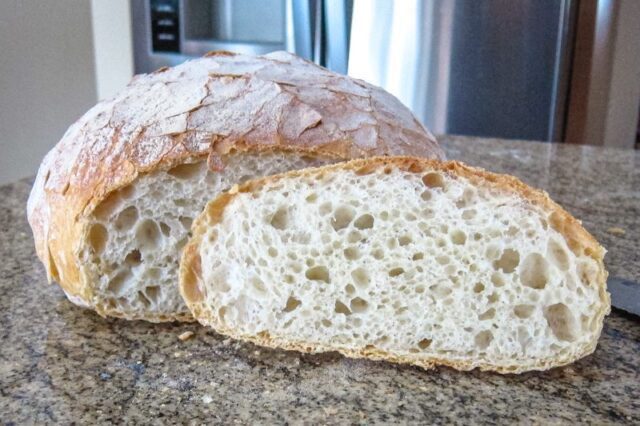
The high heat of the Dutch oven traps steam, giving the bread a crisp artisan crust without any special equipment. It’s perfect for soups, sandwiches, toast, or serving warm with butter.
What You’ll Like About This Dish
No kneading. Stir, rest, and bake — the dough practically makes itself.
Beautiful crust. The Dutch oven creates a steamy environment for an artisan-style loaf.
Simple ingredients. Just 5 pantry staples for a bakery-quality bread.
Beginner-friendly. Very forgiving recipe with excellent results even for first-time bread bakers.
Ingredient Notes
- All-purpose flour – Provides structure while keeping the loaf soft. Bread flour may be used for a chewier texture and slightly higher rise. Weighing the flour (15½ ounces) ensures accuracy.
- Water – Room-temperature water hydrates the dough and helps create the dough’s signature “shaggy” no-knead texture. A slightly higher hydration level gives a more open crumb.
- Olive oil or melted butter – Adds tenderness and a subtle flavor to the loaf. Olive oil produces a slightly softer crumb; butter gives richer flavor.
- Instant or rapid-rise yeast – Perfect for no-knead doughs because it doesn’t need to be dissolved beforehand and rises reliably. If using active dry yeast, allow it to sit in the water for 5 minutes first.
- Salt – Essential for flavor and proper gluten development. Using the correct amount prevents the bread from tasting flat or overly yeasty.
Steps to Make No-Knead Dutch Oven Bread
- Combine the flour, water, oil, yeast, and salt in a mixing bowl. Mix until a soft, shaggy dough forms.
- Cover the bowl and let the dough rise for about 2 hours, until doubled.
- Dust a large sheet of parchment paper with flour.
- With moistened hands, gather the dough into a ball and place it on the parchment.
- Shape gently into a round loaf.
- Sprinkle with flour and transfer the parchment and dough to a bowl; cover and rest 30 minutes.
- Preheat the oven to 450°F with the Dutch oven inside.
- Carefully lift the parchment and dough into the hot Dutch oven.
- Score the top if desired.
- Cover and bake 20 minutes.
- Uncover and bake another 15–20 minutes until golden.
- The bread should register about 195°F when done.
- Cool completely on a rack.
Tips
- Weigh the flour for consistent results.
- Parchment paper makes transferring the dough much safer.
- For a deeper crust, bake the last 5 minutes directly on the oven rack.
- If your Dutch oven has a plastic knob, replace it with a metal one for high-heat baking.
Recipe Variations
- Herb loaf. Add 1–2 teaspoons dried herbs such as rosemary, thyme, or Italian seasoning.
- Garlic version. Add 2–3 teaspoons roasted garlic to the dough.
- Seeded loaf. Sprinkle sesame seeds, poppy seeds, or everything bagel seasoning on top before baking.
- Cheesy loaf. Fold in 1 cup shredded cheddar, Parmesan, or Gruyère for a flavorful cheese bread.
- Whole wheat. Replace up to 1 cup flour with whole wheat flour; add 1–2 tablespoons extra water if needed.
Serving Suggestions
- Serve warm with butter, olive oil, or flavored spreads.
- Pair with hearty pea soup, a stew, such as coq au vin, or a saucy Italian pasta dish.
- Slice for sandwiches, toast, or panini.
- Add to charcuterie boards for dipping in sauces or oils.
How to Store
Cool completely: Wrap only after the loaf is fully cooled to prevent moisture buildup.
Room temperature: Store in a bread bag or wrapped loosely for up to 3 days.
Freeze: Freeze whole or sliced for up to 3 months; wrap tightly and place in a freezer bag.
Reheat: Warm in a 350°F oven for 8–10 minutes to refresh the crust.
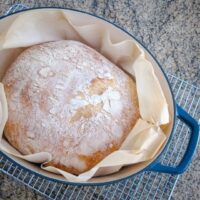
No-Knead Dutch Oven Bread
Ingredients
- 3 1/2 cups flour, (15 1/2 ounces), plus more for sprinkling
- 1 1/3 cups water, room temperature
- 2 tablespoons extra-virgin olive oil, or melted butter
- 2 1/4 teaspoons instant yeast, or rapid rise
- 1 1/4 teaspoons salt
Instructions
- In the bowl of a stand mixer fitted with the paddle attachment, combine the flour, water, olive oil, instant yeast, and salt. Mix until all ingredients are moistened and a soft dough is formed. It will look shaggy and wet, but that’s okay.
- Cover the bowl with plastic wrap and let rise in a warm place for about 2 hours, or until doubled in bulk.
- Sprinkle a large sheet of parchment paper — about 12-by-16 inches — with flour. Moisten your hands with water and gather the dough into a ball. Place on the parchment paper and gently shape it into a round loaf.
- Sprinkle the dough with flour and grasping the ends of the parchment paper, lift the dough and paper into a large bowl. Cover with a towel and let it rest for 30 minutes.
- Preheat the oven to 450 F. Place the covered ungreased Dutch oven in the oven. If the knob of the Dutch oven is plastic and not safe at the high temperature, remove it. If bake bread frequently in your Dutch oven, you might want to replace the plastic knob with a metal one.
- Carefully remove the hot pot from the oven.
- Transfer the paper and dough ball to the hot Dutch oven. Score the top of the loaf, if desired.
- Put the lid on the Dutch oven and bake, covered, for 20 minutes.
- Remove the lid and continue baking for about 15 to 20 minutes longer or until golden brown.
- The loaf should register about 195 F in the center on an instant-read thermometer.
- Cool on a rack, then slice and enjoy!

Nutrition
Disclaimer:
Our nutritional information is based on a third-party application that analyzes the ingredients list to determine the values. The information is meant to be helpful, but should be considered an estimate. Values may differ depending on measurements, brands, serving variations, and database availability.