Homemade Pumpernickel Bread
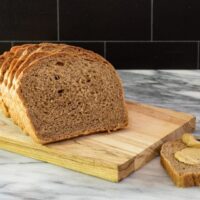
This homemade pumpernickel bread is soft, flavorful, and loaded with texture. It is well worth a few extra hours of rising time!

This post may contain affiliate links. See our Privacy Policy.
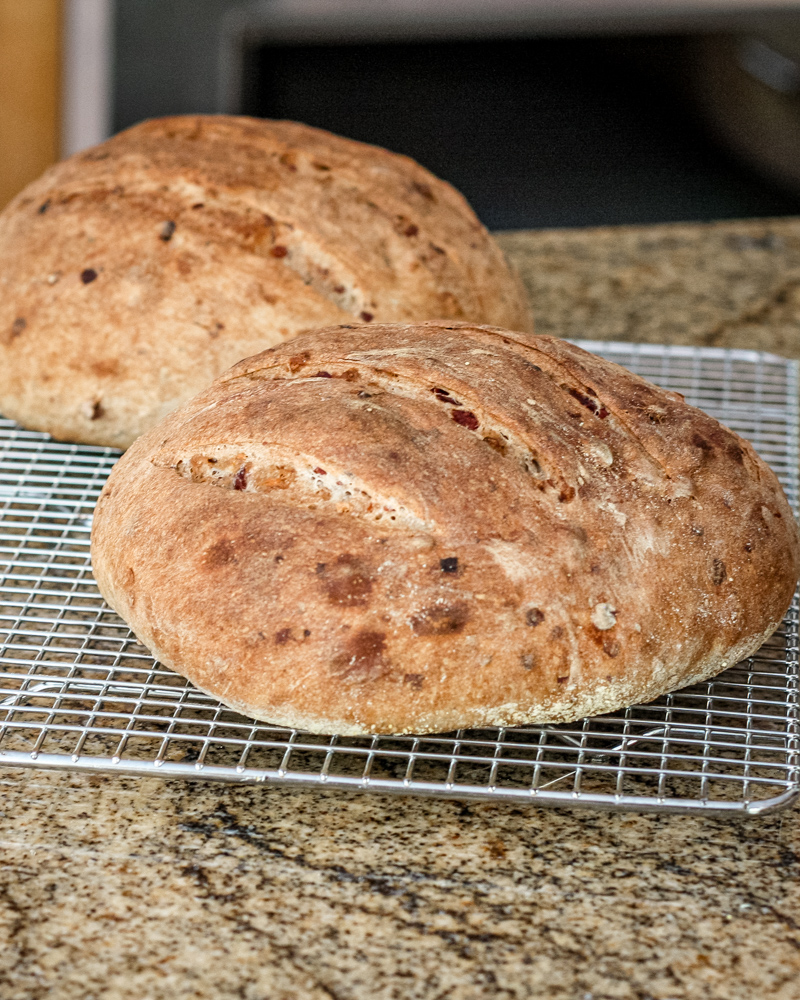
A starter gives this homemade pumpernickel bread its amazing flavor, and a combination of bread flour, cocoa, cornmeal, rye flour, and whole wheat makes it soft and gives it color and texture. The bread isn’t overly sweet and isn’t as strong-flavored like some pumpernickel breads, making it an excellent choice for just about any sandwich filling. It’s well worth the time it takes for the starter to develop, and there isn’t much extra hands-on time involved, especially if you use a stand mixer. If possible, use a stand mixer to knead the bread. It makes kneading nearly effortless and produces a softer dough. If you plan to knead the dough by hand, you might need a bit more flour.
Store this bread in large plastic bread bags with as much air removed as possible. The bread shouldn’t be stored in the refrigerated, but freezes beautifully sliced or unsliced. Stored properly at room temperature, the bread lasts up to 4 days. It’s fantastic toasted!
To freeze homemade pumpernickel bread, wrap slices or the whole loaf in plastic wrap and a layer of foil or freezer wrap. Place it in a resealable freezer bag and freeze it for up to 3 months.
What is a biga?
Biga is an Italian term for pre-fermentation of the dough. The biga acts as a starter, adding texture and complex flavor to the pumpernickel bread.
What You’ll Like About This Recipe
Excellent flavor. A starter dough, molasses, and cocoa give the bread rich, well-developed taste.
Great structure. The loaves rise well and bake up with good height and a sturdy crumb.
Perfect for sandwiches. This bread holds up beautifully to hearty fillings.
Ingredient Notes
- Biga/starter: Builds flavor and improves the texture of the finished bread; it can be made ahead and refrigerated.
- Bread flour: Provides strength and chew, especially important with the added whole grains.
- Rye flour: Adds classic pumpernickel flavor without making the loaf dense.
- Whole wheat flour: Contributes nuttiness and structure.
- Cornmeal: Adds subtle texture and helps prevent sticking when shaping.
- Molasses: Gives sweetness, color, and depth; use regular, not blackstrap.
- Cocoa powder: Unsweetened cocoa deepens color and flavor without making the bread taste like chocolate.
- Instant yeast: Used in both the starter and final dough for reliable rise.
- Egg wash: Creates a shiny, attractive crust.
Steps to Make Homemade Pumpernickel Bread
- Mix the starter ingredients and knead until smooth, then let the dough rest until developed.
- Add the remaining dough ingredients to the starter and knead until elastic and workable.
- Transfer the dough to a greased container and let it rise until doubled.
- Divide the dough into two portions and shape into rounds or loaves.
- Let the shaped loaves rise again until puffy.
- Brush with egg wash and score the tops.
- Bake until the loaves are well browned and sound hollow when tapped.
- Cool completely on racks before slicing.
Tips
- Refrigerating the starter overnight improves flavor and makes timing more flexible.
- Add flour gradually during kneading; the dough should be slightly tacky but not sticky.
- Use a kitchen scale when dividing the dough to ensure evenly sized loaves.
- Let the bread cool fully before slicing to avoid a gummy crumb.
Recipe Variations
- Make sandwich loaves. Shape the dough and bake it in loaf pans instead of free-form rounds.
- Add seeds. Caraway, sunflower, or pumpkin seeds add texture and flavor.
- Use a darker crust. Bake on a stone or add steam during the first part of baking.
- Adjust the sweetness. Increase or reduce the molasses slightly to suit your taste.
Serving Suggestions
- Serve sliced with butter or cream cheese.
- Pair with pastrami, corned beef, or roast beef for classic sandwiches.
- Add sharp cheese and mustard for an easy lunch.
- Choose this bread for toast with savory spreads.
How to Store
Refrigerate: Store wrapped loaves at room temperature for up to 3 days, or refrigerate for up to 1 week.
Freeze: Wrap whole loaves or slices tightly and freeze for up to 3 months.
Refresh: Thaw at room temperature and warm briefly in the oven to revive the crust.
Frequently Asked Questions
Homemade Pumpernickel Bread
Ingredients
Biga/Starter
- 4 ¼ cups bread flour, 19 ounces
- 2 ½ teaspoons instant yeast
- 1 ¾ cups water, 14 ounces, room temperature
- 2 teaspoons salt
Remaining Dough Ingredients
- 1 ⅔ cups water, room temperature
- 2 tablespoons molasses
- 3 ½ cups bread flour
- ½ cup rye flour
- ½ cup whole wheat flour
- ¼ cup cornmeal
- 2 tablespoons cocoa powder, unsweetened, natural
- ½ teaspoon instant yeast
- 1 ½ teaspoons salt
For the Egg Wash
- 1 large egg white
- 2 teaspoons water
Instructions
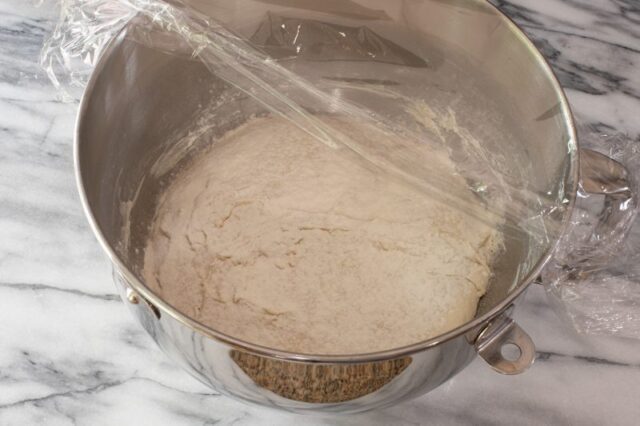
- In the bowl of a stand mixer, combine the biga/starter ingredients. Mix by hand or with the dough hook attachment on medium-low speed for 10 minutes. Sprinkle the dough with 1 tablespoon of flour. Cover the bowl with plastic wrap and let the dough rest for at least 2 hours. The dough may be refrigerated overnight.

- Punch the dough down and add the remaining dough ingredients; knead with the stand mixer and dough hook or by hand for about 10 minutes, adding more flour, as needed to keep the dough from sticking to the bowl or surface.
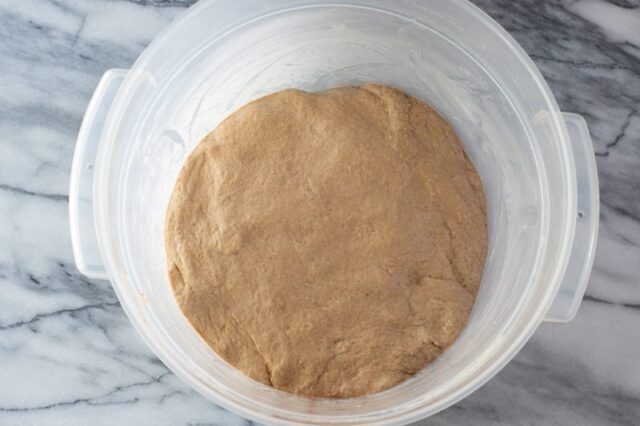
- Grease a large bowl or Cambro container.* Scrape the dough into the container and turn it so all sides are coated with the oil or butter. Place the container in a draft-free place and let it rise for about 45 minutes to 1 hour, or until doubled in bulk.
- Grease baking sheets or two large loaf pans or line them with parchment paper; sprinkle with cornmeal.
- Punch down the dough and turn it out onto a floured surface. You will have approximately 70 ounces of dough. Divide it into two equal parts and shape them into round loaves and place them on the prepared baking sheets, or roll and shape the dough to fit into prepared loaf pans. Cover the pans with a clean kitchen tea towel and let them rise for about 45 minutes.
- Meanwhile, heat the oven to 425 F.
- Whisk the egg white with the 2 teaspoons of water and brush over the loaves. Use a sharp knife or lame to score the dough.
- Bake the bread for 25 to 30 minutes, or until about 190 F to 200 F on an instant-read thermometer inserted into the center of a loaf.
- Turn the bread out onto racks to cool completely before slicing.


Nutrition
Disclaimer:
Our nutritional information is based on a third-party application that analyzes the ingredients list to determine the values. The information is meant to be helpful, but should be considered an estimate. Values may differ depending on measurements, brands, serving variations, and database availability.