

This post may contain affiliate links. See our Privacy Policy.
This crusty olive focaccia is chewy, airy, flavorful, and surprisingly easy to make. The dough comes together quickly in a stand mixer and rises in under an hour, making it a great choice for when you want bread in a hurry.
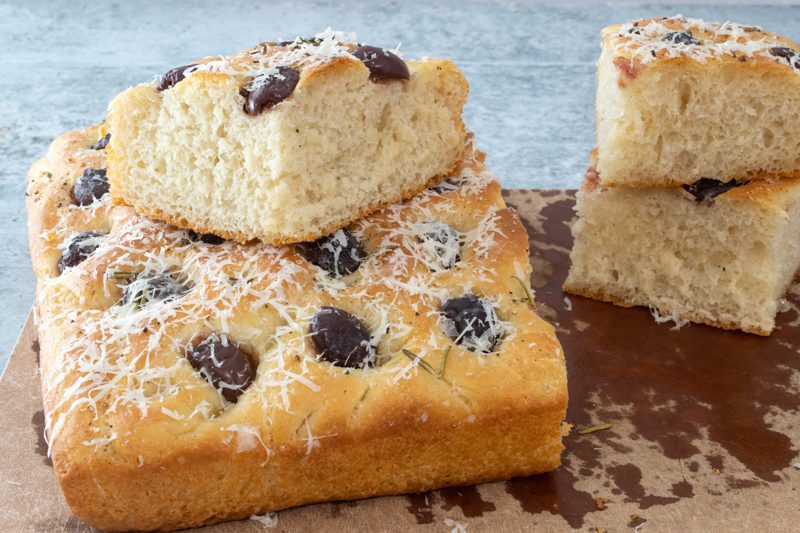
Studded with briny Kalamata olives, drizzled with olive oil, and finished with flaky sea salt and Parmesan cheese, this focaccia is perfect for dinners, parties, or Mediterranean-inspired meals. The crisp edges and soft, bubbly interior make it irresistible.
What You’ll Like About This Dish
Fast rise time. Ready in about 2 hours—much quicker than many focaccia recipes.
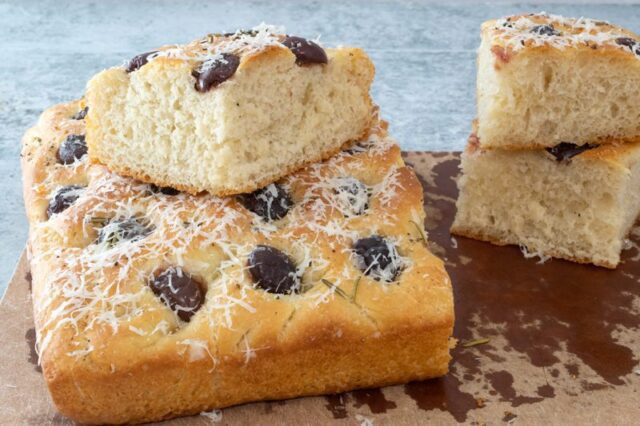
Great texture. Crispy on the outside with a soft, airy crumb.
Big flavor. Olive oil, olives, and Parmesan add rich Mediterranean character.
Easy technique. A stand mixer and simple folds make the dough beginner-friendly.
Ingredient Notes
- Warm water: Needs to be about 105–110°F to properly activate the yeast.
- Active dry yeast: Creates lift and structure; allow it to get foamy before mixing.
- Bread flour: Produces a chewier, more structured focaccia than all-purpose flour.
- Olive oil: Adds flavor, tenderness, and helps create crisp edges.
- Sugar: Feeds the yeast, helping the dough rise more quickly.
- Salt: Essential for flavor; don’t skip or reduce.
- Kalamata olives: Briny and rich—halve them for easy dimpling.
- Fresh Parmesan: Adds savory finishing flavor.
- Flaky sea salt & cracked pepper: Enhance the topping and balance the olives.
Steps to Make Crusty Focaccia With Olives
- Combine warm water, yeast, and sugar; rest until foamy.
- Add flour, salt, and olive oil and knead with a dough hook.
- Transfer dough to an oiled bowl and let rise until doubled.
- Fold dough over itself several times and let rest again.
- Add olive oil to a baking pan and spread dough into the pan.
- Allow a second rise.
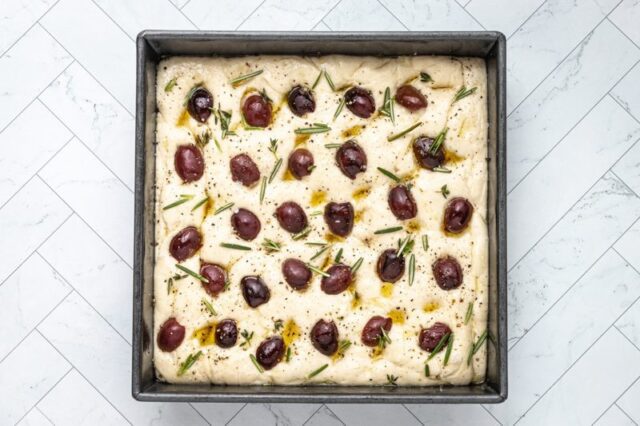
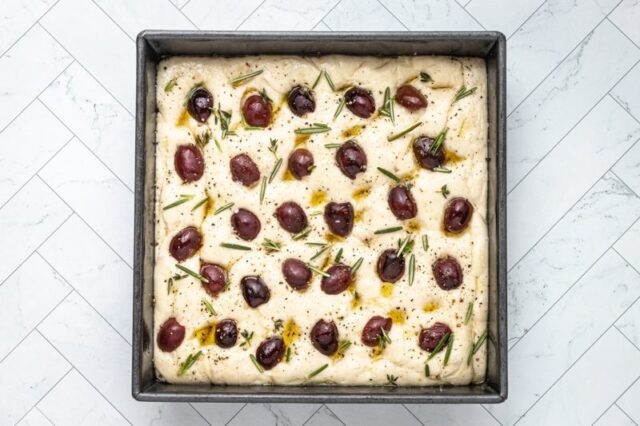
- Dimple the dough and add olives, salt, pepper, and more olive oil.
- Bake until golden brown.
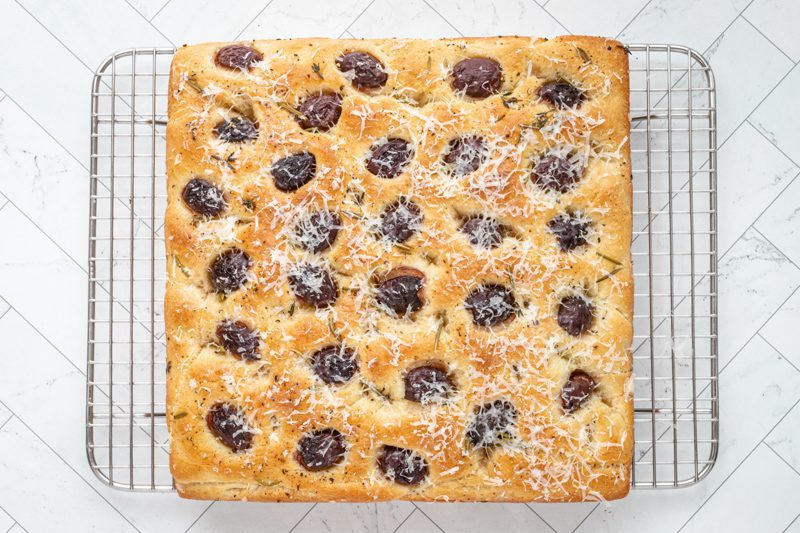
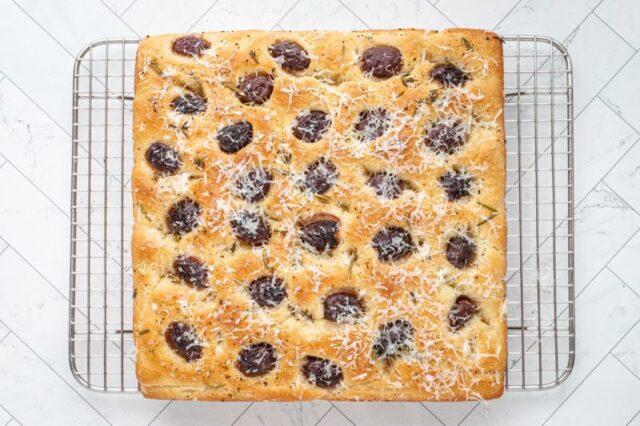
- Cool on a rack and finish with freshly grated Parmesan.
Tips for Focaccia Success
- Use bread flour if possible—its higher protein content creates a better chew.
- Oil your fingers before dimpling to avoid sticking and tearing the dough.
- Don’t skimp on the olive oil; it helps form the crusty, golden edges.
- Let the dough rise fully during both rises for an airy crumb.
- Adjust bake time based on your oven; focaccia should be deeply golden.
Recipe Variations
- Herb focaccia. Add fresh rosemary, thyme, or oregano to the dough or sprinkle on top before baking.
- Tomato focaccia. Press cherry tomato halves into the dimples along with the olives.
- Garlic focaccia. Add roasted garlic cloves to the surface or brush with garlic-infused olive oil.
- Cheesy focaccia. Top with grated mozzarella, Fontina, or Pecorino before baking.
- Caramelized onion focaccia. Spread a thin layer of caramelized onions over the dough before dimpling.
- Olive trio focaccia. Mix Kalamata, Castelvetrano, and black olives for a more complex flavor.
What to Serve With Focaccia
How to Store Focaccia
Refrigerate: Store tightly wrapped or in an airtight container for up to 3 days.
Reheat: Warm in a 350°F oven for 8–10 minutes to restore crispness.
Freeze: Freeze slices for up to 2 months; reheat straight from the freezer for best texture.
Make-ahead: The dough can be refrigerated overnight after the first rise; bring to room temperature before dimpling and baking.
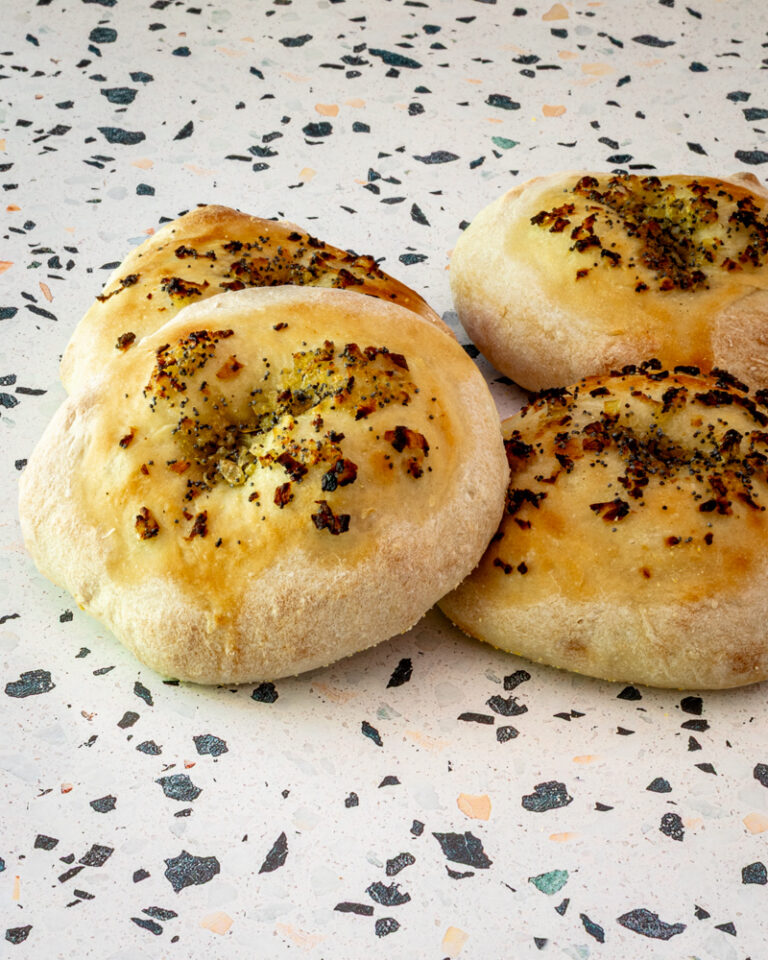
You might also like this fougasse or this recipe for no-knead olive bread. This bread machine focaccia is another excellent choice.
Crusty Olive Focaccia
Ingredients
- 1 ¼ cups warm water, about 105°F to 110°F, (283 grams)
- 2 ¼ tsp active dry yeast
- 2 tsp granulated sugar
- 3 ¼ cups bread flour, (398 grams)
- 1 tsp fine salt
- 5 tbsp olive oil, divided, plus more olive oil for the bowl
- Butter for the pan if needed
Toppings
- 15 Kalamata olives, halved (or more as desired)
- ½ tsp flaky sea salt, or to taste
- Freshly ground coarse black pepper, to taste
- 1 tbsp olive oil
- 1 tbsp grated Parmesan cheese
Recommended Equipment
Instructions
- In a stand mixer bowl, combine the warm water, yeast, and sugar. Let the mixture stand for about 8 minutes or until foamy.1 1/4 cups warm water, about 105°F to 110°F ((283 grams)) | 2 1/4 tsp active dry yeast | 2 tsp granulated sugar
- Add the bread flour, salt, and 2 tablespoons of olive oil. Attach the dough hook and knead the mixture for about 8 minutes. The dough will be sticky—use a bowl scraper to scrape it off the bottom of the bowl occasionally. If necessary, add a bit more flour, 1 tablespoon at a time. Scrape the dough into an oiled bowl or container; cover with plastic wrap and let it rise in a warm place for 45 minutes. It should more than double in that amount of time.3 1/4 cups bread flour ((398 grams) ) | 1 tsp fine salt | 2 tbsp olive oil (divided, plus more olive oil for the bowl)
- Using an oiled bowl scraper, fold the risen dough over on itself 4 times, turning the bowl 1/4-turn each time. Let the dough rest for another 15 minutes.
- Add 3 tablespoons of olive oil to a 9-inch square baking pan. If the pan isn't nonstick, butter it or line it with a sheet of parchment paper before you add the oil. Add the dough and gently spread it out to fill the pan.3 tbsp olive oil (divided, plus more olive oil for the bowl) | Butter for the pan if needed
- Let the dough rise in the pan for 30 minutes. With oiled fingertips, dimple the loaf all over. Arrange the halved kalamata olives in the dimples. Sprinkle with about 1/2 teaspoon of flaky sea salt and a few grinds of coarse black pepper. Drizzle with another tablespoon of olive oil.15 Kalamata olives (halved (or more as desired)) | 1/2 tsp flaky sea salt (or to taste) | Freshly ground coarse black pepper (to taste) | 1 tbsp olive oil

- Meanwhile, preheat the oven to 425°F
- Bake for about 22 to 27 minutes, until golden brown.
- Remove the bread from the pan and place it on a rack. Sprinkle fresh grated Parmesan cheese over the hot bread and cool completely before slicing or tearing.1 tbsp grated Parmesan cheese
Nutrition
Disclaimer:
Our nutritional information is based on a third-party application that analyzes the ingredients list to determine the values. The information is meant to be helpful, but should be considered an estimate. Values may differ depending on measurements, brands, serving variations, and database availability.