
This post may contain affiliate links. See our Privacy Policy.
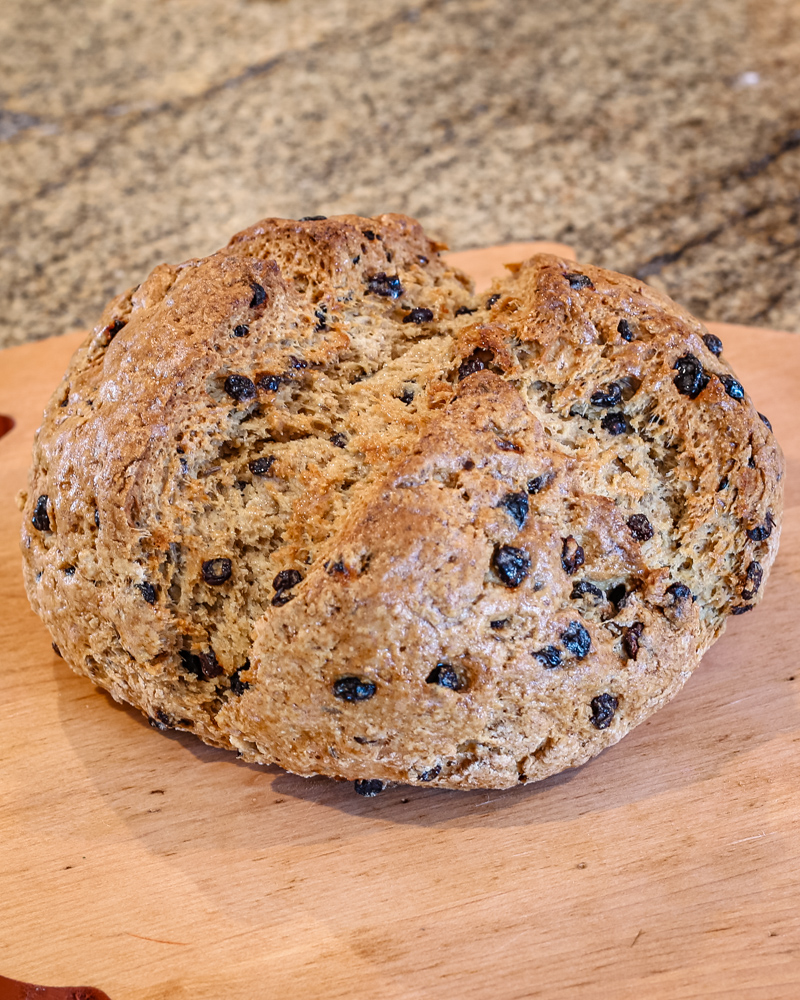
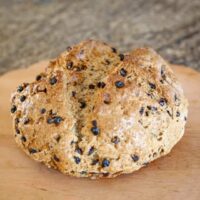
No yeast or proofing time makes Irish soda bread one of the easiest breads to prepare and bake. This recipe will make two small free-form loaves or a large skillet loaf. It’s a good alternative to biscuits, and it is much less fussy.
While this version contains currants, there are other flavors you might consider. For a more savory loaf, cut the sugar down to a tablespoon or two and add a few tablespoons of caraway seeds. To add to the flavor profile, add the finely grated zest of one orange. Raisins may be used to replace the currants, or use dried blueberries or cranberries in the bread.
What You’ll Like About This Bread
Quick and easy. No yeast, kneading, or long rise time—ready in about an hour.
Rustic and versatile. Use currants, raisins, citrus zest, or go savory with seeds and herbs.
Great with any meal. Serve it with soup, stew, butter, or cheese—or just as is!
Ingredient Notes
- Flour: Use all-purpose flour, measured by weight or spooned and leveled.
- Baking soda + cream of tartar: These give the bread its rise—no yeast needed.
- Salt: Enhances overall flavor.
- Sugar: Adds light sweetness—adjust depending on add-ins.
- Currants: Small dried fruits that distribute evenly—can substitute raisins or other dried berries.
- Egg: Enriches the dough and helps with structure.
- Buttermilk: The acid activates the soda and gives the bread its tangy flavor.
- Butter: Melted and cooled for richness and moisture.
Steps to Make Classic Irish Soda Bread
- Preheat the oven and prepare a cast iron skillet or greased baking sheet.
- Mix the dry ingredients and sugar in a large bowl. Stir in the currants.
- In another bowl, whisk together the egg, buttermilk, and melted butter.
- Add the wet ingredients to the dry and stir just until blended.
- Turn dough out onto a floured surface and knead briefly until cohesive.
- Shape into two small loaves or one large round loaf.
- Brush with buttermilk and dust lightly with flour.
- Slash an “X” on the top with a sharp knife.
- Bake until the bread is golden brown and sounds hollow when tapped.
Tips for Soda Bread Success
- Handle the dough gently—overmixing will make it tough.
- If the dough is sticky, add flour 1 tablespoon at a time until workable.
- A cast iron skillet gives the bread a nice crust, but a baking sheet works too.
- Use a sharp blade to score the top for even baking and traditional presentation.
Recipe Variations
- Savory version. Reduce sugar and add 2 to 3 tablespoons caraway seeds.
- Citrus twist. Add finely grated zest of 1 orange or lemon.
- Fruit swap. Use raisins, dried cranberries, or chopped dried blueberries.
- Whole grain. Substitute part of the flour with whole wheat for a heartier loaf.
- Cheese and herb. Omit fruit and add shredded cheese and fresh thyme or rosemary.
Serving Suggestions
- Serve with butter, jam, or honey at breakfast.
- Pair with soups, stews, or chowders.
- Add to a St. Patrick’s Day spread alongside corned beef and cabbage.
- Use as a side for Irish cheddar and smoked salmon.
- Toast leftover slices and serve with eggs or cheese.
How to Store
Room temperature: Store cooled bread in an airtight bag or container for up to 2 days.
Refrigerate: If storing longer, refrigerate for up to 1 week—bring to room temperature before serving.
Freeze: Wrap tightly and freeze whole or in slices for up to 2 months. Thaw at room temperature or warm in a 325°F oven.
Here’s a 1-loaf Irish soda bread recipe.
Classic Irish Soda Bread
Ingredients
- oil or cooking spray, for greasing the pan
- 4 cups all-purpose flour, plus more for kneading and shaping
- 1 tsp baking soda
- ½ tsp cream of tartar
- 1 tsp fine sea salt
- ⅓ cup granulated sugar, or more for a sweeter bread
- ½ cup dried currants
- 1 large egg
- 1 ¾ cup buttermilk
- 6 tbsp butter, melted and cooled
- Buttermilk or cream, for brushing
Recommended Equipment
Instructions
- Preheat the oven to 375°F and grease a large, seasoned cast iron skillet or a large baking sheet.oil or cooking spray (for greasing the pan)
- In a large bowl, combine the flour, baking soda, cream of tartar, salt, and sugar. Add the currants and stir to blend.4 cups all-purpose flour (plus more for kneading and shaping) | 1 tsp baking soda | 1/2 tsp cream of tartar | 1 tsp fine sea salt | 1/2 cup dried currants | 1/3 cup granulated sugar (or more for a sweeter bread)
- In another bowl, combine the egg and buttermilk; whisk to blend and then add the melted butter.1 large egg | 1 3/4 cup buttermilk | 6 tbsp butter (melted and cooled)
- Add the egg and buttermilk mixture to the dry mixture and stir until blended. Dump the dough out onto a floured surface and knead briefly, or just until it is firm and cohesive. Add extra flour to the dough if it is too sticky.
- Shape the dough into two round loaves or, if baking in a skillet, into one larger round loaf. Brush a bit of buttermilk on the dough and sprinkle lightly with flour.Buttermilk or cream (for brushing)
- With a sharp knife or razor blade, cut an "X" into the top of the loaf or loaves.
- Place the loaf (or loaves) on a baking sheet or in a skillet, then bake in the preheated oven for 55 to 65 minutes, or until golden brown.
Nutrition
Disclaimer:
Our nutritional information is based on a third-party application that analyzes the ingredients list to determine the values. The information is meant to be helpful, but should be considered an estimate. Values may differ depending on measurements, brands, serving variations, and database availability.