
This post may contain affiliate links. See our Privacy Policy.
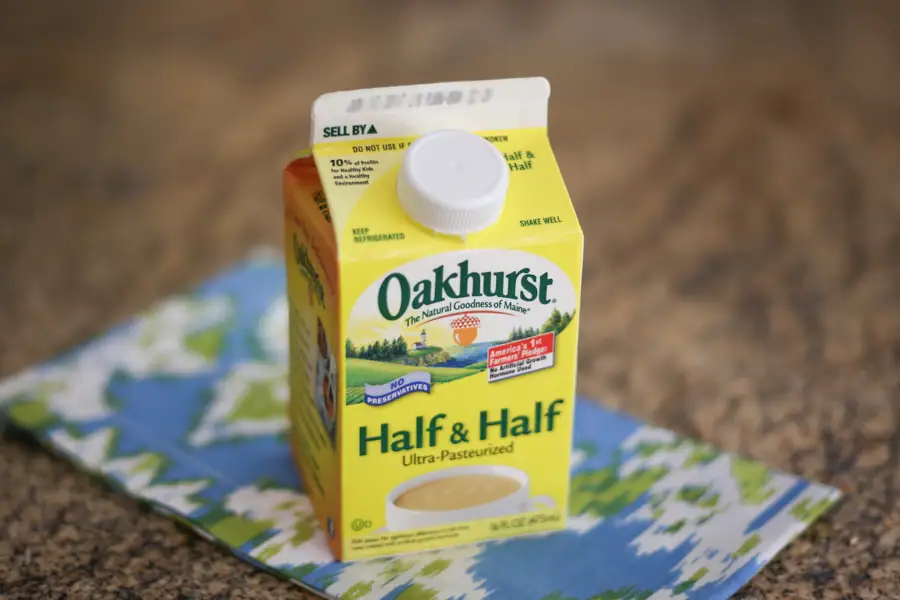
Half-and-half is a dairy product made by combining equal parts whole milk and light cream. It usually contains between 10% and 18% milkfat, making it richer than milk but lighter than heavy cream. Because of its balanced fat content, it adds creaminess without being overly heavy.
You’ll most often see half-and-half used in coffee, but it also works well in recipes that call for a slightly richer flavor and texture. It can be added to sauces, soups, casseroles, and even desserts.
Can You Use Half-and-Half Instead of Milk or Cream?
- To replace milk, it will add extra creaminess and richness. You may want to thin it with a little water if the recipe is delicate, like a custard.
- To replace heavy cream, it works well in soups, sauces, and some desserts, but it won’t whip the way cream does since it doesn’t have enough fat. Also keep in mind that half-and-half can curdle at higher heat, so it isn’t quite as stable in cooking as heavy cream.
Storage Tips for Half-and-Half
Keep half-and-half refrigerated in its original container and use by the date on the package. Once opened, it’s best consumed within 5 to 7 days for the freshest flavor. For longer storage, you can freeze half-and-half, though it may separate slightly after thawing. A quick whisk usually brings it back together for cooking or baking.
How to Make Your Own Half-and-Half
If you don’t have half-and-half on hand, you can make a quick substitute with ingredients you probably already have.
- Combine equal parts whole milk and light cream.
- If you don’t have light cream, use ¾ cup whole milk plus ¼ cup heavy cream for each 1 cup of half-and-half.
This homemade version works in coffee, sauces, soups, and baking. Just like store-bought half-and-half, remember it won’t whip and it can curdle if boiled too hard.