

This post may contain affiliate links. See our Privacy Policy.
If you have leftover turkey from a holiday meal, this turkey and egg salad is a tasty and practical way to enjoy it. Chopped turkey combines with hard-boiled eggs, a bit of mustard, and crunchy pickles and onions for a flavorful, protein-packed salad that’s ready in minutes.
Serve it chilled in a sandwich, tucked into lettuce wraps, or mounded on greens with tomatoes or avocado. It’s an easy lunch or light dinner, and you can easily tweak the ingredients based on what you have on hand.
What You’ll Like About This Dish
Quick and easy. Comes together in minutes with pre-cooked ingredients.
Great for leftovers. A perfect way to repurpose holiday turkey.
Versatile and satisfying. Serve in sandwiches, wraps, or lettuce cups.
Ingredient Notes
- Cooked turkey: A mix of light and dark meat adds the best flavor and texture.
- Hard-cooked eggs: Chop finely for a creamy, protein-rich salad.
- Mayonnaise: Adds moisture and binds the salad—adjust to your preferred consistency.
- Dijon mustard: Adds tang and depth; substitute your favorite gourmet mustard if preferred.
- Dill pickle: Chopped pickles add brightness and crunch—sweet pickles can be used instead.
- Red onion: Optional, but adds a bit of bite and color.
- Salt and pepper: Add to taste, depending on the saltiness of your turkey and pickles.
Steps to Make Turkey and Egg Salad
- Combine the chopped turkey, eggs, mayonnaise, mustard, and pickles in a large bowl.
- Add the red onion, if using, and stir to blend.
- Taste and season with salt and pepper.
- Chill briefly, if desired, or serve immediately in sandwiches or lettuce wraps.
Tips for the Best Turkey Salad
- Use a sharp knife to dice the turkey evenly for consistent texture.
- Add more mayo if the salad seems dry after mixing.
- Let it chill for 30 minutes for the flavors to meld before serving.
- Use up leftover herbs—like parsley or chives—for added freshness.
Recipe Variations
- Swap the turkey. Replace with chopped cooked chicken or flaked canned tuna.
- Make it hot. Fill sandwich buns or rolls, wrap them in foil, and bake as for these hot-baked tuna buns.
- Sweet pickles. Use chopped sweet pickles instead of dill for a milder flavor.
- Add crunch. Mix in finely chopped celery or water chestnuts for texture.
- Make it spicy. Add a dash of hot sauce or chopped jalapeño for a kick.
Serving Suggestions
- Spread onto soft sandwich buns, wraps, or croissants.
- Mound onto salad greens with avocado, tomato slices, or grapes.
- Scoop into lettuce leaves for a light, low-carb option.
- Pack in a lunchbox with crackers and sliced veggies.
- Serve alongside soup for a comforting lunch combo.
How to Store Turkey and Egg Salad
Refrigerate: Store in an airtight container in the fridge immediately after mixing.
Storage time: Keeps well for up to 4 days. Stir gently before serving if it separates slightly.
Before serving: Taste and adjust seasoning or mayo if needed after chilling.
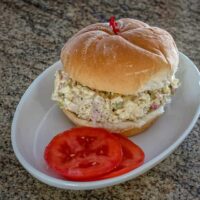
Turkey and Egg Salad
Ingredients
- 3 cups chopped cooked turkey
- 3 hard-boiled eggs, chopped
- ⅔ cup mayonnaise, or to taste
- 1 tbsp Dijon mustard
- ¼ cup chopped dill pickle
- 3 to 4 tbsp finely chopped red onion (optional)
- Salt and pepper, to taste
- Bread or salad greens (optional), for serving
- Avocado or tomato slices (optional), for garnish
Recommended Equipment
- Mixing bowl
Instructions
- Combine the turkey, chopped eggs, mayonnaise, Dijon mustard, chopped dill pickle, and red onion (if using) in a large bowl and mix, adding more mayonnaise, as needed. Taste and season with salt and pepper.3 cups chopped cooked turkey | 3 hard-boiled eggs, chopped | 2/3 cup mayonnaise (or to taste) | 1 tbsp Dijon mustard | 1/4 cup chopped dill pickle | 3 to 4 tbsp finely chopped red onion (optional) | Salt and pepper (to taste)
- Serve in sandwiches, lettuce wraps, or over salad greens with avocado or tomato slices, if desired.Bread or salad greens (optional) (for serving) | Avocado or tomato slices (optional) (for garnish)
Nutrition
Disclaimer:
Our nutritional information is based on a third-party application that analyzes the ingredients list to determine the values. The information is meant to be helpful, but should be considered an estimate. Values may differ depending on measurements, brands, serving variations, and database availability.