

This post may contain affiliate links. See our Privacy Policy.
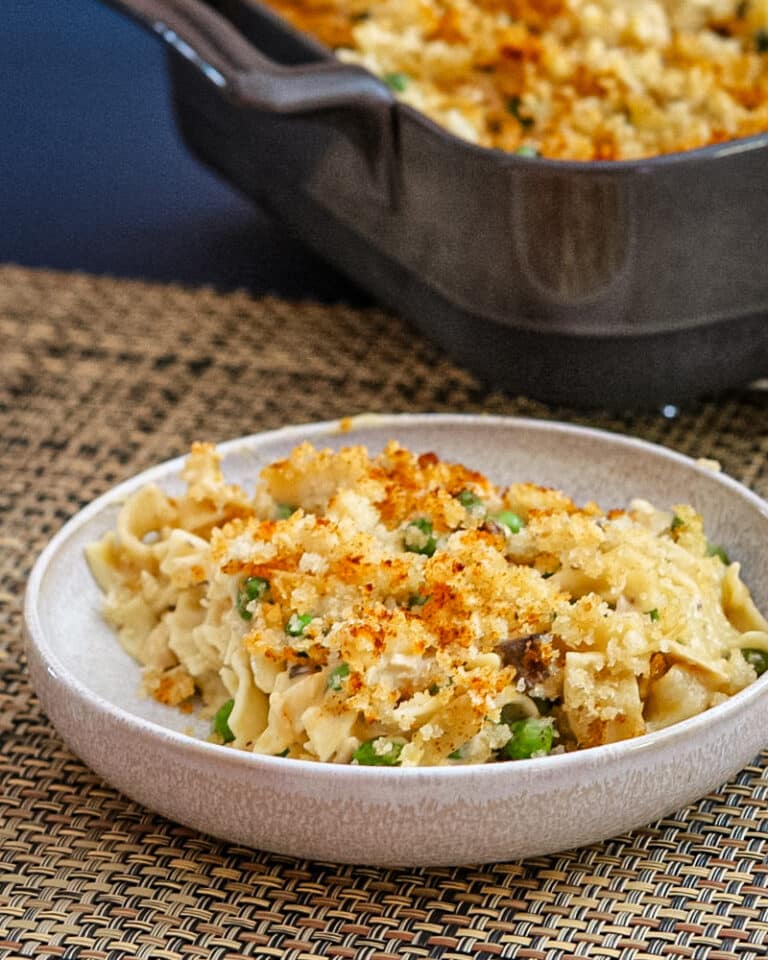
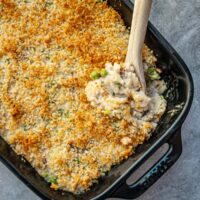
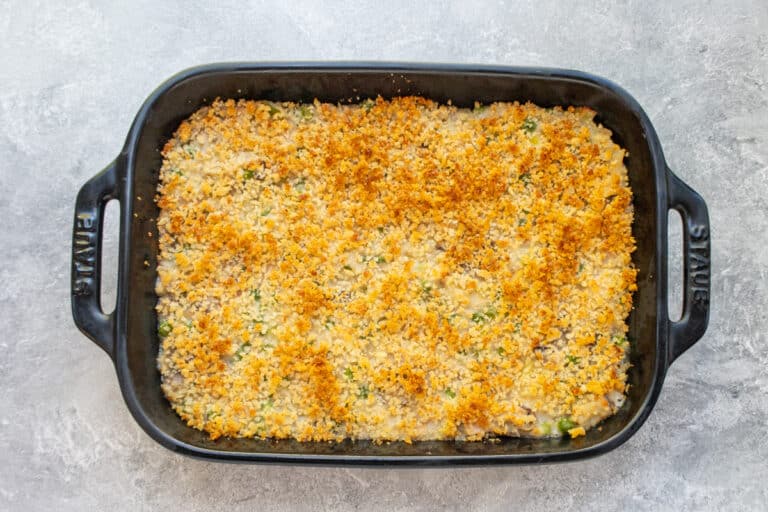
This tuna and orzo casserole is made with orzo pasta, peas, mushrooms, and a creamy homemade Parmesan cheese sauce. It’s cozy and family-friendly, with plenty of flavor and texture from the vegetables and a sauce made completely from scratch.
As much as I like condensed soups for their convenience, I love being able to replace them with a simple homemade sauce. Serve this tuna casserole with a tossed salad, biscuits, crusty bread, or soft dinner rolls.
What You’ll Like About This Dish
No condensed soup. A simple homemade Parmesan sauce brings rich, fresh flavor.
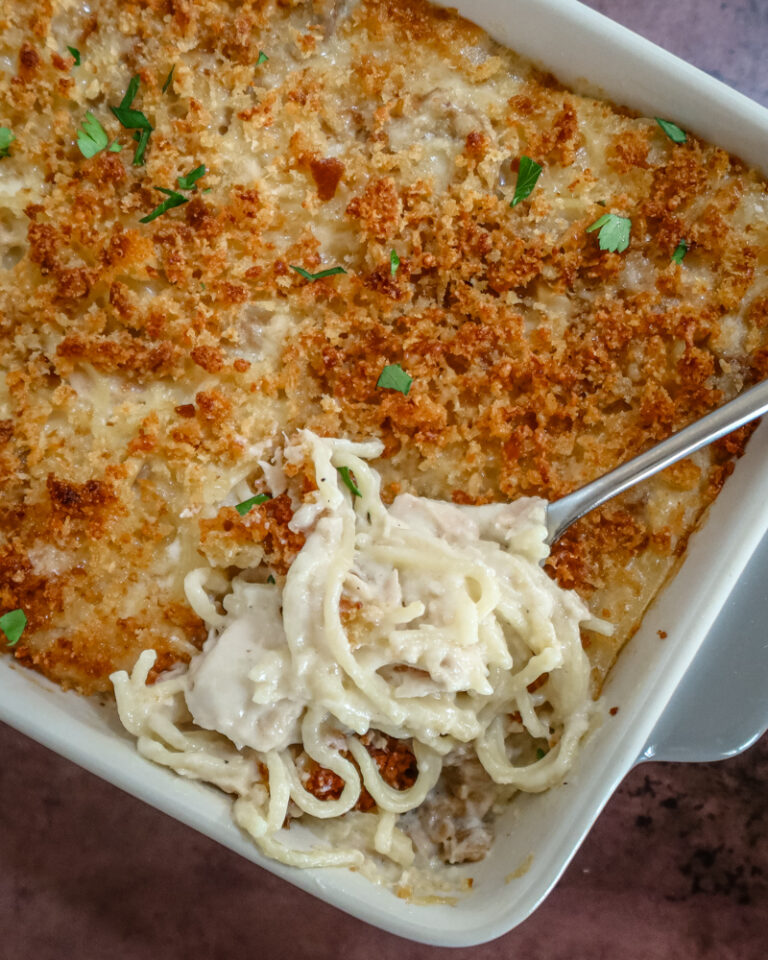
Comfort food with texture. Creamy pasta, tender vegetables, and a crisp breadcrumb topping in every bite.
Flexible and family-friendly. Easy to prep ahead, great for leftovers, and adaptable to what’s in your pantry.
Ingredient Notes
- Orzo pasta: A small rice-shaped pasta that bakes up tender and absorbs the sauce well.
- Butter: Used in both the sauce and topping—adds richness throughout.
- Mushrooms: Fresh sliced mushrooms add umami; sauté until golden.
- Green onions: Milder than regular onions and add subtle depth to the sauce.
- All-purpose flour: Forms the roux to thicken the milk-based sauce.
- Milk: Whole milk or 2% works best for a creamy but not heavy texture.
- Tuna: Use two 5- to 6-ounce cans of drained tuna—either chunk light or solid white.
- Peas (or peas and carrots): Add sweetness and color—lightly steamed before adding.
- Pimiento: Optional, but adds color and a touch of tang.
- Parmesan cheese: Freshly grated and divided between the sauce and topping.
- Panko crumbs: Create a light, crisp crust when combined with butter and cheese.
Steps to Make Tuna and Orzo Pasta Casserole
- Preheat the oven to 350°F and butter a 2-quart baking dish.
- Cook orzo according to package directions; drain and set aside.
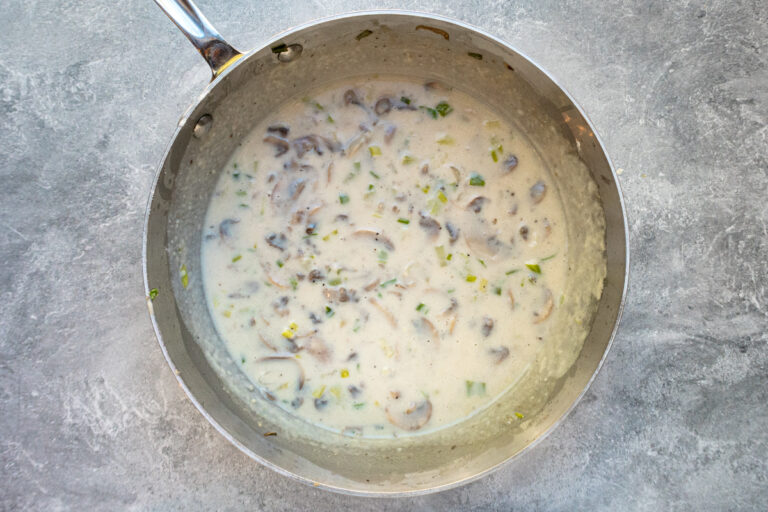
- In a saucepan, melt butter and sauté mushrooms and green onions until golden.
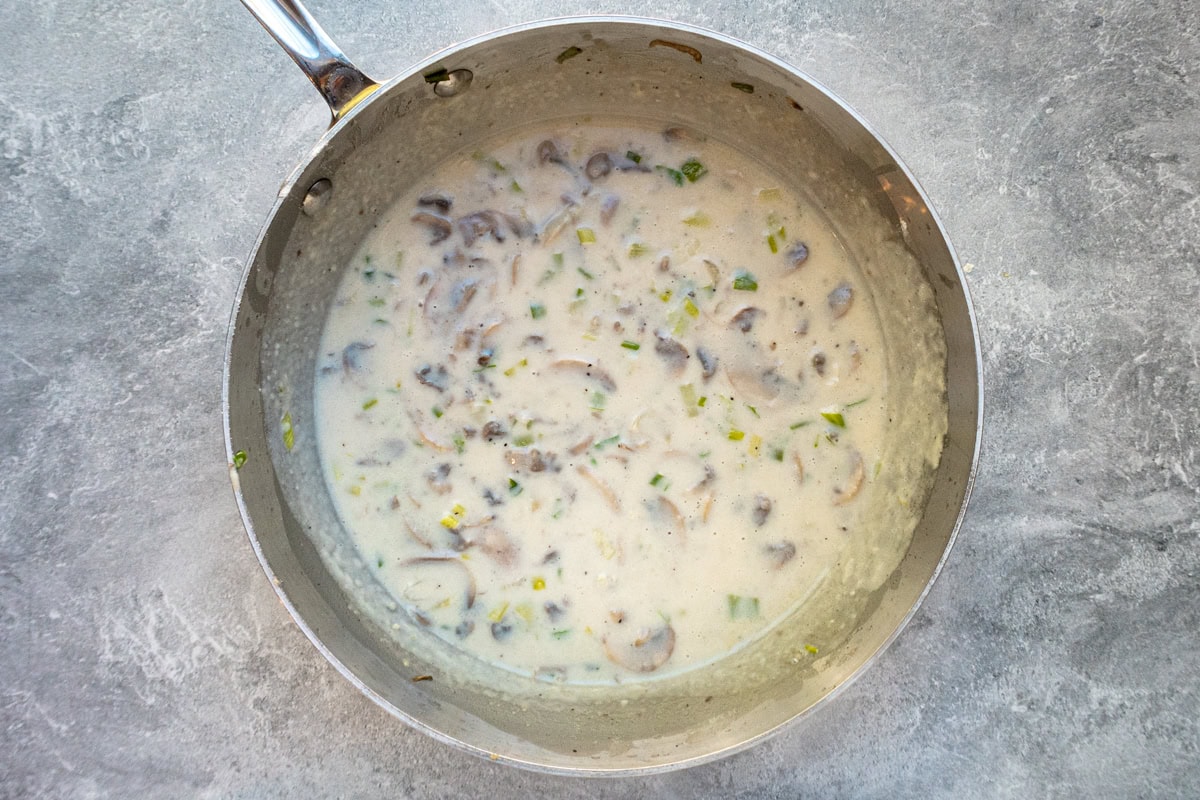
- Stir in flour and cook briefly, then gradually whisk in milk. Cook until thickened.
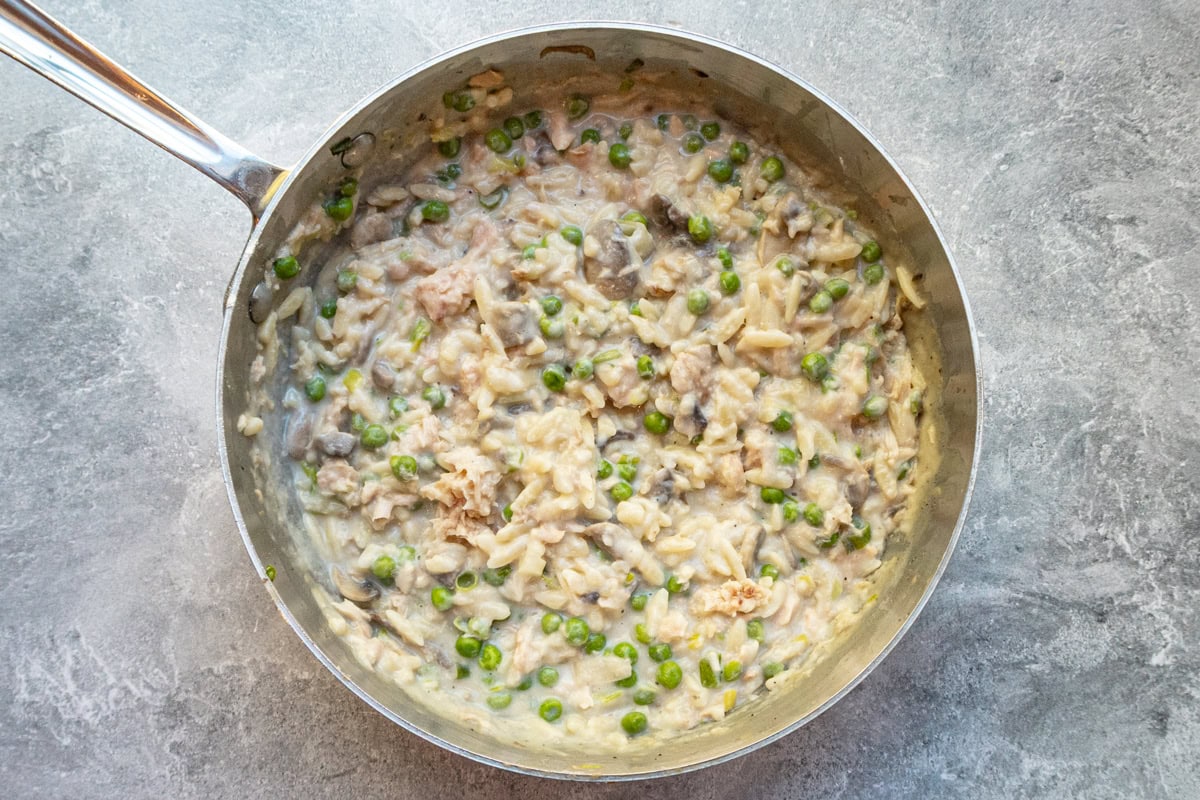
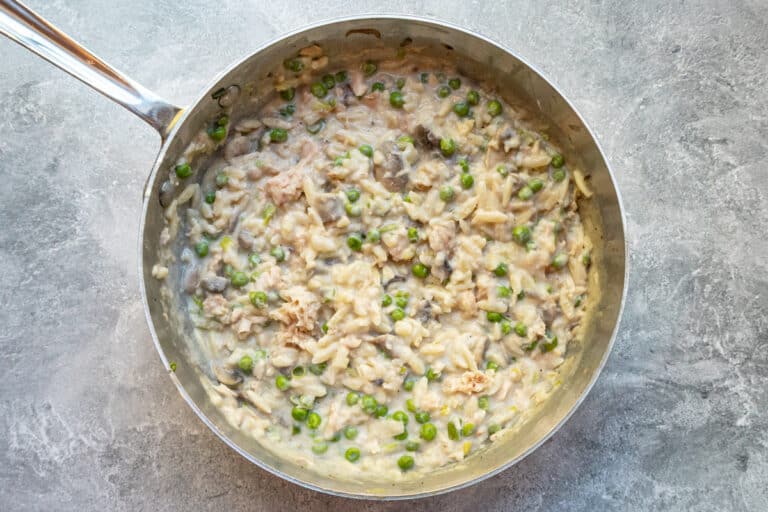
- Stir in half the Parmesan, then add tuna, peas, cooked orzo, and pimiento (if using). Season to taste.
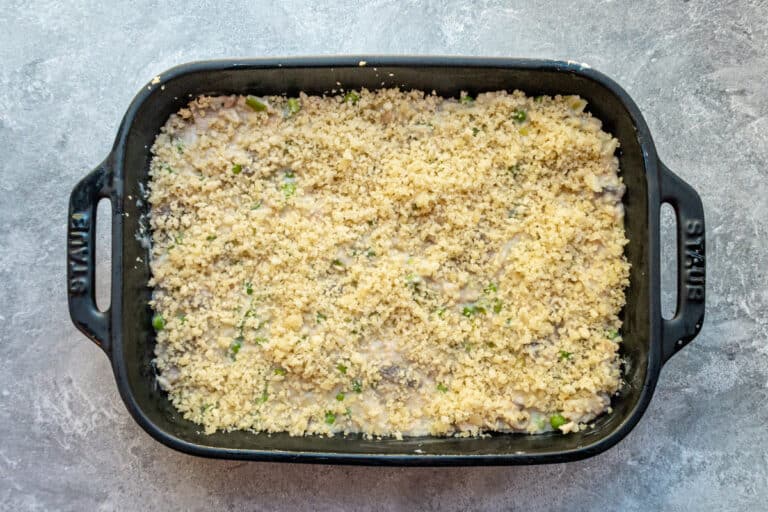
- Transfer the mixture to the prepared baking dish.
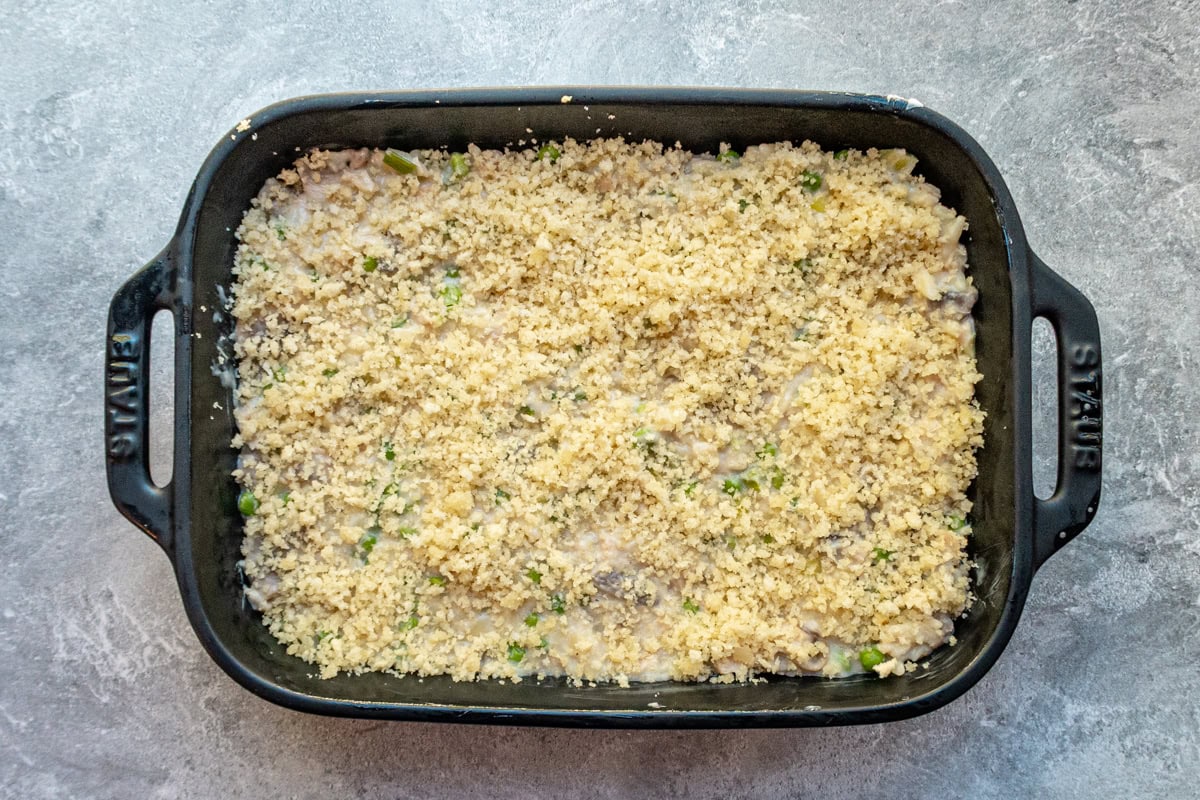
- Mix melted butter with panko and remaining Parmesan, then sprinkle over the top.
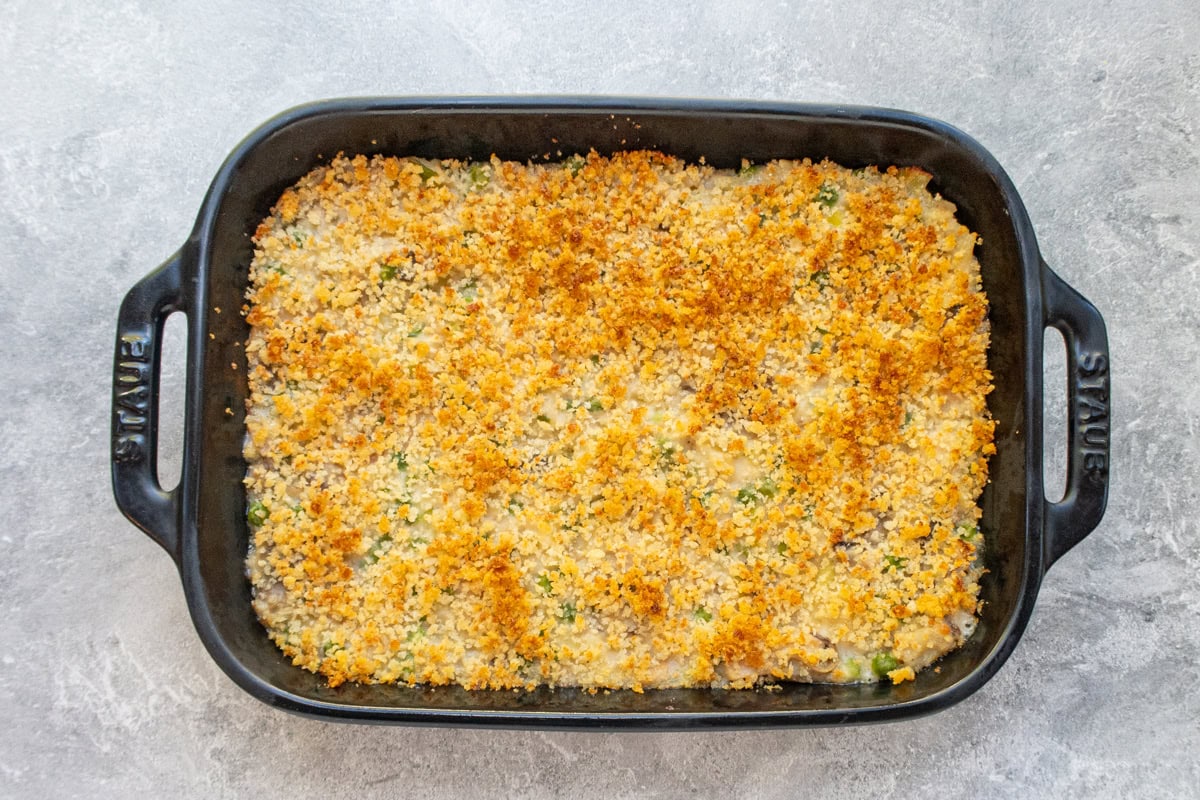
- Bake uncovered for 20 to 25 minutes, until bubbling and lightly browned.

How to Cook Pasta
Learn how much water and salt to use, when pasta is perfectly al dente, and a few simple tips for better results.
Tips for Tuna Orzo Casserole
- Cook the orzo just until al dente so it holds up during baking.
- Sauté mushrooms long enough to release moisture and develop flavor.
- Use solid white albacore for firmer chunks of tuna or chunk light for a milder, flakier texture.
- Try adding a splash of lemon juice or white wine to the sauce for brightness.
- Cover loosely with foil during baking if the topping browns too quickly.
Recipe Variations
- Use different pasta. Swap orzo for small shells or elbow macaroni if needed.
- Add cheese. Stir in shredded mozzarella or Swiss with the Parmesan for extra creaminess.
- Make it spicy. Add a pinch of crushed red pepper or a chopped jalapeño.
- Use other vegetables. Substitute broccoli, chopped spinach, or sautéed zucchini.
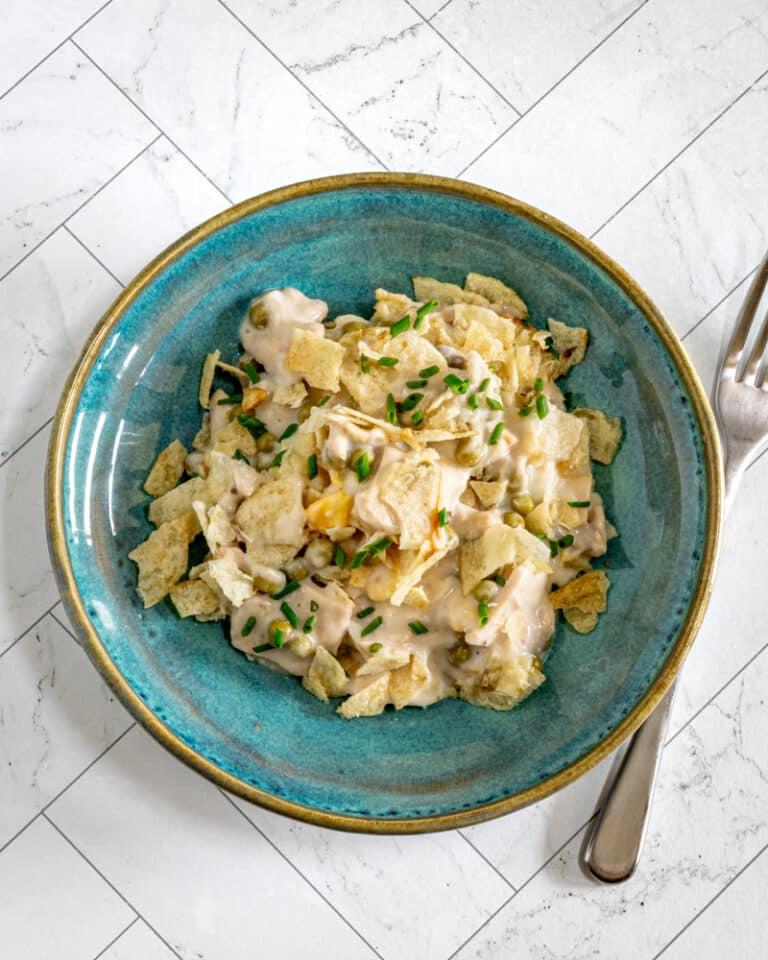
- Top with crackers. Use crushed buttery crackers or seasoned breadcrumbs instead of panko.
Serving Suggestions
- Tossed salad: A simple green salad with vinaigrette balances the richness.
- Biscuits or rolls: Serve with warm dinner rolls, biscuits, or garlic bread.
- Steamed vegetables: Try green beans, asparagus, or carrots on the side.
- Pickles: Add a tangy contrast with dill pickles or pickled red onions.
- Fruit salad: A sweet, fresh addition—especially nice for spring or summer meals.
How to Store
Refrigerate: Store leftovers covered in the refrigerator for up to 3 days.
Freeze: Freeze cooled portions in airtight containers for up to 2 months. Thaw in the fridge overnight before reheating.
Reheat: Warm in a 350°F oven (covered) until hot, or reheat individual servings in the microwave. Add a splash of milk if it seems too thick.
Tuna and Orzo Pasta Casserole
Ingredients
- Butter for greasing the baking dish
- 2 teaspoons kosher salt for the pasta cooking water
- 1 cup orzo pasta
- 3 tbsp butter
- 8 ounces sliced fresh mushrooms
- 4 green onions, thinly sliced
- 3 tbsp all-purpose flour
- 1 ½ cups milk
- 12 ounces tuna, drained and flaked, about 2 cans
- 1 cup frozen peas, thawed
- ½ cup grated Parmesan cheese
- 2 tbsp diced pimientos, optional
- Salt and freshly ground black pepper, to taste
For the Topping
- 2 tbsp butter, melted
- ¾ cup panko crumbs
Recommended Equipment
- 2-quart baking dish
Instructions
- Heat the oven to 350°F. Butter a 2-quart baking dish.Butter for greasing the baking dish
- Bring a large pot of water to a boil with 2 teaspoons of kosher salt. Add the orzo and cook following the package directions for al dente. Drain and set aside.2 teaspoons kosher salt for the pasta cooking water | 1 cup orzo pasta
- Meanwhile, melt the butter in a large saucepan over medium heat. Add the mushrooms and green onions and cook, stirring, until the mushrooms are tender, their moisture has cooked off, and they are lightly browned. Stir in the flour and cook, stirring, for 1 to 2 minutes. Gradually add the milk and continue cooking until thickened.3 tbsp butter | 8 ounces sliced fresh mushrooms | 4 green onions (thinly sliced) | 3 tbsp all-purpose flour | 1 1/2 cups milk

- Add the flaked tuna, peas, orzo, and half of the Parmesan cheese to the sauce. Stir in the pimientos, if using. Taste and season with salt and freshly ground black pepper. Spoon the mixture into the prepared baking dish.12 ounces tuna (drained and flaked, about 2 cans) | 1 cup frozen peas, thawed | ¼ cup grated Parmesan cheese | 2 tbsp diced pimientos (optional) | Salt and freshly ground black pepper (to taste)
- Combine 2 tablespoons of melted butter with the panko crumbs and the remaining Parmesan cheese. Sprinkle over the casserole.¼ cup grated Parmesan cheese | 2 tbsp butter (melted ) | 3/4 cup panko crumbs
- Bake the casserole for 20 to 25 minutes, or until the topping is lightly browned and the casserole is bubbling around the edges.
Nutrition
Disclaimer:
Our nutritional information is based on a third-party application that analyzes the ingredients list to determine the values. The information is meant to be helpful, but should be considered an estimate. Values may differ depending on measurements, brands, serving variations, and database availability.