

This post may contain affiliate links. See our Privacy Policy.
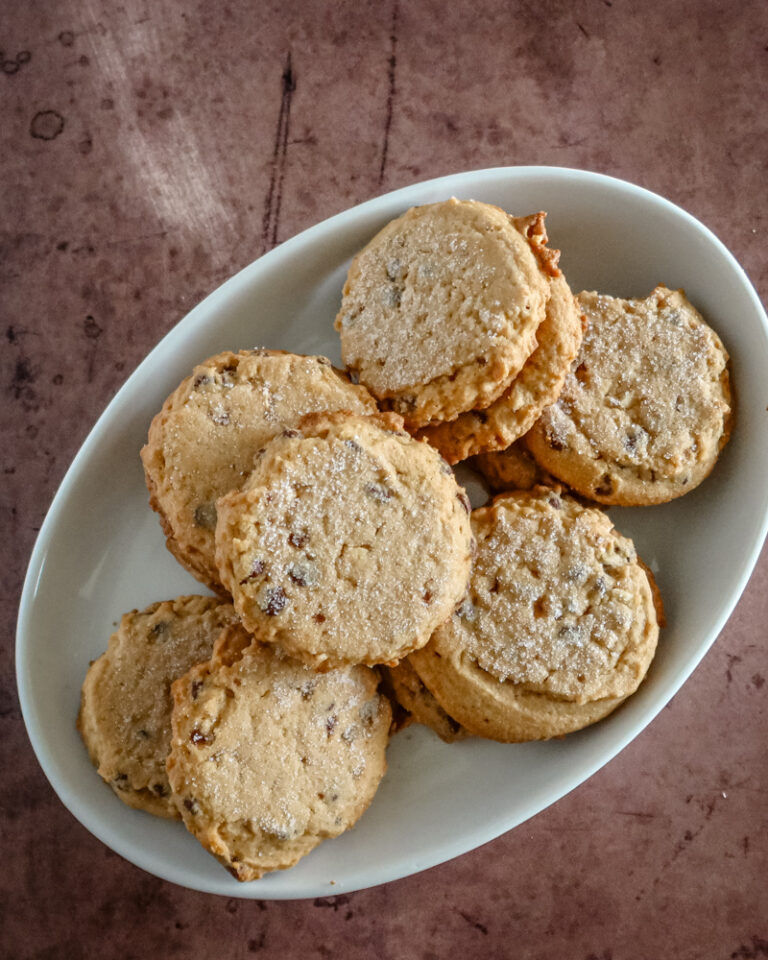
Sablé cookies are classic French shortbread-style treats, named for their delicate, “sandy” texture. They’re rich, buttery, and crumbly in the best way—perfect with tea or coffee, or as an elegant addition to your holiday cookie tray.
History Note: Sablé cookies originate from Normandy, where bakers created buttery shortbread-style treats with a texture reminiscent of sand—“sablé” in French. Traditionally flavored simply with vanilla, lemon, or almond, modern variations often include spices such as cardamom, which pairs especially well with citrus. The slice-and-bake format made them a favorite for gifting and holiday baking.
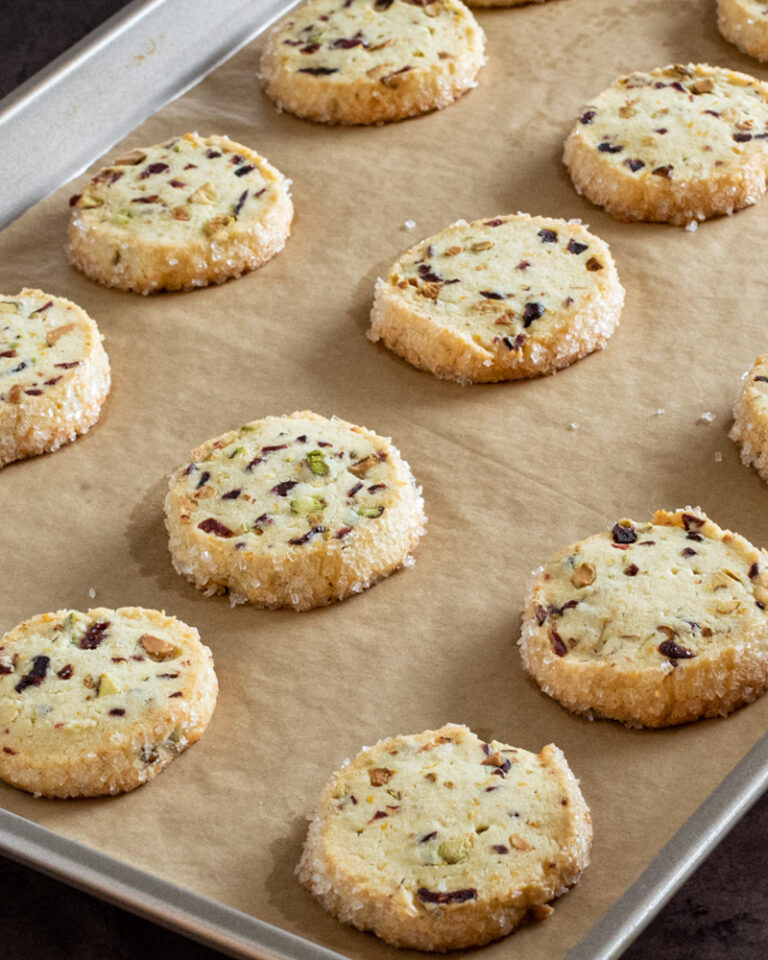
This version gets a flavorful twist from bright lemon and orange zest along with aromatic cardamom. The dough is shaped into logs and chilled, making it easy to slice and bake as needed. The citrus and spice make them feel special, but the method is beautifully simple.
What You’ll Like About These Cookies
Bright citrus flavor. Orange and lemon zest add…
Elegant with minimal effort. Just slice and bake…
Perfectly crisp edges. Brushed with egg white…
Ideal for gifting. These cookies stay fresh…
Ingredient Notes
- Butter: Use unsalted butter for the best flavor and texture—make sure it’s at room temperature for creaming.
- Citrus zest: The zest of a large orange and lemon adds bold natural flavor. A microplane zester works best.
- Cardamom: Ground cardamom adds warmth and complexity. If your cardamom is older, use a touch more.
- Sparkling or sanding sugar: Adds sparkle and crunch to the edges. Turbinado sugar can be used in a pinch.
- Egg yolk/white: The yolk enriches the dough; the reserved white is for brushing the chilled log before coating with sugar.
How to Make Citrus Cardamom Sable Cookies
- Start by whisking together the flour and salt in a small bowl. In another bowl, mash the zest into the granulated sugar to release the citrus oils, then stir in the cardamom.
- In a mixer, beat the butter until creamy, then add the citrus sugar and confectioners’ sugar and beat until light and fluffy. Mix in the egg yolk, then gradually add the flour mixture until just combined.
- Divide and shape the dough into two logs, about 8 to 9 inches long. Wrap in plastic wrap and refrigerate for at least 2 hours, or until firm.
- Before baking, preheat your oven and line baking sheets with parchment. Brush each log with the reserved egg white and roll in sparkling sugar. Slice the dough into ½-inch rounds and space them out on the prepared baking sheets.
- Bake until the bottoms are lightly golden—this usually takes 18 to 20 minutes. Let them cool on the pan briefly before transferring to a rack to cool completely.
Pro Tip: To keep the rolls from flattening as they chill in the fridge, I put the wrapped logs in an empty paper towel tube. Cut the tube so you can easily insert the sablé log, then tie it in a few places with kitchen twine. This helps keep the sablé cookies perfectly round.
Recipe Variation Ideas
- Use a different citrus. Swap in lime or grapefruit zest for a new twist on the flavor profile.
- Add nuts. Fold in very finely chopped pistachios or almonds for extra texture.
- Try vanilla or almond. Add a splash of extract along with the egg yolk for extra depth.
- Make them into shapes. Roll out the dough and cut with cookie cutters instead of shaping logs.
Serving Suggestions
- Pair with tea, coffee, or a holiday cocktail.
- Add to a cookie box alongside biscotti, shortbread, or meringues.
- Serve with fresh berries or citrus curd for a light dessert.
- Gift in clear bags tied with ribbon—these cookies hold up beautifully.
How to Store
Refrigerate: Store the baked cookies in an airtight container at room temperature for up to 1 week.
Freeze: Freeze baked cookies in a sealed container or bag for up to 6 months. Freeze unbaked dough logs tightly wrapped for up to 3 months.

Citrus Cardamom Sablé Cookies
Ingredients
- 2 ¼ cups all-purpose flour, (280 grams)
- ½ tsp fine salt
- ⅓ cup granulated sugar, (66 grams)
- Zest of 1 large orange
- Zest of 1 lemon
- 3 tsp ground cardamom
- 1 cup unsalted butter, room temperature
- ⅓ cup confectioners' sugar, (38 grams)
- 1 large egg, separated
- Sparkling sugar or sanding sugar
Recommended Equipment
Instructions
- Combine the flour and salt in a bowl; whisk to blend and set aside.2 1/4 cups all-purpose flour ((280 grams) ) | 1/2 tsp fine salt
- In a small bowl, combine the granulated sugar, orange zest, and lemon zest; use a spoon to mash the zest into the sugar to thoroughly combine it. Stir in the cardamom. Set aside until the next step.1/3 cup granulated sugar ((66 grams)) | Zest of 1 large orange | Zest of 1 lemon | 3 tsp ground cardamom
- In a mixing bowl with an electric mixer, beat the butter until smooth and creamy. Add the granulated sugar and zest mixture and the confectioners' sugar and beat until fluffy, about 3 minutes.1 cup unsalted butter (room temperature) | 1/3 cup confectioners' sugar ((38 grams))
- Add the egg yolk to the creamed mixture and beat until well combined. Refrigerate the egg white until it's time to cut and bake the cookies. Add the flour mixture and mix on low speed just until blended.1 large egg (separated)
- Shape the dough into 2 equal logs about 8 or 9 inches in length. Wrap the logs in plastic wrap and refrigerate for at least 2 hours.
- When it's time to bake, preheat the oven to 350°F and line cookie sheets with parchment paper.
- Whisk the egg white and brush it over a cookie dough roll, and then roll it in sparkling sugar or a large-grain decorating sugar.Sparkling sugar or sanding sugar
- Cut a roll into 1/2-inch slices and place them 1 1/2 inches apart on the prepared cookie sheet. Repeat with the remaining roll of cookie dough. Bake the sablés until lightly browned on the bottoms, about 18 to 20 minutes.
- Cool the cookies in the pan for 5 minutes then move them to a rack to cool completely. Store sablés in an airtight container for up to 1 week, or freeze in a resealable freezer bag or container for up to 6 months.
Nutrition
Disclaimer:
Our nutritional information is based on a third-party application that analyzes the ingredients list to determine the values. The information is meant to be helpful, but should be considered an estimate. Values may differ depending on measurements, brands, serving variations, and database availability.