
This post may contain affiliate links. See our Privacy Policy.
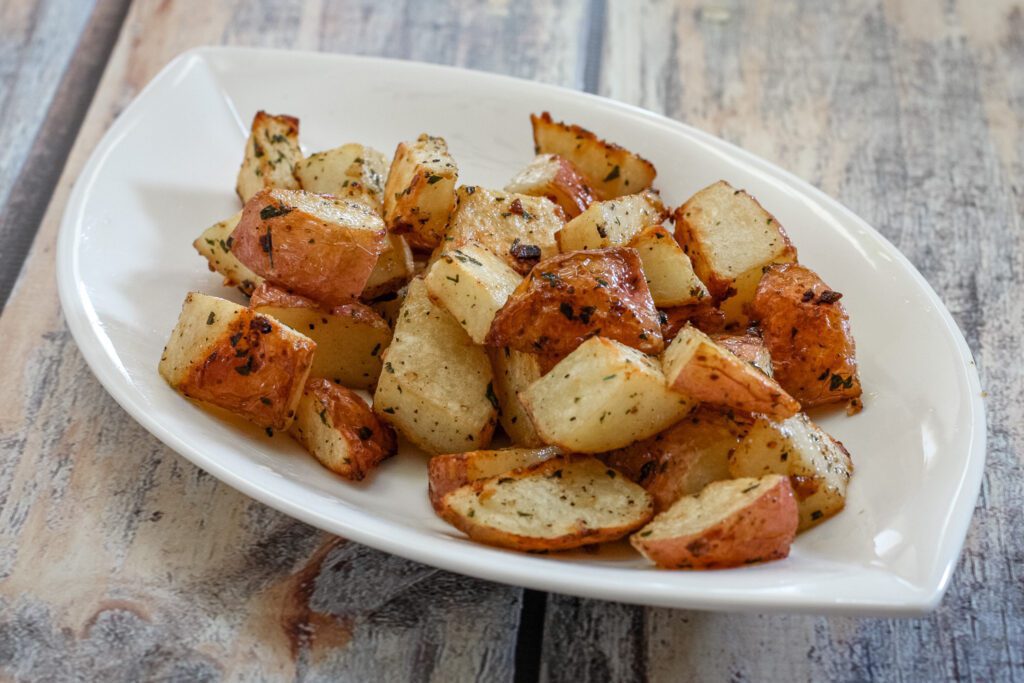
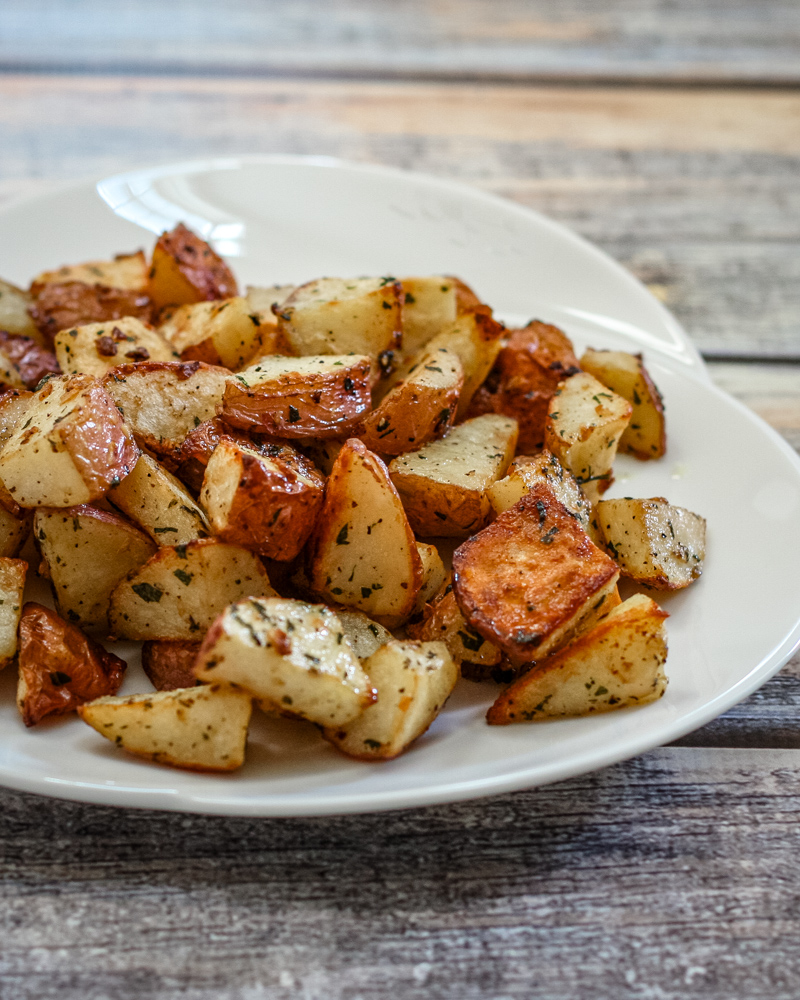
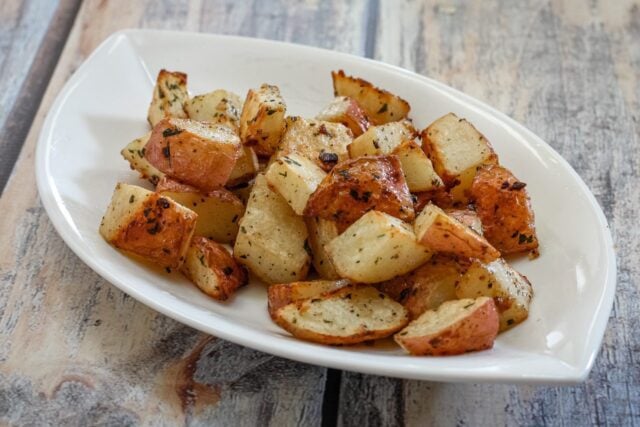
Roasted potatoes make a fantastic side dish that fits into almost any meal—breakfast, lunch, or dinner. Preparation is nearly effortless, and roasting the potatoes in the oven leaves you free to tend to other dishes. I used duck fat in this recipe, but feel free to use another fat. Olive oil, butter, bacon drippings, ghee, or whatever you have on hand.
Why Duck Fat?
Duck fat contains monounsaturated fat and polyunsaturated fats, which are considered healthy fats. The fat is very soft and melts at warm temperatures. It keeps well in the fridge for several months, or freeze it for even longer storage. There is likely an expiration date on the jar or container, but it may be fine past that date. Use your nose to judge whether it’s okay to use, and discard it if it smells rancid.
What You’ll Like About This Dish
Deep savory flavor. Duck fat adds richness you won’t get from oil alone.
Reliable crispiness. High-heat roasting creates golden, crunchy edges.
Easy prep. Just toss, roast, and enjoy—a weeknight-friendly side.
Ingredient Notes
- Potatoes – Yukon Gold or red potatoes both roast beautifully; no need to peel unless you prefer.
- Duck fat – Provides superior crisping and a rich depth of flavor; olive oil works as a substitute.
- Garlic – Fresh garlic adds a bold aromatic note.
- Kosher salt & pepper – Keeps the flavor simple and balanced.
- Fresh herbs – Parsley, green onion tops, or chives add color and a bright finish.
Steps to Make Duck Fat Roasted Potatoes
- Heat the oven and line a large baking sheet.
- Scrub and chop the potatoes into evenly sized pieces.
- Toss the potatoes with duck fat, garlic, salt, and pepper.
- Spread them on the baking sheet in a single layer.
- Roast until browned and crisp, turning occasionally.
- Toss with fresh herbs just before serving.
Tips for Success
- Cut potatoes into similar sizes for even browning.
- Use a large sheet pan so the potatoes can crisp rather than steam.
- Turn them every 15–20 minutes for maximum color.
- Preheat the pan for extra-crisp edges.
Recipe Variations
- Add smoked paprika. A dash brings deeper color and light smokiness.
- Use rosemary or thyme. Add hardy herbs during the roast for more aroma.
- Try lemon zest. Toss with zest right before serving for brightness.
- Make them spicy. Add cayenne or Aleppo pepper to the seasoning mix.
Serving Suggestions
- Serve with steak, roast chicken, or fish.
- Pair with burgers or meatloaf.
- Add them to breakfast plates with eggs.
- Garnish with extra herbs or flaky salt.
How to Store
Refrigerate: Keep leftovers in an airtight container for up to 4 days.
Reheat: Warm in a 425°F oven for 10–12 minutes to restore crispiness.
Freeze: Not recommended, as texture softens after thawing.
Duck Fat Roasted Potatoes
Ingredients
- 2 pounds potatoes, red-skinned or Yukon Gold
- 4 tbsp duck fat, melted, or olive oil
- 3 cloves garlic, minced
- ¾ tsp kosher salt
- ½ tsp freshly ground black pepper
- 1 to 2 tbsp minced fresh parsley or chives (optional)
Recommended Equipment
Instructions
- Heat the oven to 400 F.
- Line a large rimmed baking sheet with foil.
- Scrub the potatoes and peel, if desired. Cut them into 1-inch to 1 1/2-inch chunks and place them in a bowl.2 pounds potatoes
- Combine duck fat or olive oil, minced garlic, kosher salt, and pepper; add to the potatoes and toss to coat.4 tbsp duck fat | 3 cloves garlic | 3/4 tsp kosher salt | 1/2 tsp freshly ground black pepper
- Arrange the potatoes on the prepared baking sheet.
- Roast the potatoes for 45 to 55 minutes, or until they are tender and browned, turning every 15 to 20 minutes. If desired, toss the hot roasted potatoes with the fresh parsley or chives just before serving.1 to 2 tbsp minced fresh parsley or chives (optional)

Nutrition
Disclaimer:
Our nutritional information is based on a third-party application that analyzes the ingredients list to determine the values. The information is meant to be helpful, but should be considered an estimate. Values may differ depending on measurements, brands, serving variations, and database availability.