
This post may contain affiliate links. See our Privacy Policy.
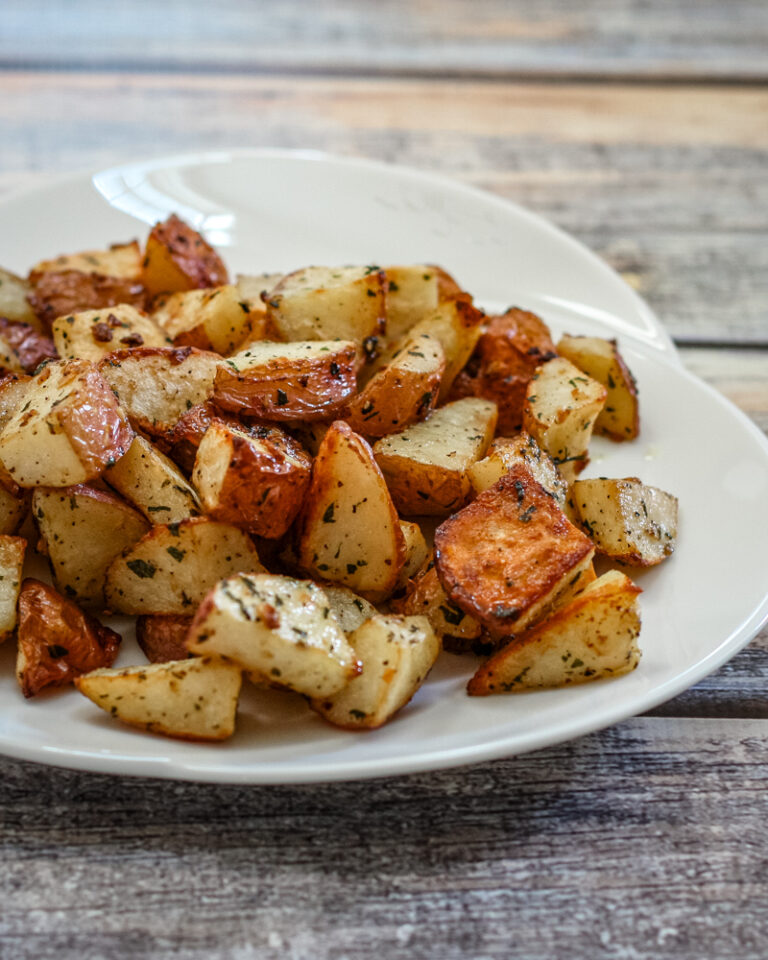
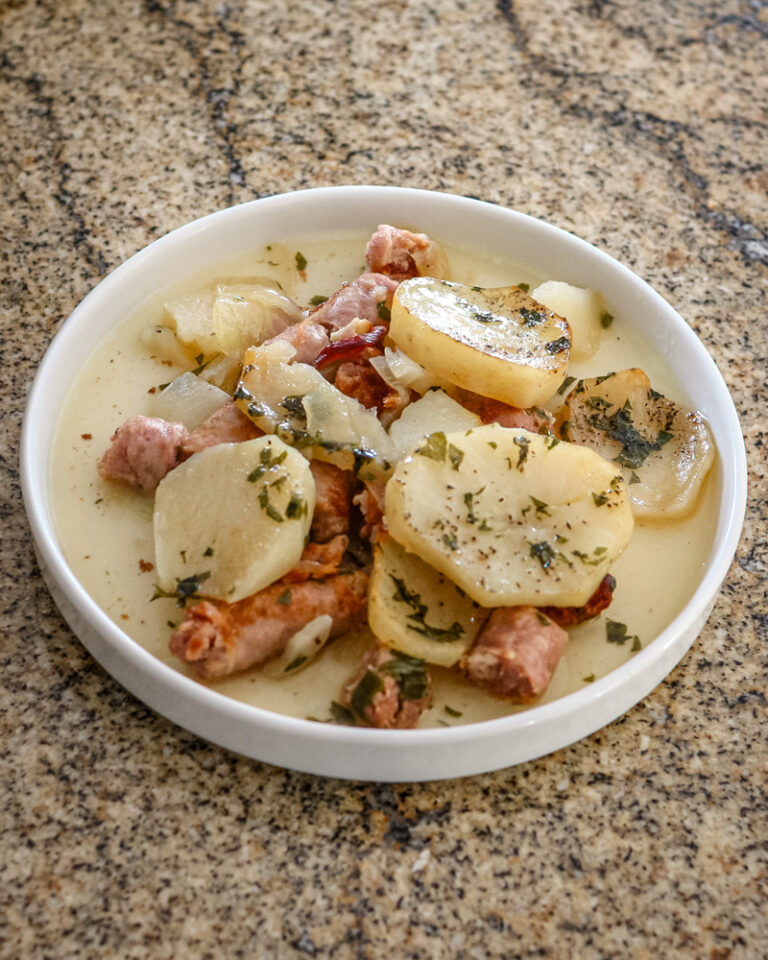
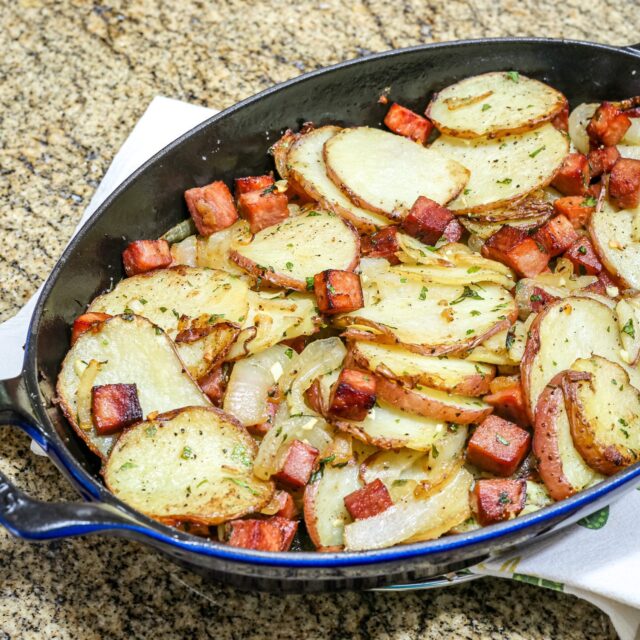
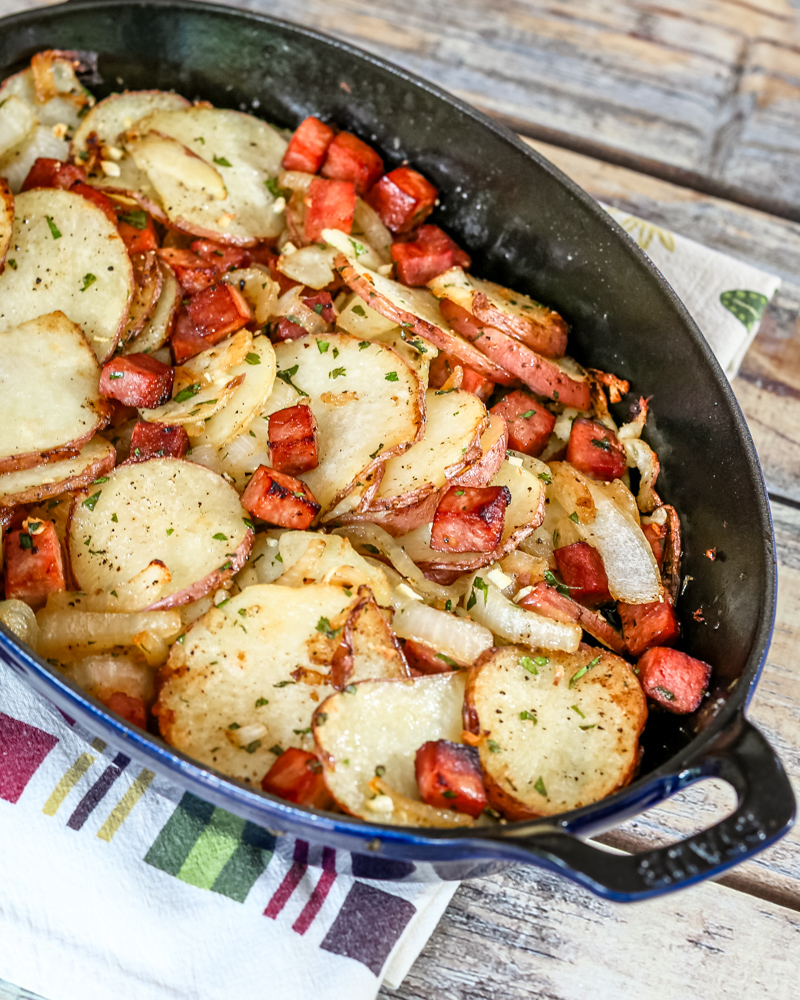
Roasted potatoes and ham make a hearty, comforting one-pan meal that’s perfect for using up leftover ham. The potatoes turn golden and crisp in the oven while the onions soften and sweeten, adding flavor to every bite.
It’s an easy weeknight option that requires only a handful of ingredients and minimal prep. Serve it as a main dish with a simple green salad or enjoy it as a savory brunch entrée alongside eggs.
What You’ll Like About This Dish
Perfect for leftovers. A great way to use up cooked holiday or deli ham.
One-pan ease. Everything cooks together for a simple, satisfying meal.
Crispy and savory. Pan-browned potatoes and roasted edges add texture and flavor.
Ingredient Notes
- Potatoes – Russets or baking potatoes brown nicely and get crisp edges.
- Ham – Leftover baked ham or thick-cut deli ham both work well.
- Onion – Adds sweetness as it softens during cooking.
- Garlic – A quick sauté boosts flavor.
- Oil or fat – Vegetable oil, duck fat, or ghee all work for browning.
- Parsley – Fresh parsley brightens the dish at the end.
Steps to Make Roasted Potatoes and Ham
- Heat the oven and lightly grease a baking dish.
- Brown the sliced potatoes in oil until lightly softened.
- Cook the ham and onion until the onion is translucent.
- Add garlic and cook briefly.
- Combine the potato mixture with parsley, salt, and pepper.
- Transfer everything to the dish and bake until browned and tender.
Tips for Success
- Slice potatoes evenly so they brown at the same rate.
- Don’t crowd the skillet—browning happens best with enough space.
- Use duck fat for extra flavor and crispness.
- Finish under the broiler for a deeper golden crust.
Recipe Variations
- Add bell peppers. A cup of diced red or green pepper adds sweetness.
- Use smoked sausage. Replace the ham with sliced smoked sausage.
- Try herbs. Rosemary or thyme pair beautifully with potatoes.
- Make it cheesy. Sprinkle with shredded cheddar during the last 5 minutes.
Serving Suggestions
- Serve with a crisp green salad or roasted vegetables.
- Pair with eggs for a hearty brunch.
- Add a dollop of sour cream or Greek yogurt.
- Garnish with fresh herbs for color and freshness.
How to Store
Refrigerate: Store leftovers in an airtight container for up to 4 days.
Reheat: Warm in a 400°F oven for 10–12 minutes to restore crispness.
Freeze: Freezing is possible but may soften the potato texture.
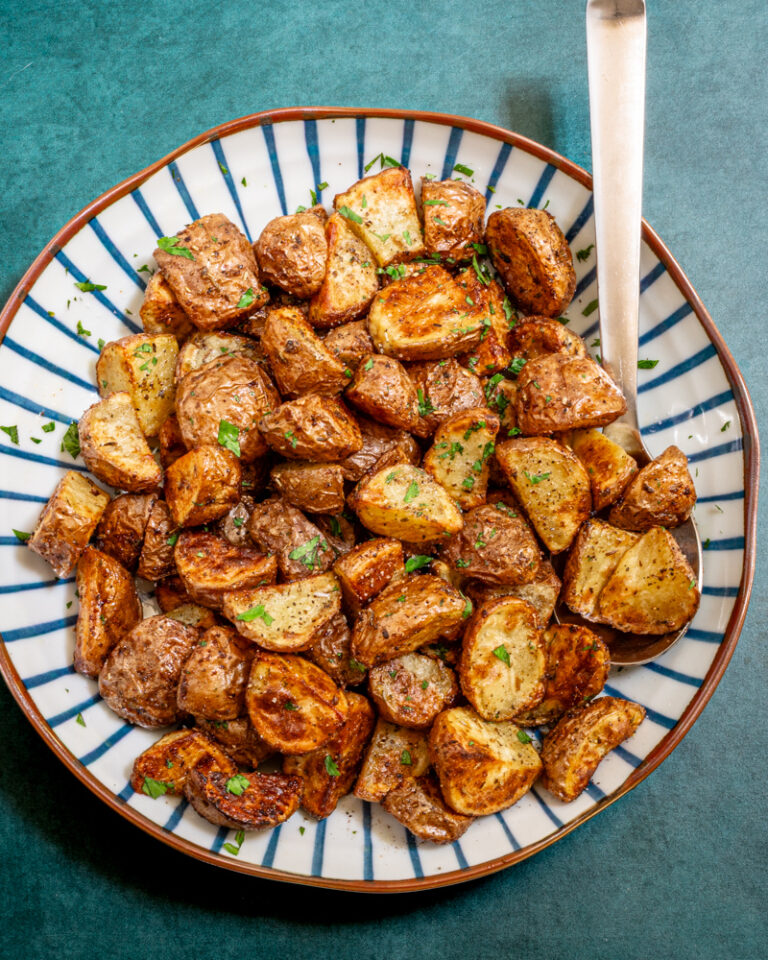
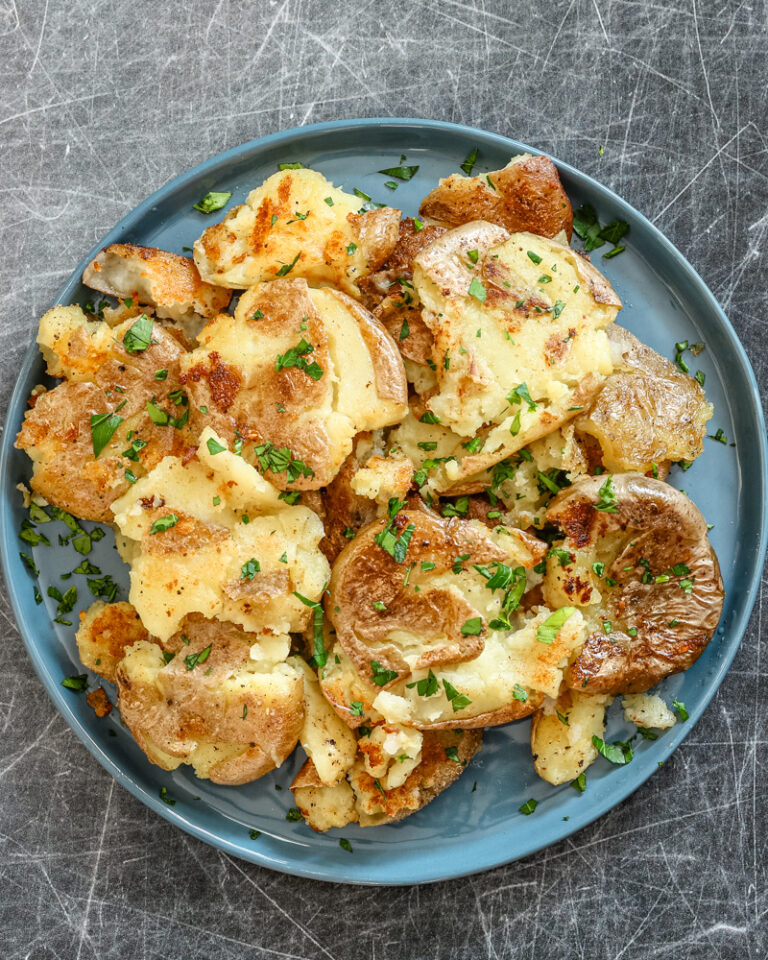
You might like this recipe for crispy fried smashed potatoes. It’s a tasty combination with a creamy sauce. Or, try these delicious duck fat roasted potatoes.

Roasted Potatoes and Ham
Ingredients
- Cooking spray or oil for greasing the baking dish.
- 3 tbsp vegetable oil, plus more as needed
- 1 ½ pounds potatoes, russets or baking potatoes
- 2 cups ham, diced
- 1 large onion, quartered and thinly sliced
- 2 cloves garlic, minced
- 2 tbsp parsley, chopped
- Kosher salt and freshly ground black pepper, to taste
Recommended Equipment
Instructions
- Heat the oven to 425 F. Grease a shallow 2 1/2-quart baking dish.Cooking spray or oil for greasing the baking dish.
- Heat the oil in a large, heavy skillet over medium-high heat. Add the sliced potatoes and cook until they are slightly softened and lightly browned, stirring and turning frequently. Remove the potatoes to a large bowl and set aside.3 tbsp vegetable oil | 1 1/2 pounds potatoes
- Add the diced ham and sliced onion to the skillet and continue cooking until the onions are translucent and the ham begins to brown. Add extra oil or fat to the skillet, if necessary.2 cups ham | 1 large onion
- Add the garlic to the ham and onions and continue to cook for 1 minute longer.2 cloves garlic
- Transfer the ham mixture to the bowl with the potatoes; sprinkle with the parsley, salt, and pepper and toss gently to combine. Turn the potato mixture into the prepared baking dish.2 tbsp parsley | Kosher salt and freshly ground black pepper
- Bake for about 20 to 25 minutes, or until the potatoes are tender, golden brown, and crisp around the edges.
Nutrition
Disclaimer:
Our nutritional information is based on a third-party application that analyzes the ingredients list to determine the values. The information is meant to be helpful, but should be considered an estimate. Values may differ depending on measurements, brands, serving variations, and database availability.