


This post may contain affiliate links. See our Privacy Policy.
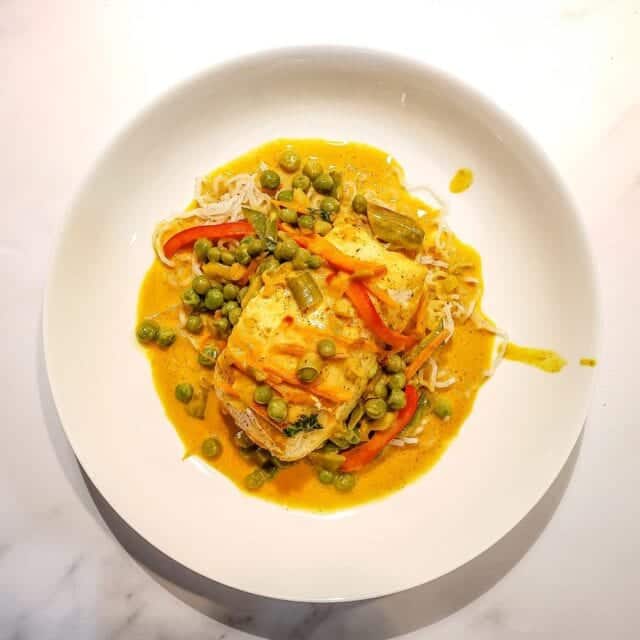
The aromatic Thai-style ginger and coconut curry sauce flavors mild, delicious halibut perfectly. Serve the halibut with the sauce over rice or Asian noodles. Cauliflower rice or konjac noodles are an excellent keto or low carb option.
Red curry sauces vary in heat and spice depending on the brand, so add just 1 tablespoon and then increase the amount to suit your taste and heat tolerance.
What You’ll Like About This Dish
Vibrant flavors. Creamy coconut milk, aromatic ginger, and spicy curry paste create a restaurant-style sauce.
Colorful vegetables. A mix of snow peas, bell peppers, carrots, and peas adds freshness and texture.
Customizable heat. Use more or less curry paste depending on your spice preference.
Beautiful presentation. Flaky halibut over rice or noodles looks elegant and tastes even better.
Ingredient Notes
- Halibut fillets: Mild, firm white fish that bakes beautifully. Cod, haddock, grouper, or mahi-mahi also work.
- Coconut milk: Full-fat for the creamiest sauce; light coconut milk will make a thinner curry.
- Red curry paste: Thai red curry paste varies in heat — start with 1 tablespoon and adjust to taste.
- Ginger + turmeric: Fresh ginger is ideal, and dried turmeric adds warm color and depth.
- Vegetables: Snow peas, carrots, and bell peppers add crunch and color; feel free to swap what you have on hand.
- Coconut aminos / soy sauce: Adds salt and umami. Adjust to taste after the sauce simmers.
Steps to Make Thai-Style Coconut Curry Halibut
- Sauté scallions in olive oil, then add ginger and turmeric.
- Add carrots and snow peas; cook briefly, then add bell pepper and peas. Remove vegetables and set aside.
- Stir coconut milk, curry paste, and lime juice into the pan; simmer and adjust seasonings.
- Return vegetables to the sauce and keep warm.
- Bake the seasoned halibut at 400°F until the fish flakes easily.
- Rewarm the curry sauce and serve the halibut over rice or noodles with sauce spooned over the top.
Tips
- Start with less curry paste if you’re unsure of heat level and add more after tasting the sauce.
- Let the baked halibut rest a few minutes — it stays firmer when plated.
- If the sauce becomes too thick, thin with a splash of water or broth.
- Add lime juice at the end to brighten flavors if needed.
- For softer vegetables, simmer them briefly in the sauce instead of removing them.
Recipe Variations
- Extra-creamy curry. Add a tablespoon of peanut butter or cashew butter to the sauce.
- Green curry version. Swap the red curry paste for green curry paste and add basil.
- Shrimp or chicken. Substitute shrimp (quick-cooking) or thinly sliced chicken breast.
- Vegetable-forward curry. Add mushrooms, zucchini, baby spinach, or bok choy.
- Spicy boost. Add Thai chiles, chili crisp, or a pinch of red pepper flakes.
Serving Suggestions
- Serve over jasmine rice or rice noodles.
- Pair with cucumber salad or steamed broccoli.
- Add naan or flatbread for dipping into the sauce.
- Garnish with cilantro, sliced scallions, or lime wedges.
How to Store
Refrigerate: Store fish and sauce separately in airtight containers for up to 2 days.
Reheat: Warm gently on the stovetop over low heat to avoid overcooking the fish.
Do not freeze: Halibut and coconut curry sauces tend to become watery and lose texture after freezing.
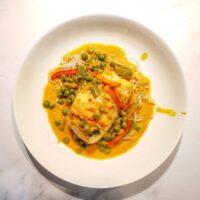
Thai-Style Coconut Curry Halibut
Ingredients
- 1 tbsp olive oil
- 4 scallions, whites/light greens sliced, dark greens sliced and reserved for garnish
- 1 tbsp minced ginger
- 1 tsp dried turmeric
- 1 carrot, cut into matchsticks
- ½ cup snow peas, trimmed and sliced thinly on the diagonal
- ½ red bell pepper, cut into matchsticks
- ½ cup frozen green peas
- 1 13-ounce can coconut milk, (full fat)
- 1 tbsp red curry paste, or to taste
- 1 tsp coconut aminos, or soy sauce to taste
- Cooking oil spray
- 16 ounces halibut, 2 fillets, about 8 ounces each
- Kosher salt and black pepper, to taste
- Hot cooked rice or Asian noodles
- 1 tbsp lime juice, or to taste
- Garnish: chopped cilantro
- Reserved sliced dark green scallion tops
Recommended Equipment
Instructions
- Heat the olive oil in a skillet or medium saucepan over medium heat. Add the scallions (white and light green only) and cook for 3 minutes, stirring constantly. Add the ginger and turmeric and cook, stirring, for 1 minute longer.1 tbsp olive oil | 4 scallions (whites/light greens sliced, dark greens sliced and reserved for garnish) | 1 tbsp minced ginger | 1 tsp dried turmeric
- Add the carrots and snow peas to the skillet and cook for another 2 minutes. Add the bell pepper and peas and cook for 2 minutes longer. Remove the vegetables to a plate and set aside.1 carrot (cut into matchsticks) | 1/2 cup snow peas (trimmed and sliced thinly on the diagonal) | 1/2 red bell pepper (cut into matchsticks) | 1/2 cup frozen green peas
- To the same pan, add the coconut milk and curry paste. Stir to blend and bring to a simmer. Reduce the heat to low and simmer for about 5 minutes. Taste and adjust the curry paste as desired. Add 1 teaspoon coconut aminos or soy sauce, or to taste.1 13-ounce can coconut milk ( (full fat)) | 1 tbsp red curry paste (or to taste) | 1 tsp coconut aminos (or soy sauce to taste)
- Add the vegetables back to the sauce and set aside.
- Heat the oven to 400°F.
- Spray a baking sheet with cooking oil spray. Arrange the halibut fillets on the baking sheet; sprinkle with kosher salt and pepper.16 ounces halibut (2 fillets, about 8 ounces each) | Kosher salt and black pepper (to taste)
- Bake the halibut for about 12 to 15 minutes, or until the fish flakes easily with a fork. The general rule of thumb is 10 minutes per inch of thickness. The minimum safe temperature for fish, according to the USDA, is 145°F.
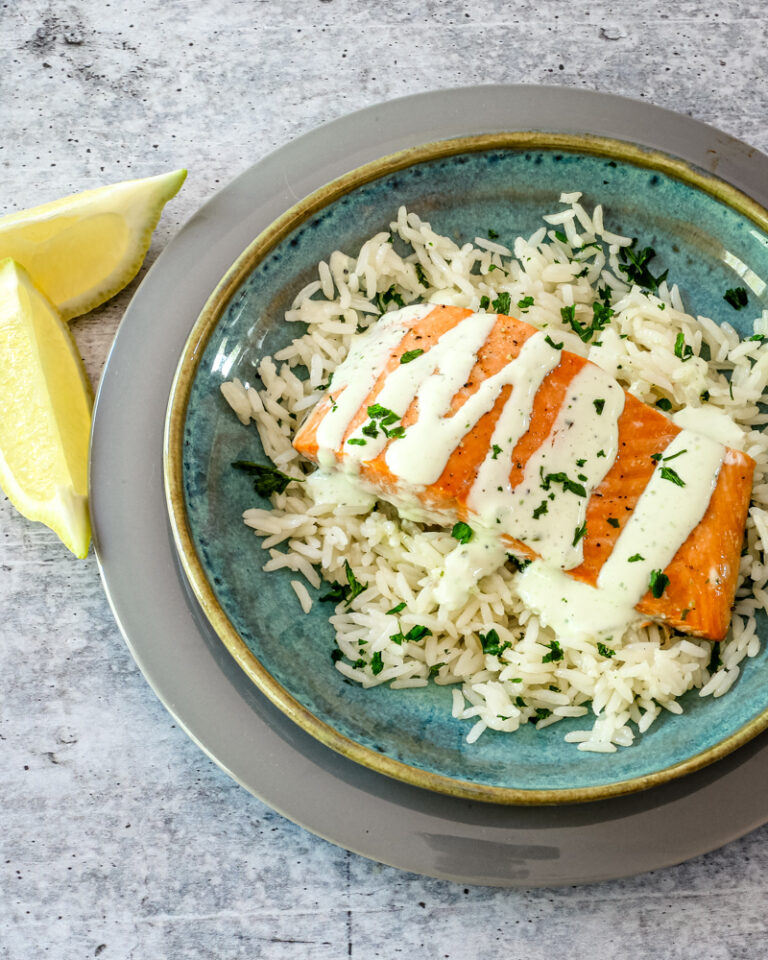
- To plate, reheat the sauce. Add a mound of hot rice or noodles to a plate or wide bowl. Place the halibut on the rice or noodles and spoon the sauce over the fish. Drizzle with lime juice and garnish with the reserved green onion tops and cilantro, if desired.Hot cooked rice or Asian noodles | 1 tbsp lime juice (or to taste) | Garnish: chopped cilantro | Reserved sliced dark green scallion tops
Nutrition
Disclaimer:
Our nutritional information is based on a third-party application that analyzes the ingredients list to determine the values. The information is meant to be helpful, but should be considered an estimate. Values may differ depending on measurements, brands, serving variations, and database availability.

Wow this was good! I only used half a can of coconut milk and instead added some chicken broth and it was amazing! If you don’t have red curry paste you can use a good dried curry powder.