Garlic Pasta With Pancetta and Peas
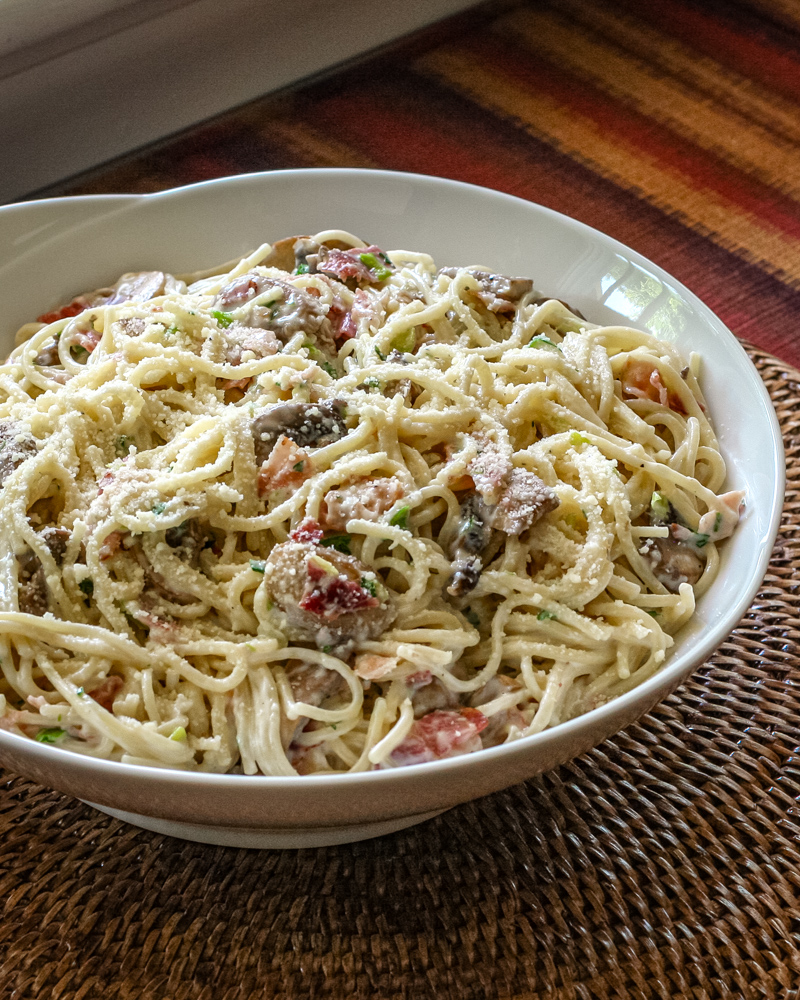
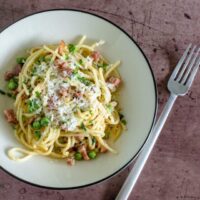
Peas and pancetta make a delicious combination when added to garlicky pasta. A bit of pecorino Romano or Parmesan cheese adds to the amazing flavor in this spaghetti dish!

This post may contain affiliate links. See our Privacy Policy.
Garlic pasta with pancetta and peas makes a delicious dish, and it’s easy enough to prepare and cook any night of the week. The pancetta and garlic can even be prepared ahead of time, giving you a shortcut if your day is particularly busy. Cover and refrigerate the pan of cooked pancetta and garlic until you’re ready to finish the dish with the pasta and remaining ingredients. It couldn’t be easier, and it will please even the pickiest eaters!
I like to use regular spaghetti in the dish, but it’s great with bucatini or thin spaghetti as well. Or use fettuccine or another type of long pasta. Dried pasta is recommended—it may be cooked al dente, which gives it better structure that holds up better than fresh pasta.
Pancetta or Guanciale
Guanciale would be my first choice, but it is really difficult to find locally. Instead of guanciale (cured pork cheek), I used the more accessible pancetta and added an extra tablespoon of olive oil. If you use guanciale, reduce the olive oil to 1 or 2 tablespoons. If you have a hard time finding either one of them, use diced ham or bacon in the dish.
Pecorino Romano is sheep’s milk cheese with a slightly stronger flavor when compared to Parmesan. It’s also saltier. Feel free to use Parmesan cheese, Parmigiano-Reggiano, or use Grana Padano, which is a bit milder than Parmesan cheese.
What You’ll Like About This Dish
Fast and flavorful. Uses minimal ingredients but delivers restaurant-style taste.
Balance of textures. Crispy pancetta, tender pasta, and sweet peas add variety to each bite.
Garlicky and aromatic. Sliced garlic browns gently in the pancetta fat, adding depth without harshness.
Flexible and reliable. Easy to adjust with different cheeses, vegetables, or spices.
Ingredient Notes
- Spaghetti: Classic choice for this dish, but linguine or bucatini also work.
- Salt: Seasoning the cooking water is essential—well-salted pasta water flavors the entire dish.
- Olive oil: Helps brown the pancetta and garlic while carrying their flavors through the pasta.
- Pancetta: Adds salty, savory richness; bacon works as a substitute but has a smokier flavor.
- Garlic: Thinly sliced so it softens and browns gently, adding sweetness and aroma.
- Black pepper: Freshly ground pepper complements the garlic and pancetta.
- Red pepper flakes: Add subtle heat; adjust to taste.
- Pecorino Romano: Sharp and salty; Parmesan is milder but equally delicious. Extra cheese at serving is highly recommended.
- Pasta water: Helps emulsify the cheese and oil into a silky sauce.
- Peas: Their sweetness balances the salty pancetta and sharp cheese; frozen peas work beautifully.
- Parsley: Adds a fresh, bright finish.
Steps to Make Garlic Pasta With Pancetta and Peas
- Boil salted water for the pasta.
- Heat olive oil in a skillet and cook the pancetta until lightly browned.
- Add garlic, black pepper, and red pepper flakes and cook until the garlic softens.
- Cook the spaghetti to al dente.
- Reserve some pasta cooking water, then drain the pasta.
- Add the drained pasta to the skillet and toss to coat with the pancetta mixture.
- Add cheese and splashes of pasta water to form a light sauce.
- Add peas and combine thoroughly.
- Taste and adjust the seasoning, then serve with extra cheese and parsley.
Tips for Garlic Pasta With Pancetta and Peas
- Slice the garlic thinly so it cooks evenly and doesn’t burn.
- Render the pancetta slowly over medium-low heat to achieve crisp edges without overbrowning.
- Reserve more pasta water than you think you’ll need— it creates the silky sauce.
- Stir in the cheese off heat to prevent clumping.
- If using frozen peas, no need to thaw—just stir them in and let the heat of the pasta warm them.
Recipe Variations
- Creamy garlic pancetta pasta. Add 1/4 cup heavy cream or half-and-half when adding the cheese and pasta water. It creates a lightly creamy sauce that still feels balanced and not too rich.
- Lemon-pea pasta. Add the zest of one lemon and a squeeze of juice for brightness; lemon pairs perfectly with pancetta and peas.
- Vegetable boost. Add sautéed mushrooms, spinach, or blistered cherry tomatoes. Their juices help create an even more flavorful sauce.
- Chicken or shrimp version. Stir in cooked diced chicken or a handful of quick-seared shrimp to make this a heartier main dish.
- Herb-forward pasta. Add fresh basil, mint, chives, or thyme to complement the peas and garlic.
- Bacon swap. Substitute bacon for pancetta—it adds delicious smokiness. Reduce added salt slightly.
- Red pepper heat. Increase the crushed red pepper flakes or drizzle with chili oil before serving.
Serving Suggestions
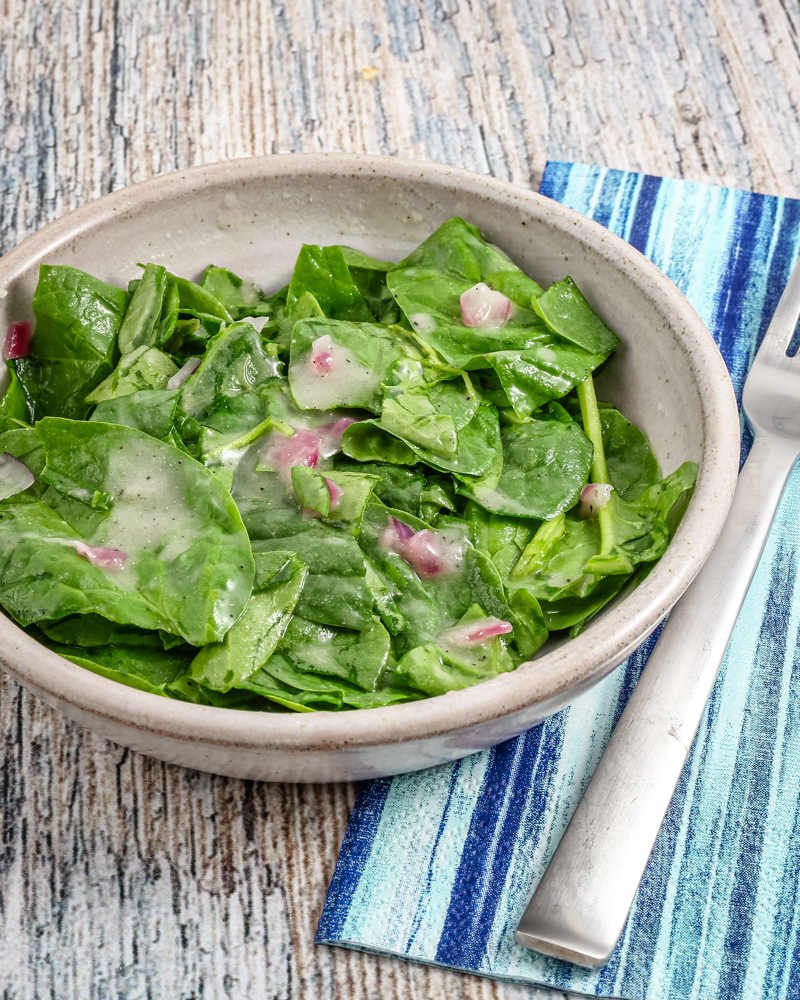
- Green salad: A crisp salad with a simple vinaigrette balances the richness.
- Roasted vegetables: Broccoli, asparagus, or Brussels sprouts pair nicely.
- Garlic bread: Always a hit and perfect for soaking up the pasta sauce. Or serve it with focaccia.
- Soup and pasta night: Pair with minestrone or tomato basil soup.
- White wine: A chilled pinot grigio or sauvignon blanc complements the garlic and pancetta.
How to Store Garlic Pasta
Refrigerate: Store leftovers in an airtight container for up to 3 days.
Reheat: Warm gently in a skillet with a splash of water or broth to loosen the sauce.
Freeze: Not recommended, as pasta and peas can become mushy once thawed.
You might also enjoy this roasted garlic pasta. Or try this fabulous cacio e pepe.
Garlic Pasta With Pancetta and Peas
Ingredients
- 8 ounces spaghetti
- 1 tablespoon salt for the cooking water plus more to taste, as needed
- 3 tablespoons olive oil
- 4 ounces pancetta
- 3 cloves garlic, thinly sliced
- ¼ teaspoon freshly ground black pepper
- ¼ teaspoon crushed red pepper flakes
- 1 ounce pecorino romano cheese, grated, plus more for serving
- ¼ to ½ cup pasta cooking water
- ¾ cup peas, steamed
- 2 teaspoons chopped parsley, for garnish, optional
Instructions
- Fill a large pot with about 3 quarts of water and add 2 teaspoons of salt. Place it over high heat.
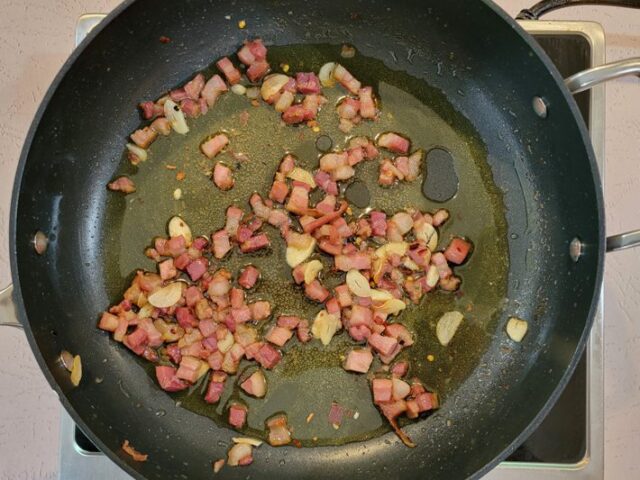
- Heat the olive oil in a large, deep skillet or sauté pan over medium-low heat. When the oil is hot, add the pancetta to the pan and cook for about 8 minutes, until lightly browned and most of the fat is rendered. Add the garlic and both peppers and continue cooking until the garlic is softened and lightly browned.

- Cook the spaghetti to al dente, following the package directions.
- Reserve about 1/3 cup of the pasta cooking water and drain the spaghetti.
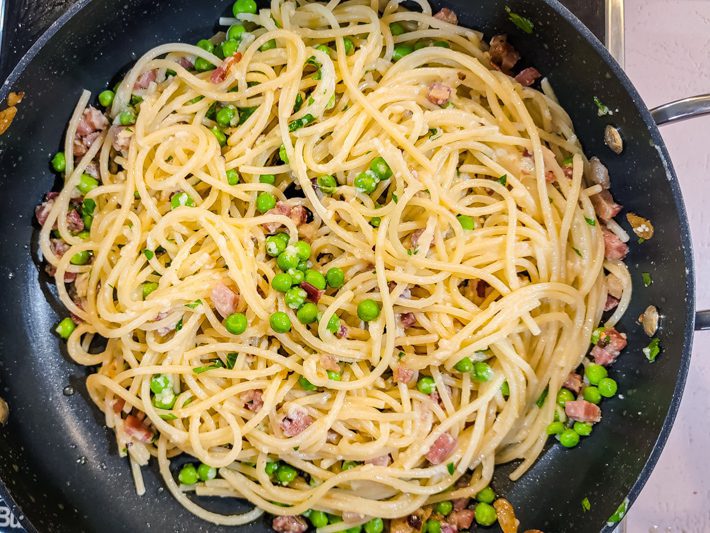
- Transfer the spaghetti to the skillet with the pancetta and stir to coat with the oil. Add the cheese and a few tablespoons of the pasta water and continue stirring and tossing. Add the peas and combine thoroughly. Taste and adjust the seasonings with more salt, if needed.
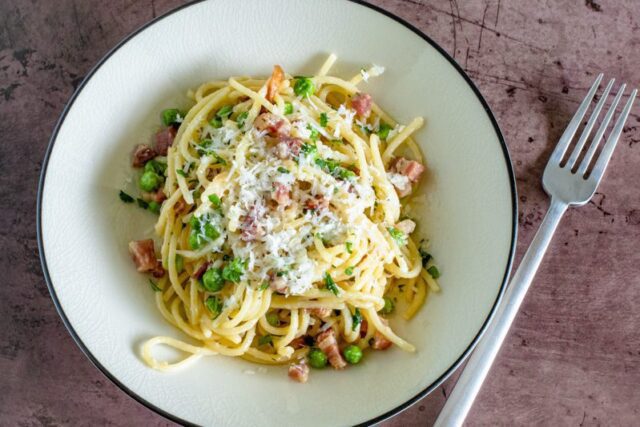
- Serve the pasta with extra grated cheese and a light sprinkle of parsley.

Nutrition
Disclaimer:
Our nutritional information is based on a third-party application that analyzes the ingredients list to determine the values. The information is meant to be helpful, but should be considered an estimate. Values may differ depending on measurements, brands, serving variations, and database availability.