

This post may contain affiliate links. See our Privacy Policy.
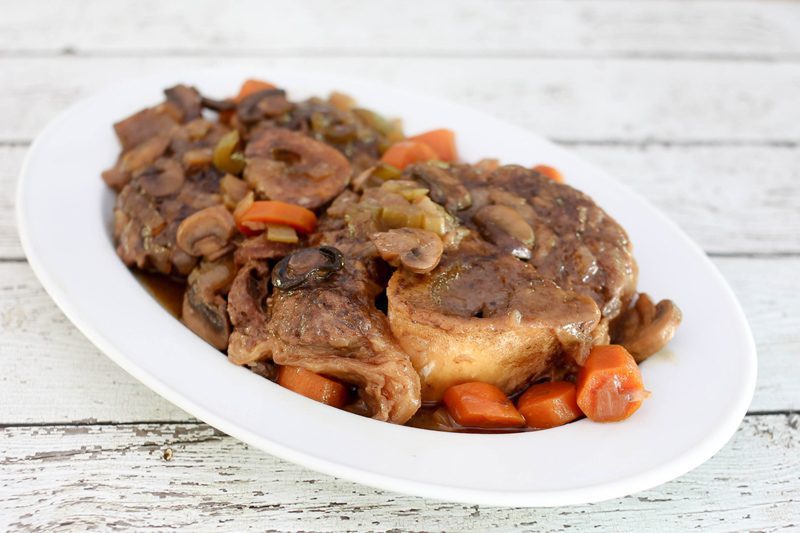
Beef shanks are an economical cut that shine with long, slow cooking. As they braise, the connective tissue breaks down, creating incredibly tender meat and a deeply flavorful gravy.
This is the kind of comforting weekend meal that rewards patience. Serve the beef shanks with mashed potatoes or noodles to soak up the sauce, and pair with a dry red wine for a simple, satisfying dinner.
What You’ll Like About This Recipe
Budget-friendly cut. Beef shanks deliver big flavor without a high price tag.
Rich, savory gravy. Red wine and vegetables create a deeply satisfying sauce.
Perfect for weekends. Mostly hands-off once it’s in the oven.
Ingredient Notes
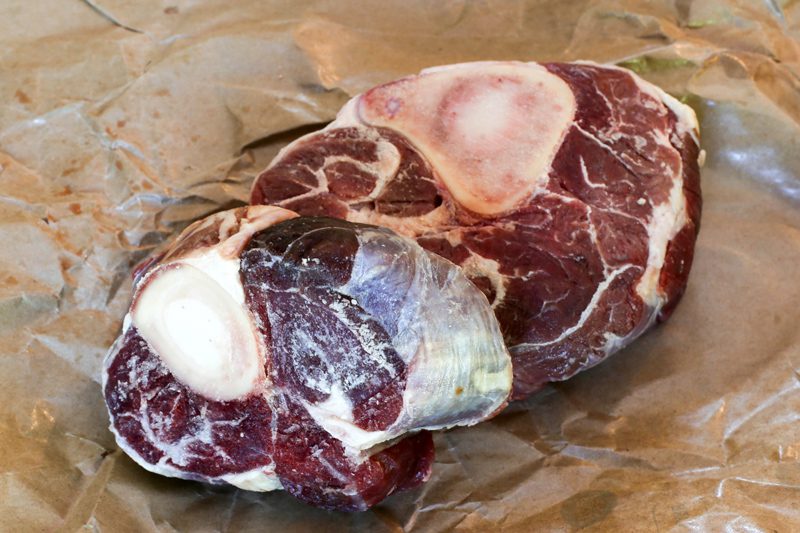
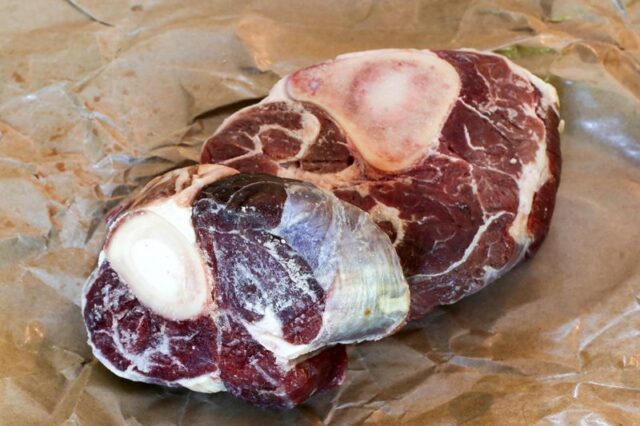
- Beef shanks – Look for thick, meaty pieces with good marbling.
- Flour – Used both for dredging and thickening the gravy.
- Red wine – Choose a dry wine you enjoy drinking.
- Beef broth – Low-sodium works best so the sauce doesn’t become overly salty.
- Mushrooms – Add depth and soak up the braising liquid.
Steps to Make Braised Beef Shanks
- Heat the oven and prepare a Dutch oven or heavy oven-safe pan.
- Dredge the beef shanks in seasoned flour.
- Brown the beef shanks on both sides and set aside.
- Sauté the mushrooms until browned, then remove.
- Cook the onion, celery, carrots, and garlic until softened.
- Add the wine and simmer briefly to reduce.
- Return the beef and mushrooms to the pan with the broth.
- Cover and braise in the oven until the meat is very tender.
- Remove the beef and vegetables and keep warm.
- Strain and skim the cooking liquid.
- Simmer the liquid and thicken with a flour slurry.
- Season to taste and serve.
Tips
- Brown well. Good browning adds depth to the finished gravy.
- Use a heavy pot. A Dutch oven maintains steady heat during long cooking.
- Be patient. Beef shanks need time to become tender.
- Skim the fat. Removing excess fat keeps the gravy rich but not greasy.
Recipe Variations
- Herb addition. Add thyme or a bay leaf to the braising liquid.
- Tomato depth. Stir in a tablespoon of tomato paste before adding the wine.
- Vegetable swap. Add parsnips or turnips in place of some of the carrots.
- No wine. Replace the wine with additional beef broth.
Serving Suggestions
- Serve over mashed potatoes or buttered noodles.
- Pair with crusty bread or dinner rolls.
- Add a simple green salad for balance.
- Finish with chopped parsley for freshness.
How to Store
Refrigerate: Store beef shanks and gravy in an airtight container for up to 4 days.
Freeze: Freeze cooled beef shanks with gravy for up to 3 months.
Reheat: Reheat gently on the stovetop or in a low oven until warmed through.
Refresh: Add a splash of broth or water if the gravy thickens too much.
Frequently Asked Questions
Braised Beef Shanks
Ingredients
- 4 pounds meaty beef shanks
- 1 tsp kosher salt, plus more to taste as needed
- ¼ tsp freshly ground black pepper, plus more to taste as needed
- ¼ cup all-purpose flour
- 4 tbsp vegetable oil, divided
- 8 ounces sliced mushrooms
- 1 large onion, chopped
- 1 cup thinly sliced celery
- 2 large carrots, cut into 1-inch chunks
- 2 large cloves garlic, minced
- 1 cup dry red wine
- 2 cups low-sodium beef broth
- 1 ½ tbsp all-purpose flour for thickening the broth
- 2 tbsp cold water
Recommended Equipment
- Fat separator or strainer
Instructions
- Heat the oven to 300°F.
- Sprinkle the beef shanks all over with the kosher salt and pepper. Put 1/4 cup of flour in a wide, shallow bowl or plate, and dredge the beef, coating it thoroughly.4 pounds meaty beef shanks | 1 tsp kosher salt (plus more to taste as needed) | 1/4 tsp freshly ground black pepper (plus more to taste as needed) | 1/4 cup all-purpose flour

- Heat 2 tablespoons of the vegetable oil in a large Dutch oven over medium-high heat. Cook the beef shanks, turning to sear all sides, for about 7 to 9 minutes in total. Remove the beef shanks to a plate and set aside.2 tbsp vegetable oil (divided)
- Reduce the heat to medium. Add the mushrooms to the Dutch oven with another tablespoon of vegetable oil and cook for about 3 to 5 minutes, until browned and tender. Remove the mushrooms to the plate with the beef shanks and set aside.8 ounces sliced mushrooms | 1 tbsp vegetable oil (divided)
- Add the onion, celery, carrots, and garlic to the Dutch oven with another tablespoon of oil. Cook, stirring constantly, until the onions are translucent, about 5 minutes. Season with a light sprinkle of kosher salt and black pepper. Remove the vegetables to a plate.1 tbsp vegetable oil (divided) | 1 large onion (chopped) | 1 cup thinly sliced celery | 2 large carrots (cut into 1-inch chunks) | 2 large cloves garlic (minced)
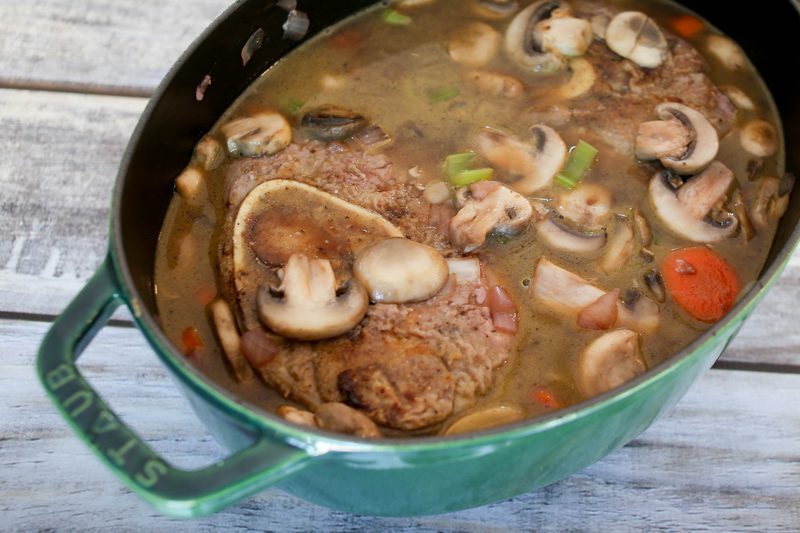
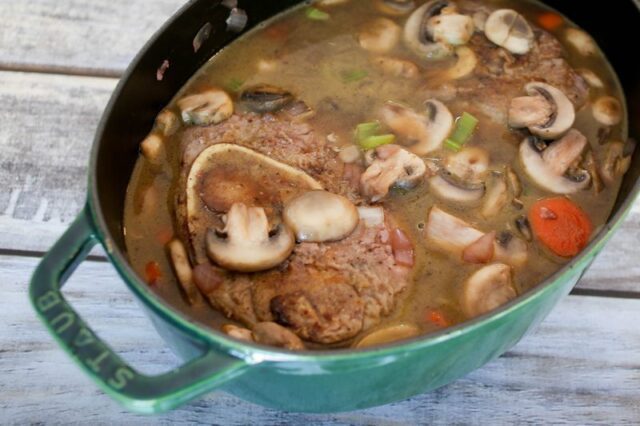
- Add the wine and beef broth to the Dutch oven and bring to a boil. Simmer for 5 minutes to reduce slightly. Add the beef shanks, mushrooms, and vegetables back to the Dutch oven.1 cup dry red wine | 2 cups low-sodium beef broth
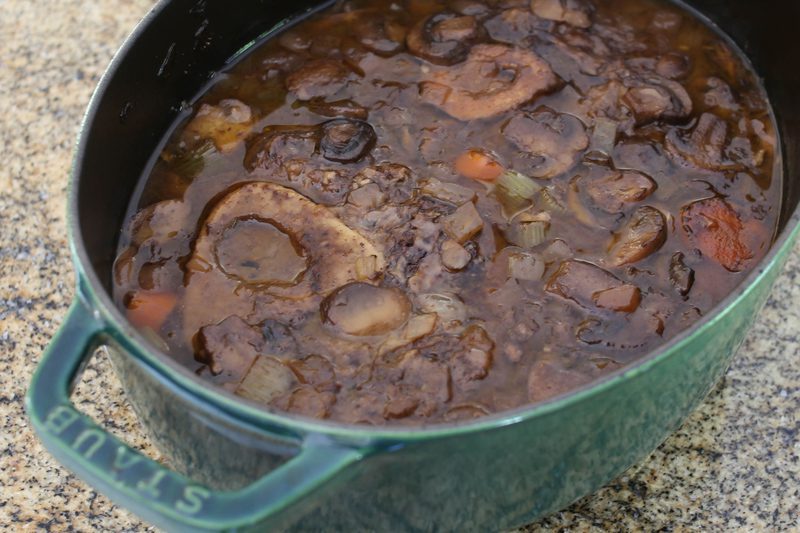
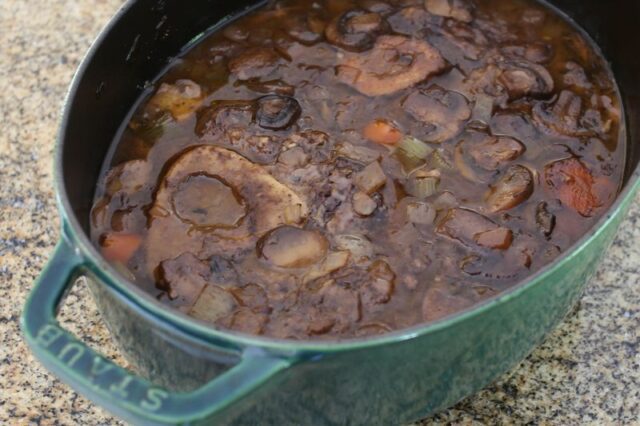
- Cover the pan and bake for about 3 to 4 hours, until the meat is tender and coming away from the bone.
- Remove the beef and vegetables to a plate and keep warm while you make the gravy.
- Strain the liquids and skim off fat. A fat separator with strainer works well for this, or you could place a mesh strainer over a bowl. Pour the skimmed liquid back into the Dutch oven, then add any solids left in the strainer to the beef shanks and vegetables.
- Put the pan with the liquids over medium heat and bring to a boil. Simmer for about 3 to 5 minutes to concentrate flavors. Taste and adjust the seasonings.
- Put 1 1/2 tablespoons of flour into a small bowl or cup. Add 2 tablespoons of cold water and whisk until smooth. Stir the mixture into the simmering liquids, and cook, stirring, for 2 to 3 minutes, until thickened and smooth. Taste the gravy and add salt and pepper, as needed.1 1/2 tbsp all-purpose flour for thickening the broth | 2 tbsp cold water
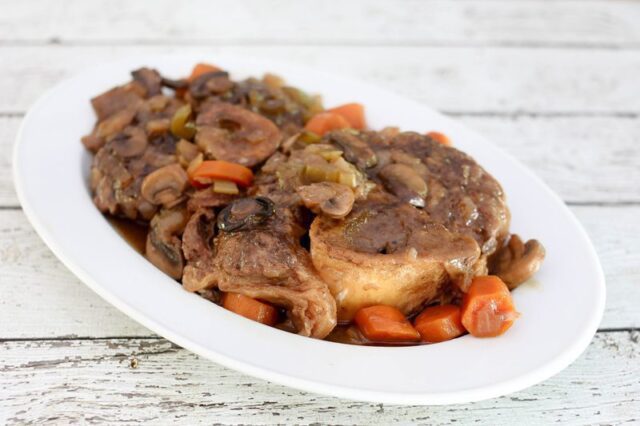
- Serve the beef shanks with the gravy and vegetables, along with mashed or boiled potatoes or hot cooked noodles.
Nutrition
Disclaimer:
Our nutritional information is based on a third-party application that analyzes the ingredients list to determine the values. The information is meant to be helpful, but should be considered an estimate. Values may differ depending on measurements, brands, serving variations, and database availability.