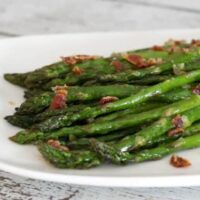
Asparagus With Bacon and Mustard Sauce
Bacon, shallots, and a tangy mustard sauce make this asparagus shine! It’s the perfect side dish to serve with steaks or a Sunday roast.

This post may contain affiliate links. See our Privacy Policy.
Asparagus is already a wonderfully flavorful vegetable, but when you pair it with smoky bacon, tender sautéed shallots, and a bright, tangy mustard sauce, it becomes something truly special. This dish highlights how simple ingredients—just a handful—can create a bold, elegant side that complements everything from steak and roast pork to chicken or fish. The mustard cuts through the richness, while the bacon adds depth and texture.
Because the asparagus is steamed gently before joining the skillet, it stays crisp-tender and vibrant, never mushy or overcooked. The final toss in the warm bacon-mustard mixture ensures every spear is coated in flavor. It’s quick enough for weeknights yet refined enough for serving guests or anchoring a Sunday dinner.
What You’ll Like About This Recipe
Bacon adds smoky depth. A few strips go a long way, giving the dish a savory backbone without overwhelming the delicate asparagus.
Bright, tangy mustard sauce. Dijon mustard blends into the warm bacon drippings and shallots, creating a simple sauce that brings zip and balance to the rich flavors.
Perfect asparagus texture. Steaming the spears briefly keeps them crisp-tender with a vibrant color, ensuring they hold up beautifully in the skillet.
Fast and unfussy. With minimal prep and short cook time, this side comes together in under 20 minutes—ideal for busy evenings or adding variety to a simple meal.
Pairs with almost anything. Whether you’re serving steak, roast chicken, pork tenderloin, or salmon alternatives, this versatile vegetable dish fits right in.
Ingredient Notes
- Bacon – Adds smoky flavor and provides drippings that form the base of the mustard sauce. I used thick, but regular is just fine.
- Shallot – Softer and sweeter than onion; it melts into the drippings, deepening the sauce’s flavor.
- Asparagus – Look for spears of similar thickness so they cook evenly. Trim away the tough woody ends. The ends of asparagus should be tightly closed and compact. If they look mushy or spread a bit, discard them.
- Dijon mustard – Smooth and tangy, it emulsifies with the drippings to create a quick, flavorful coating. I often use a gourmet “old world” brown mustard.
- Salt and pepper – Used lightly to finish the dish and enhance the natural flavors.
How to Make It
- Start by cooking the bacon until just crisp so it can crumble easily without over-browning. The rendered drippings form the flavorful base of the sauce.
- Sauté the shallots in the bacon drippings until soft and fragrant. This helps the shallots melt into the sauce and develop a mild sweetness.
- Trim the asparagus by snapping or cutting off the woody ends. Steaming ensures the spears cook gently and evenly without taking on water or losing their color.
- Steam the asparagus over boiling water until crisp-tender. Removing them promptly prevents overcooking and helps them hold their shape when tossed in the skillet.
- Stir Dijon mustard into the skillet with the softened shallots and crumbled bacon, creating a warm, emulsified coating. Add the asparagus and toss gently so the spears are evenly coated.
- Taste and adjust seasoning with salt and pepper, keeping in mind the natural saltiness of the bacon and mustard.
Tips
- Choose asparagus spears of similar thickness to ensure even cooking.
- Don’t overcook the bacon; slightly crisp pieces crumble well and mix evenly into the sauce.
- If the sauce feels too thick, add a splash of the asparagus steaming water to loosen it.
- Use low heat when adding the mustard so it warms gently without scorching.
- For very thin asparagus, reduce steaming time to prevent over-softening.
Recipe Variations
- Make it creamy. Add a splash of heavy cream or half-and-half to the skillet after stirring in the mustard for a richer, silkier sauce.
- Add lemon brightness. A squeeze of lemon juice or a bit of zest gives the dish a fresh, citrusy lift.
- Try whole-grain mustard. It adds texture and a more robust mustard flavor while still complementing the asparagus.
- Use pancetta instead of bacon. Pancetta offers similar richness with a slightly different savory profile.
- Include fresh herbs. Parsley, tarragon, or chives add color and a bright finish to the warm asparagus.
Serving Suggestions
- Serve with steaks, pork tenderloin, or roast chicken for a flavorful, well-balanced dinner.
- Add roasted potatoes, rice, or crusty bread to complete the plate and soak up the sauce.
- Pair with other spring vegetables—like peas or baby carrots—for a seasonal side dish trio.
- Choose to top with extra crumbled bacon or a sprinkle of fresh herbs for a polished finish.
How to Store
Refrigerate: Cool leftovers promptly and store them in an airtight container for up to 3 days. The asparagus will soften slightly but remain flavorful.
Freeze: Freezing is not recommended since asparagus loses its texture once thawed.
Reheat: Warm gently in a skillet over low heat or microwave in short intervals until heated through. Add a splash of water if the sauce thickens too much.
Frequently Asked Questions
Asparagus With Bacon and Mustard Sauce
Ingredients
- 3 strips bacon
- 1 tablespoon shallot, minced
- 1 pound asparagus spears
- 1 tablespoon Dijon mustard
- Dash salt
- Dash pepper
Instructions
- n a large skillet, cook the bacon over medium heat until just crisp. Remove to paper towels to drain; crumble and set aside.
- Add the minced shallots to the bacon drippings and cook just until they are translucent.
- Meanwhile, cook the asparagus. Trim the asparagus, cutting or snapping off the woodier part of the stalks.
- Bring about one inch of salted water to a boil in a pot. Place a steamer insert in the pot and place the trimmed spears in it, preferably in a single layer. Cover the pot and cook for 3 minutes (about 2 minutes for very thin spears). Remove the asparagus to a platter.
- Add the mustard and crumbled bacon to the skillet with the shallots; stir to blend. Add the asparagus and toss gently to coat. Continue to cook over low heat just until heated through.
- Taste and adjust seasonings, as needed.
Nutrition
Disclaimer:
Our nutritional information is based on a third-party application that analyzes the ingredients list to determine the values. The information is meant to be helpful, but should be considered an estimate. Values may differ depending on measurements, brands, serving variations, and database availability.