

This post may contain affiliate links. See our Privacy Policy.
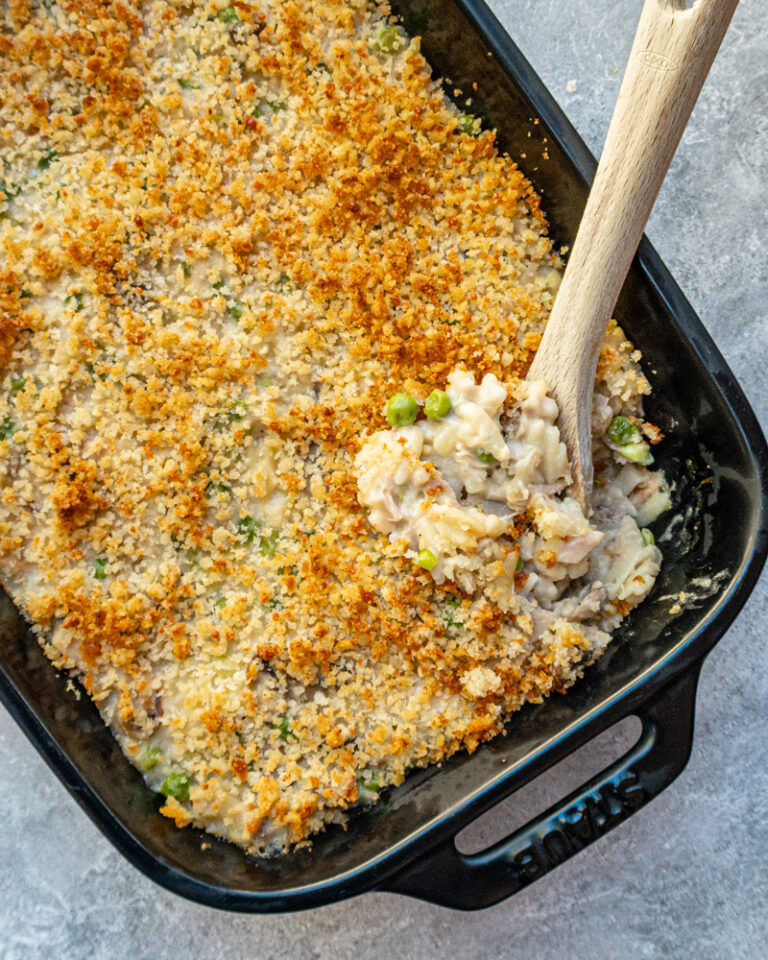
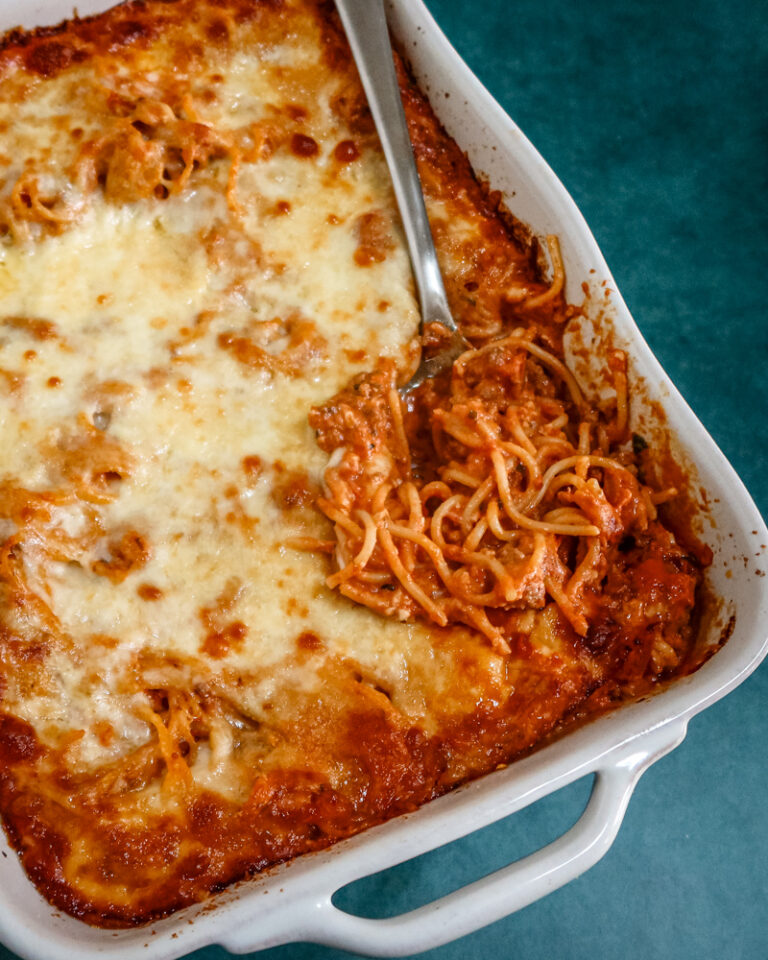
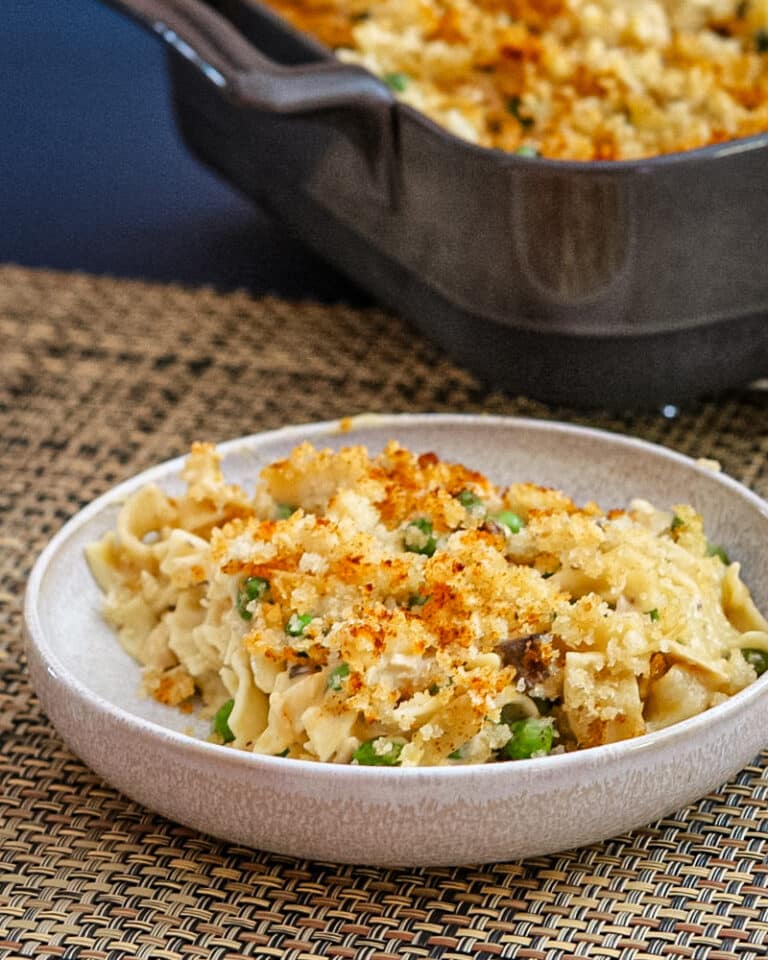
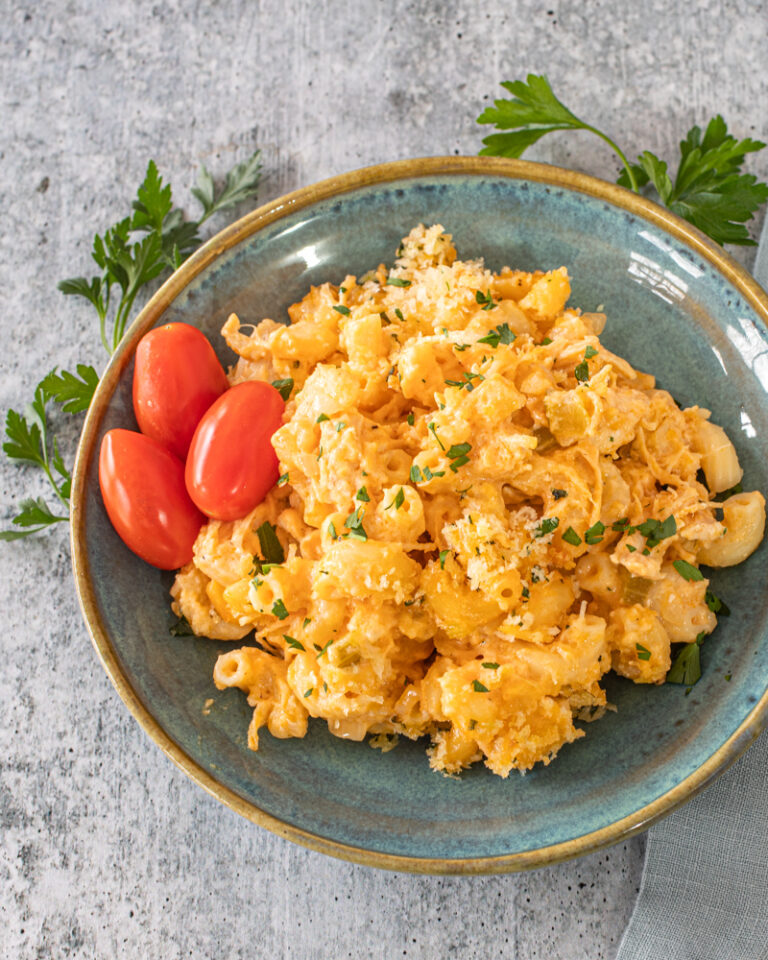
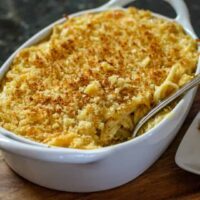
This comforting spaghetti casserole is a cheesy, creamy, oven-baked favorite that’s perfect for weeknights or family gatherings. The cheese sauce is made from scratch with Cheddar and Pecorino Romano, giving it bold, savory flavor. Tossed with pasta and finished with a buttery breadcrumb topping, it’s a guaranteed crowd-pleaser.
While spaghetti is the classic choice, this dish is equally delicious with linguine, bucatini, or perciatelli. And it’s flexible—stir in cooked chicken, bacon, or vegetables to make it your own. A satisfying and simple bake that’s hard to resist!
What You’ll Like About This Dish
Cheesy and comforting. A rich, creamy cheese sauce coats every strand of pasta.
Crispy topping. Buttery breadcrumbs and extra cheese make the perfect golden crust.
Flexible and filling. Easily adapted with proteins or vegetables for a heartier casserole.
Ingredient Notes
- Spaghetti or similar pasta: Use long pasta like spaghetti, linguine, or bucatini. Cook until al dente.
- Butter: Used in both the roux and for the breadcrumb topping.
- Flour: Thickens the cheese sauce—make sure to cook the roux briefly to eliminate raw flavor.
- Milk: Whole milk or 2% both work well for a smooth, creamy sauce.
- Mustard powder: Enhances the flavor of the cheese without tasting mustardy.
- Cheddar cheese: Choose sharp or extra sharp for bold flavor.
- Pecorino Romano or Parmesan: Adds salty, umami depth to the sauce and topping.
- Breadcrumbs: Soft, fresh crumbs work best—sourdough or sandwich bread are good choices.
Steps to Make Spaghetti Cheese Casserole
- Cook the pasta in boiling salted water; drain and set aside.
- Preheat the oven to 350°F and butter a 2½-quart baking dish.
- In a saucepan, melt 4 tablespoons of butter and stir in the flour to make a roux.
- Cook the roux for 1 minute, then add mustard, salt, pepper, and milk gradually. Cook until thickened.
- Stir in most of the Cheddar and Romano cheeses, reserving some for topping.
- Toss the hot pasta with the cheese sauce, then pour into the prepared baking dish.
- Sprinkle reserved cheeses over the top.
- Melt remaining butter and mix with breadcrumbs. Sprinkle over the cheese layer.
- Bake for 25 minutes, or until golden brown on top.
Tips for a Perfect Pasta Casserole
- Use freshly grated cheese for best melting and flavor.
- Toast the breadcrumbs lightly in a skillet if you want extra crunch.
- Cook the pasta just to al dente—it will soften more in the oven.
- Let the casserole rest for 5 minutes before serving to firm up.
Recipe Variations
- Meat. Add diced cooked bacon or ham for smoky, savory depth.
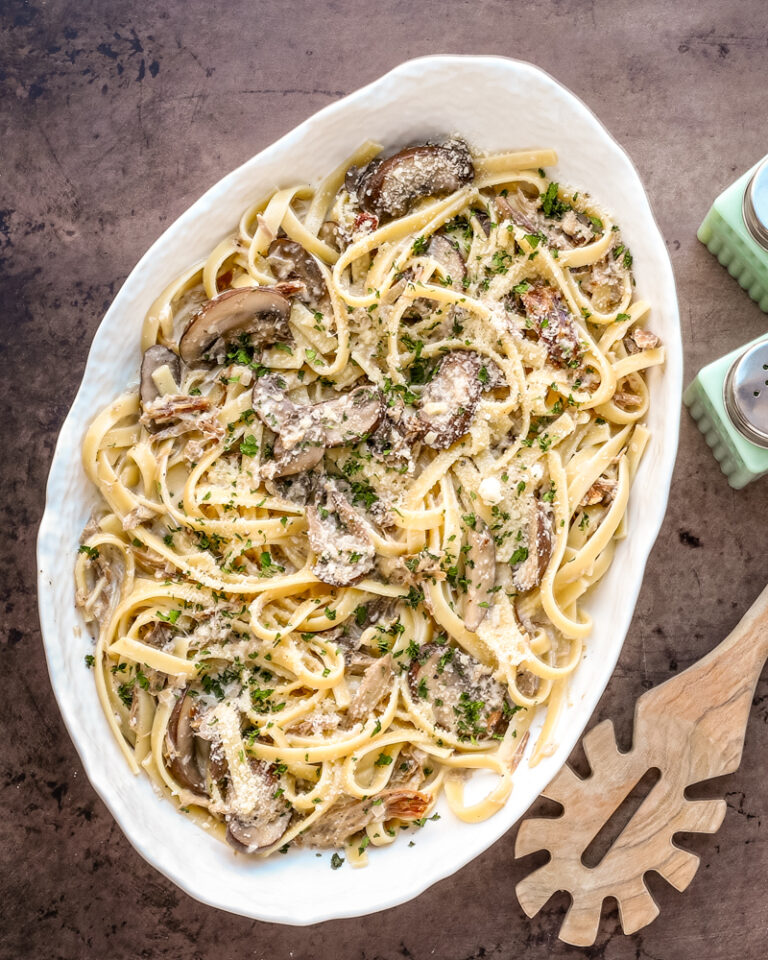
- Vegetables. Stir in sautéed mushrooms, onions, or peppers for flavor and texture.
- Herbs. Add chopped chives, parsley, or thyme to the cheese sauce.
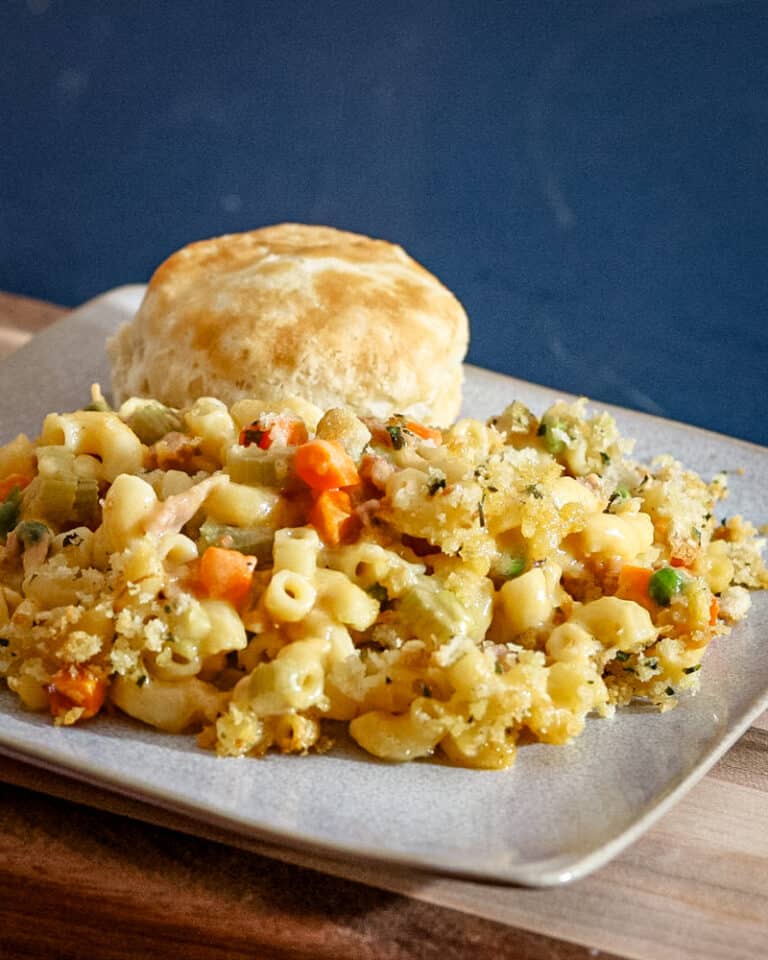
- Poultry. Mix in chopped cooked chicken or turkey for a complete, protein-packed meal.
- Spicy twist. Add a pinch of cayenne pepper or red pepper flakes to the cheese sauce.
Serving Suggestions
- Serve with a crisp green salad or sautéed greens for balance.
- Pair with garlic bread or warm rolls to soak up extra sauce.
- Add a dash of hot sauce or fresh cracked pepper at the table.
- Offer steamed broccoli or glazed carrots as a side.
- Pack leftovers for an easy next-day lunch.
How to Store and Reheat
Refrigerate: Store leftovers in a covered container for up to 4 days.
Reheat: Warm individual portions in the microwave or reheat covered in a 325°F oven until hot.
Freeze: You can freeze the unbaked casserole (without topping) for up to 2 months. Thaw overnight in the fridge, add topping, and bake as directed.
Spaghetti Cheese Casserole
Ingredients
- 1 tbsp kosher salt for the pasta water
- 12 ounces spaghetti or bucatini
- Butter or nonstick cooking spray, for the baking dish
- 6 tbsp butter, divided
- ¼ cup all-purpose flour
- 1 tsp ground mustard powder
- ⅛ tsp cayenne pepper, or to taste
- 2 ¼ cups milk
- Kosher salt and freshly ground black pepper, to taste
- 2 cups shredded sharp cheddar cheese, divided
- ¾ cup grated Parmesan cheese, divided
- 1 cup soft bread crumbs
Recommended Equipment
- Saucepan
Instructions
- Bring a large pot of water to a boil with 1 tablespoon of kosher salt. Add the spaghetti or bucatini and cook following package directions for al dente. Drain and set aside.1 tbsp kosher salt for the pasta water | 12 ounces spaghetti or bucatini
- Heat oven to 350°F. Lightly butter a 2 1/2-quart baking dish or spray it lightly with nonstick cooking spray.Butter or nonstick cooking spray
- Meanwhile, melt 4 tablespoons of the butter in a medium saucepan over medium heat. Blend in the flour until smooth and bubbly. Cook, stirring, for 1 minute. Stir in the mustard powder and add the cayenne. Gradually stir in the milk. Cook, stirring, until thickened. Taste and season with kosher salt and freshly ground black pepper.4 tbsp butter | 1/4 cup all-purpose flour | 1 tsp ground mustard powder | 1/8 tsp cayenne pepper | 2 1/4 cups milk | Kosher salt and freshly ground black pepper
- Set aside about 2/3 cup of the cheddar cheese and 1/4 cup of the Parmesan for topping.⅔ cups shredded sharp Cheddar cheese | ¼ cup grated Parmesan cheese
- Reduce the heat to low, add the remaining 1 1/3 cups of shredded cheddar cheese and 1/2 cup of grated Parmesan cheese to the sauce, and cook, stirring, just until the cheese has melted.1 ⅓ cups shredded sharp Cheddar cheese | ½ cup grated Parmesan cheese
- Combine the cheese sauce and the hot, drained pasta.
- Pour the pasta mixture into the prepared baking dish and top with the reserved cheese, sprinkling it evenly over the casserole.
- Melt the remaining 2 tablespoons of butter and toss with the soft bread crumbs. Sprinkle over the cheese layer. Bake for about 25 minutes, or until the topping is golden brown and the casserole is bubbling around the edges.2 tbsp butter | 1 cup soft bread crumbs
Nutrition
Disclaimer:
Our nutritional information is based on a third-party application that analyzes the ingredients list to determine the values. The information is meant to be helpful, but should be considered an estimate. Values may differ depending on measurements, brands, serving variations, and database availability.