Green Tomato Chutney
Turn your garden’s last green tomatoes into this sweet and tangy Green Tomato Chutney! Packed with apples, raisins, grapes, and spices, it’s perfect for cheese boards, sandwiches, or roasted meats.

This post may contain affiliate links. See our Privacy Policy.
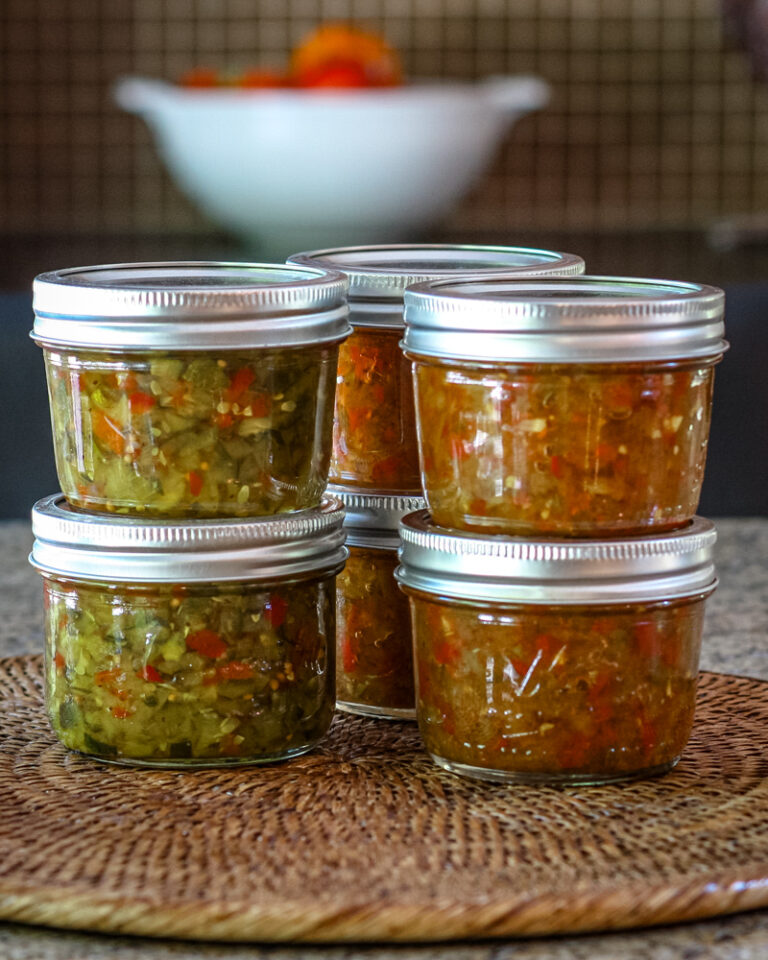
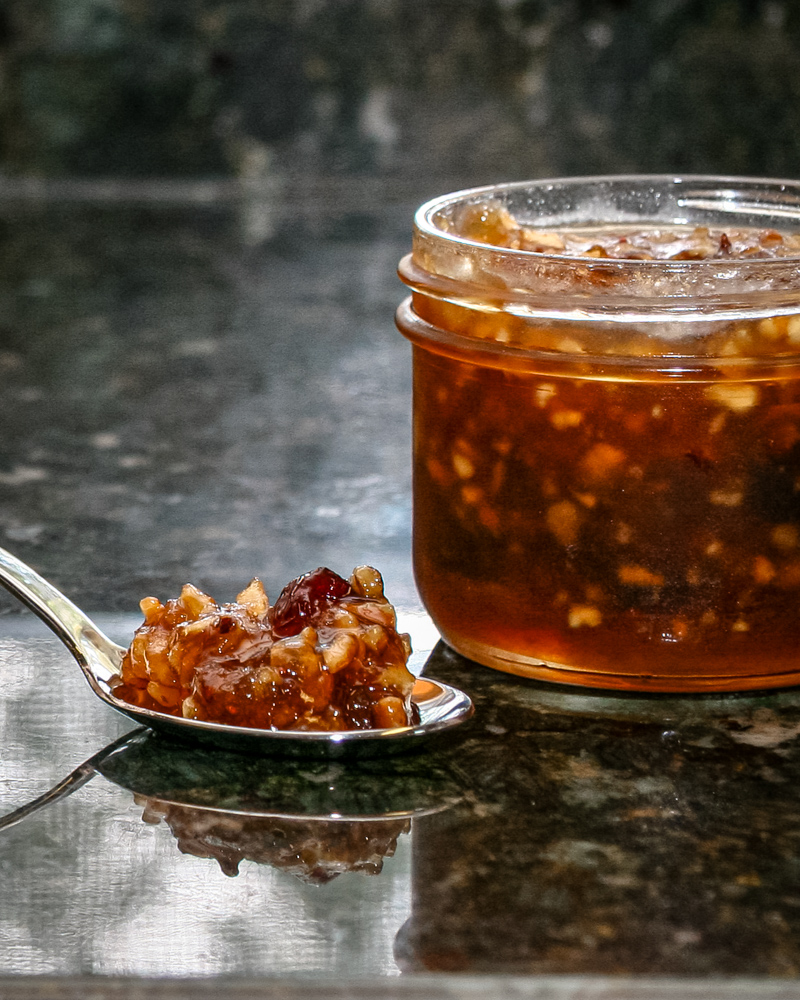
This green tomato chutney is a warm, sweet, tangy, and gently spiced preserve that makes the most of end-of-season green tomatoes. The combination of tomatoes, apples, grapes, raisins, brown sugar, and aromatic spices creates a rich and complex condiment that complements everything from roasted meats to simple sandwiches.
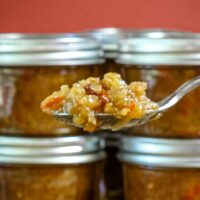
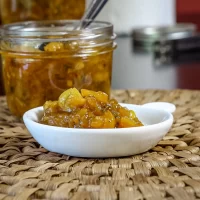
As it simmers down, the mixture thickens into a glossy chutney with soft fruit, warm spice, and just a little heat from crushed red pepper. It’s perfect for canning and keeping in your pantry, and it brings a bright, homemade touch to cheese boards, curries, wraps, and charcuterie.
What You’ll Like About This Dish
Saves end-of-season produce. A delicious way to use green tomatoes, apples, and grapes.
Warm, layered flavor. Sweet fruit, vinegar tang, gentle heat, and aromatic spices.
Great for canning. Makes six pints and stores beautifully for months.
Versatile condiment. Ideal with cheeses, meats, curries, sandwiches, and more.
Ingredient Notes
- Green tomatoes: Choose firm, underripe tomatoes; chop into consistent slices so they cook evenly.
- Granny Smith apples: Add tartness and body; peel and dice for even texture.
- Brown sugar: Sweetens the chutney and helps it thicken and caramelize slightly as it cooks.
- Apple cider vinegar: Provides acidity and balances the sweetness of the fruit.
- Raisins: Add natural sweetness and chewy texture; golden raisins or dried cranberries work well too.
- Onion: Adds savory depth to balance the fruit.
- Seedless grapes: Stirred in partway through cooking so they keep some shape and juiciness.
- Mustard seeds: Provide earthy, warm spice that complements the fruit.
- Ground ginger: Adds warmth and brightness.
- Dry mustard: Brings a deeper mustard note and subtle heat.
- Crushed red pepper: Adds gentle spice without overpowering the fruit.
Steps to Make Green Tomato Chutney
- Combine the tomatoes, apples, sugar, vinegar, raisins, onions, and salt in a large nonreactive pot.
- Bring the mixture to a boil, then reduce the heat and simmer uncovered.
- Add the grapes and seasonings, stirring well.
- Continue simmering until the chutney thickens and the fruit softens.
- Wash jars and lids and keep them warm in a simmering water bath.
- Spoon the hot chutney into prepared jars, leaving ¼-inch headspace.
- Wipe the rims, apply lids, and secure the bands.
- Process the jars in a boiling water bath for the recommended time.
- Let the jars cool undisturbed and check that all seals have set.
Tips
- Use a wide, heavy pot to help the chutney reduce evenly without scorching.
- Stir frequently during the last 30 minutes to prevent sticking as it thickens.
- Cut apples and tomatoes into similar-size pieces for even cooking.
- Let sealed jars rest 24 hours before storing to ensure the chutney fully sets.
Recipe Variations
- Spicier chutney Add extra crushed red pepper or a minced fresh chile.
- Sweeter blend Increase brown sugar slightly or add chopped dried apricots.
- Ginger-forward Add fresh grated ginger along with the ground ginger.
- Cranberry chutney Replace half the raisins with dried cranberries for tartness.
- Warm spice mix Add a pinch of cinnamon, cloves, or allspice for a deeper fall flavor.
Serving Suggestions
- Serve with cheese boards, especially sharp cheddar or creamy goat cheese.
- Spread on turkey, ham, or roast beef sandwiches.
- Spoon alongside grilled or roasted chicken, pork, or lamb.
- Pair with Indian curries or rice dishes for sweet contrast.
- Add to charcuterie plates for a bright, fruity accent.
How to Store
Canned jars: Store sealed jars in a cool, dark place for up to 1 year. Check seals before using.
Refrigerate after opening: Once opened, keep refrigerated for up to 1 month.
Freezing: Not recommended, as the chutney may become watery once thawed.
Green Tomato Chutney
Ingredients
- 2 pounds green tomatoes, cut into wedges and sliced
- 4 medium Granny Smith apples, peeled and diced
- 2 ½ cups brown sugar, firmly packed
- 2 cups apple cider vinegar
- 2 cups raisins, may use half golden raisins or dried cranberries
- ¾ cup onion, chopped
- ½ teaspoon salt
- 2 cups green grapes, seedless, halved
- 1 tablespoon mustard seeds
- 2 teaspoons ground ginger
- 1 teaspoon dry mustard
- ½ teaspoon crushed red pepper
Instructions
- Combine and Simmer: In a large nonreactive stockpot or Dutch oven, combine the green tomato wedges, diced apples, brown sugar, vinegar, raisins, onions, and salt. Stir well. Bring to a boil; reduce heat to low and simmer, uncovered, for 30 minutes. Add the grapes and seasonings; stir well. Continue cooking, uncovered, over medium-low heat for 1 hour, or until mixture is thickened.
- Prepare the Jars and Lids: Meanwhile, wash the jars and lids in hot soapy water. Put the jars put them in a large water bath canner. Fill the pot with water and bring to a simmer to keep them warmPut the lids in a saucepan of water; bring to a simmer. Remove from the heat.
- Add the Chutney to the Jars: Spoon the chutney into the hot jars, leaving 1/4-inch head space; wipe jar rims and threads. Cover at once with the lids. Screw the bands on firmly but do not overtighten.
- Process the Jars of Chutney: Put the jars in a rack and lower them into the canner. The water should be at least 1 inch above the jars; add more hot water if necessary. Bring the water to a boil. Cover and reduce the heat to maintain a gentle boil and process for 15 minutes — 20 minutes for altitudes of 1001 to 6,000 feet.
- Finish and Store: Let the jars cool on a rack for 12 to 24 hours. Remove the bands and test the seals. They should all be concave and not flex when pressed. Store in a cool dark place.
Nutrition
Disclaimer:
Our nutritional information is based on a third-party application that analyzes the ingredients list to determine the values. The information is meant to be helpful, but should be considered an estimate. Values may differ depending on measurements, brands, serving variations, and database availability.