
Easy Duck Confit
Discover how to make easy duck confit at home. Enjoy rich flavors and crispy skin with this simple recipe.

This post may contain affiliate links. See our Privacy Policy.
The process for making duck confit is simple. The legs are cooked low and slow, giving the meat an unbeatable richness, while crisping the skin. It’s a dish that feels special, but it’s surprisingly easy to do at home.
The method of slow-cooking duck legs in their own fat until they’re fall-apart tender originated in Gascony, France. Traditionally, confit was a way to preserve duck before refrigeration, but these days it’s all about the flavor.
If you’re not eating the duck legs right away, the meat can be shredded and used in all kinds of dishes. Toss it into pasta with a little garlic and Parmesan, layer it in a grilled cheese, or fold it into tacos with a bright salsa. It’s excellent in fried rice or added to a salad for a boost of umami.
And don’t forget the duck fat. It’s liquid gold! Roast potatoes in it for the crispiest edges, use it to sauté greens, or whip up a luxurious omelet. Even a spoonful in a pot of beans takes them to the next level.
If you’re serving the legs as they are, keep the sides simple. A crisp salad with mustard vinaigrette, garlicky green beans, or silky mashed potatoes all complement the richness of the duck. A bit of tart fruit—cranberry sauce, cherry compote, or orange segments—adds a perfect contrast.
What You’ll Love About This Recipe
- Effortless elegance. Duck confit feels like a restaurant specialty, yet the process is wonderfully straightforward. Once the legs go into the oven, the slow heat takes care of the rendering and tenderizing, making this an ideal “set it and forget it” dish.
- Ultra-tender texture. The slow cooking allows the meat’s connective tissue to break down gently, producing legs that are tender enough to shred but still moist and flavorful. The fat keeps everything juicy, even if you reheat it later.
- Deep, concentrated flavor. Duck naturally has a rich, savory taste, and confit amplifies it without requiring extra seasoning. The rendered fat surrounds the meat during cooking, intensifying its flavor and producing a silky mouthfeel.
- Crispy skin finish. A quick blast of higher heat at the end gives the skin that irresistible crispness. It adds a beautiful contrast of textures and transforms the dish into something truly memorable.
- Versatile and make-ahead friendly. You can serve the legs whole, shred them into tacos or salads, fold them into potatoes or pasta, or use them in a grain bowl. They store well and reheat beautifully, making them perfect for prep-ahead meals.
Ingredient Notes
- Duck legs: Use bone-in, skin-on legs, which naturally render the fat needed for confit. If the skin is very thick, pricking helps release more fat. Thaw completely if using frozen legs, and pat them very dry for better crisping.
- Kosher salt: Helps season the meat evenly and draws moisture from the skin to promote crispiness. If you substitute table salt, use slightly less, as it is more concentrated. You can also add optional herbs like thyme or bay leaf, though this recipe keeps it simple.
How to Make It
- Pat the duck legs completely dry and prick the skin all over with a needle or skewer, taking care not to pierce the meat. This encourages even fat rendering and helps the skin crisp.
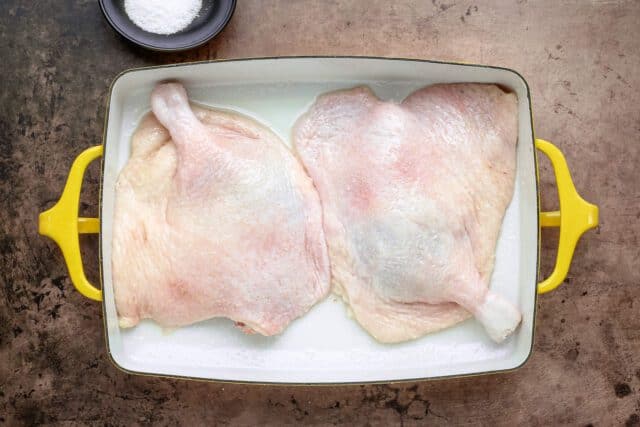
- Arrange the legs snugly in a small baking dish to ensure the rendered fat pools around them as they cook. Sprinkle the salt evenly over the legs.
- Place the baking dish in a cold oven and turn the heat on. Starting cold allows gradual fat release, which protects the meat and develops a silky texture.
- Let the duck cook low and slow until the fat has rendered and the meat is tender. The legs will shrink slightly and the fat will become clear and golden.
- Increase the heat briefly at the end to crisp the skin and deepen the color. This final step gives the characteristic contrast between crisp exterior and supple meat.
- Serve immediately for the best texture, or cool the legs in their own fat if you plan to store them for later use.
Pro Tips
- Dry well: Moisture on the skin prevents crisping, so take a moment to pat the legs thoroughly before seasoning.
- Tweeze pin feathers: Duck legs often have a few pin feathers left behind. Removing them before cooking gives a cleaner appearance and helps the skin brown more evenly.
- Prick lightly: Many small pricks are more effective than a few deep ones. Keeping the punctures shallow avoids losing juices from the meat.
- Choose a smaller pan: A tight-fitting pan keeps rendered fat concentrated around the legs, improving both texture and flavor.
- Cool in fat: If storing, allow the legs to cool fully in their rendered fat to preserve moisture and extend shelf life.
- Reheat gently: Warm the duck at a low temperature before crisping the skin to keep the meat tender and prevent it from drying out.
Recipe Variations
- Classic herb confit. Rub the legs with salt, garlic, thyme, or bay leaf before cooking for a more traditional aromatic profile. Allowing them to rest overnight intensifies the flavor, though it isn’t required.
- Garlic and citrus confit. Add crushed garlic cloves or strips of orange zest to the pan for a brighter, more fragrant variation. These aromatics infuse subtly into the fat and meat.
- Spiced duck confit. Add a pinch of five-spice powder, smoked paprika, or ground coriander to give the dish a more distinctive, modern twist. These spices pair well with roasted vegetables or rice bowls.
- Extra-crispy finish. After the final bake, place the legs under the broiler for a very brief time to deepen the crisp. Watch carefully, as the skin browns quickly.
- Shredded confit. Remove the skin and shred the meat for tacos, pasta dishes, fried rice, grain bowls, or salads. The rich flavor adds depth to everyday meals.
Serving Suggestions
- Serve with mustardy greens or frisée salad with vinaigrette.
- Add creamy mashed potatoes, roasted root vegetables, or a crusty baguette.
- Pair with tart fruit like cranberry sauce, cherry preserves, or citrus.
- Use shredded confit in pasta, fried rice, grilled cheese, or duck tacos.
How to Store
- Refrigerate: Let the duck legs cool completely in their rendered fat. Store them covered in an airtight container for up to 5 days. Keeping the legs submerged helps preserve their moisture and texture.
- Freeze: Transfer the cooled legs and enough fat to cover them into a freezer-safe container. Freeze for up to 2 months. Allow them to thaw overnight in the refrigerator before reheating.
- Reheat: Warm the duck gently in the oven until heated through, then increase the temperature briefly to re-crisp the skin. Slow reheating keeps the meat tender while restoring the crisp exterior.
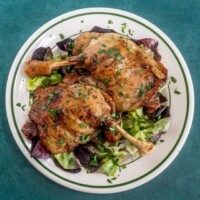
Easy Duck Confit
Ingredients
- Neutral oil or duck fat, for the baking dish
- 2 duck legs
- 2 teaspoons kosher salt
Instructions
Prep the Duck Legs
- Pat the duck legs with paper towels to dry. Use a needle, the tip of a metal skewer, or a sharp knife to prick each leg. Prick them all over, piercing the skin but not the meat. This helps to ensure a crispy skin.
- Arrange the legs in a baking dish that has been lightly oiled with a neutral oil or duck fat. The dish should be just large enough to fit them comfortably.
- Sprinkle 1 teaspoon of kosher salt over each leg.

Bake the Duck Legs
- Place the duck legs in a cold oven and set the temperature to 300°F.
- Bake for 2 hours. When done, the legs should be partially submerged in their melted fat, and the skin should be starting to look crispy.
- Increase the oven temperature to 375°F and cook for 15 minutes or until golden brown and the skin is crisp.
- Serve the duck legs immediately, or remove them from the fat and refrigerate for later.

Nutrition
Disclaimer:
Our nutritional information is based on a third-party application that analyzes the ingredients list to determine the values. The information is meant to be helpful, but should be considered an estimate. Values may differ depending on measurements, brands, serving variations, and database availability.