Chive Blossom Vinegar
Enhance your meals with chive blossom vinegar, a beautiful and flavorful way to celebrate spring in your kitchen.
This post may contain affiliate links. See our Privacy Policy.
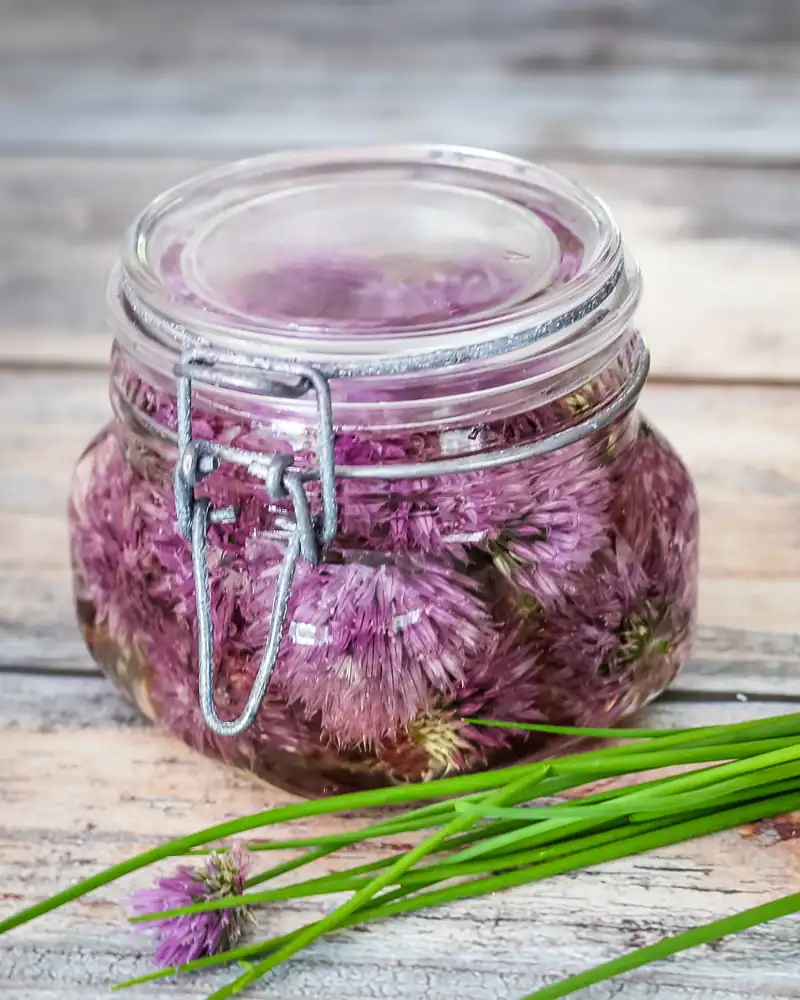
Capture spring in a jar with this stunning chive blossom vinegar. The pale pink hue and delicate onion-floral flavor make it a beautiful and flavorful pantry addition. Steeped in white wine or champagne vinegar, chive blossoms infuse a gorgeous hue and subtle allium notes perfect for vinaigrettes, marinades, or bright finishing touches on savory dishes. This pantry staple is as beautiful as it is flavorful, and a great way to celebrate the garden’s early blooms.
What You’ll Like About This Recipe
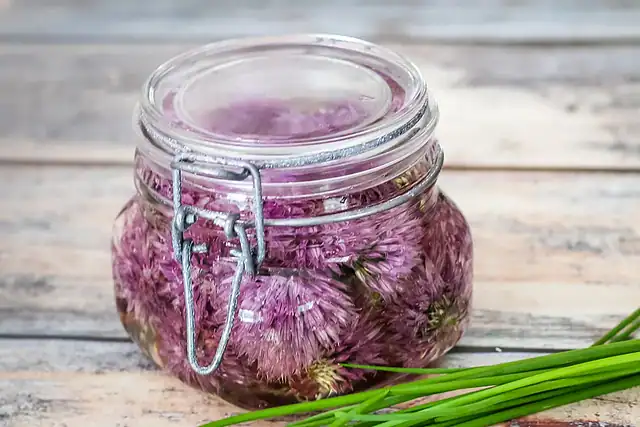
Beautiful natural color. Few pantry staples are as eye-catching as a jar of chive blossom vinegar. The blossoms tint the vinegar a rosy hue that looks gorgeous in mason jars and vinaigrettes. The color intensifies over the first few days of steeping and feels like a springtime transformation happening right on your counter.
Delicate onion-floral flavor. This vinegar adds just enough savory allium essence without overwhelming a dish. It’s ideal for cooks who like brightness and complexity but prefer a more subtle flavor than raw onion or garlic. The flavor pairs wonderfully with vegetables, seafood, herbs, and light proteins.
Easy, low-effort preparation. The process couldn’t be simpler: harvest, rinse, dry, pack, and steep. There’s no cooking required, no sterilization beyond a clean jar, and no special equipment. Even if you’re new to infused vinegars, this recipe is almost foolproof.
Versatile in the kitchen. A bottle of chive blossom vinegar opens up many possibilities—salad dressings, marinades, pickled vegetables, finishing splashes for soups, or even brightening up creamy dishes like potato or pasta salad. It’s a multipurpose condiment that quickly earns its place on the shelf.
Makes a lovely homemade gift. Once strained and bottled, this vinegar looks artisan-made. Pack it in a swing-top bottle or decorative jar, add a simple label, and you have an elegant gift for cooks, gardeners, or anyone who enjoys unique ingredients.
Ingredient Notes
- Chive blossoms
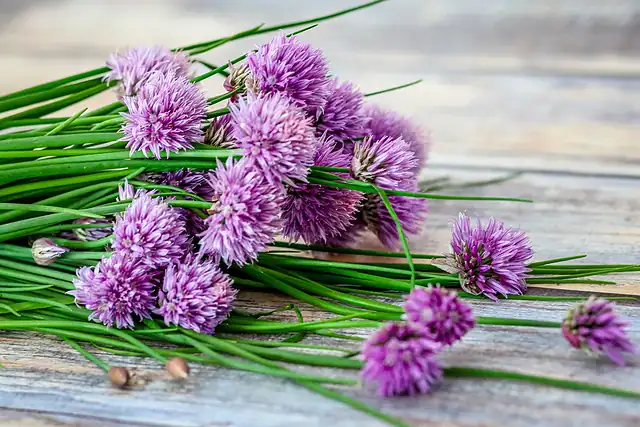
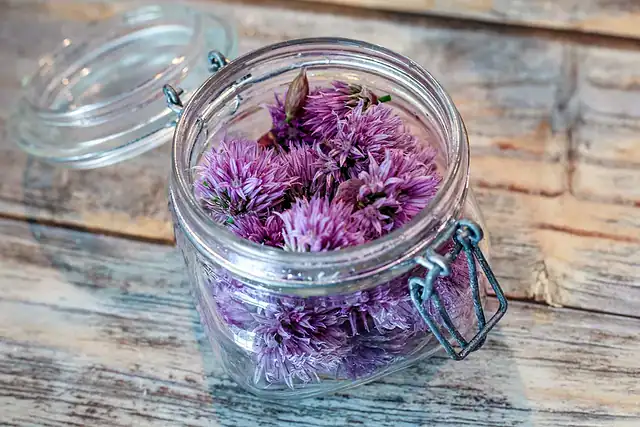
These add both color and flavor. Use fully open, vibrant blossoms for the best infusion. Blossoms from common chive plants work beautifully, and garlic chive blossoms can be used too, although they produce a stronger, more garlicky result. Remove any damaged or browning petals. - White wine vinegar or champagne vinegar
These lighter vinegars allow the floral-pink color and delicate flavor to shine. Distilled white vinegar is too harsh and will overpower the infusion. Many cooks prefer champagne vinegar for its softer acidity and clean finish. - Olive oil (for the vinaigrette)
A fruity extra-virgin oil creates a balanced dressing. If your oil is strong or peppery, it may slightly mute the floral notes—use a milder oil if you want the vinegar to stand out. - Dijon mustard
Acts as an emulsifier in the vinaigrette. Whole-grain Dijon adds texture and rustic appeal, while regular Dijon gives a smooth finish. Both work well. - Sugar (optional)
A tiny amount softens the acidity of the vinegar and rounds out the vinaigrette. You can omit it for a sharper dressing or substitute with honey for a more floral undertone.
How to Make It
- Rinse the blossoms gently and allow them to dry fully so no water dilutes the vinegar or clouds the infusion. Removing excess moisture helps maintain clarity.
- Loosely fill a clean glass jar with the blossoms, packing only lightly so the petals remain intact and can release their color evenly.
- Pour vinegar over the blossoms until they are completely submerged, tapping the jar lightly to release trapped air pockets.
- Cover the jar with a non-metal lid or line a metal lid with parchment to prevent any reaction between the acidic vinegar and metal surfaces.
- Place the jar in a cool, dark area and allow the blossoms to steep. Check the color after a few days and continue steeping until the flavor reaches your preferred intensity.
- Strain out the blossoms and transfer the infused vinegar to a clean bottle. If preparing the vinaigrette, whisk the vinegar with oil, mustard, and seasoning until emulsified.
Pro Tips
- Dry blossoms completely before infusing to avoid cloudiness. Excess water can dilute the vinegar and shorten shelf life.
- Use a glass jar with a non-metal lid to prevent corrosion. If using a metal lid, always place a piece of parchment between the lid and the jar.
- Steep longer for deeper color. Cooler environments may require additional days for the vinegar to fully take on a rosy hue.
- Label the jar with the date you begin steeping. This makes it easy to track infusion time and replicate your preferred flavor intensity.
- Strain through a fine-mesh sieve or coffee filter for maximum clarity, especially if gifting the vinegar.
Recipe Variations
- Use apple cider vinegar.
This creates a warmer, slightly fruity infusion with a golden-pink tone rather than a vivid magenta. It pairs well with pork dishes, roasted vegetables, and hearty grains. - Add peppercorns or herbs.
A few whole pink peppercorns, tarragon sprigs, or basil leaves can add subtle background notes. These variations work beautifully in vinaigrettes for summer salads. - Try garlic chive blossoms.
Garlic chives bloom later in the season and offer a stronger, more savory profile. The vinegar becomes more pungent, making it a great option for marinades and roasted vegetable dishes. - Create a mixed-herb vinegar.
Combine chive blossoms with parsley stems, dill fronds, or thyme sprigs for a garden-inspired infusion. This version is excellent for homemade dressings.
How to Use Chive Blossom Vinegar
- Drizzle over sliced tomatoes or cucumber salad.
- Whisk into vinaigrettes for leafy greens or grain bowls.
- Use in marinades for chicken, seafood, or tofu.
- Add a splash to potato or pasta salad.
- Brighten up sautéed greens or roasted vegetables.
- Use it as a finishing vinegar for soups or stews.
How to Store
Refrigerate: Refrigeration is optional for infused vinegars, but storing the strained vinegar in the refrigerator can help preserve peak flavor and color. Keep it in a tightly sealed glass bottle and use within 3 to 6 months.
Freeze: Freezing is not recommended, as vinegar-based infusions can lose clarity and flavor. If you want to preserve the blossoms for later use, freeze them separately and thaw before drying and infusing.
Room Temperature: Chive blossom vinegar keeps well in a cool, dark pantry for up to 6 months. Protect it from direct light to prevent fading.
Frequently Asked Questions
Chive Blossom Vinegar
Ingredients
For the Chive Blossom Vinegar
- 1 ½ cups white wine vinegar, or champagne vinegar
- Fresh chives, with blossoms, enough to loosely fill a 1-pint jar 3/4 full
For the Vinaigrette
- ¾ cup extra virgin olive oil
- ¼ cup chive blossom vinegar
- ½ teaspoon Dijon mustard, or a whole grain Dijon style
- ½ teaspoon sugar, optional
- Salt and freshly ground black pepper, to taste
Instructions
- Harvest and Prep Blossoms: Snip chive blossoms just below the flower head. Rinse gently and let them dry completely.

- Infuse: Loosely pack the dry blossoms into a clean 1-pint glass jar, filling about 3/4 full.Pour vinegar over the blossoms to fill the jar completely.
- Steep: Cover the jar with a non-metal lid or line a metal lid with parchment to prevent corrosion.Label with the date and let sit in a cool, dark place for 10 days to 2 weeks.
- Strain: Remove and discard the blossoms. Strain the vinegar into a clean bottle or jar.
- Make the Vinaigrette (Optional): Whisk together olive oil, chive blossom vinegar, mustard, sugar (if using), salt, and pepper. Adjust seasoning to taste.
Nutrition
Disclaimer:
Our nutritional information is based on a third-party application that analyzes the ingredients list to determine the values. The information is meant to be helpful, but should be considered an estimate. Values may differ depending on measurements, brands, serving variations, and database availability.