Beef and Noodle Skillet
Try this delicious one-pot beef and noodle skillet recipe for an easy weeknight meal. Packed with flavors and super versatile!

This post may contain affiliate links. See our Privacy Policy.
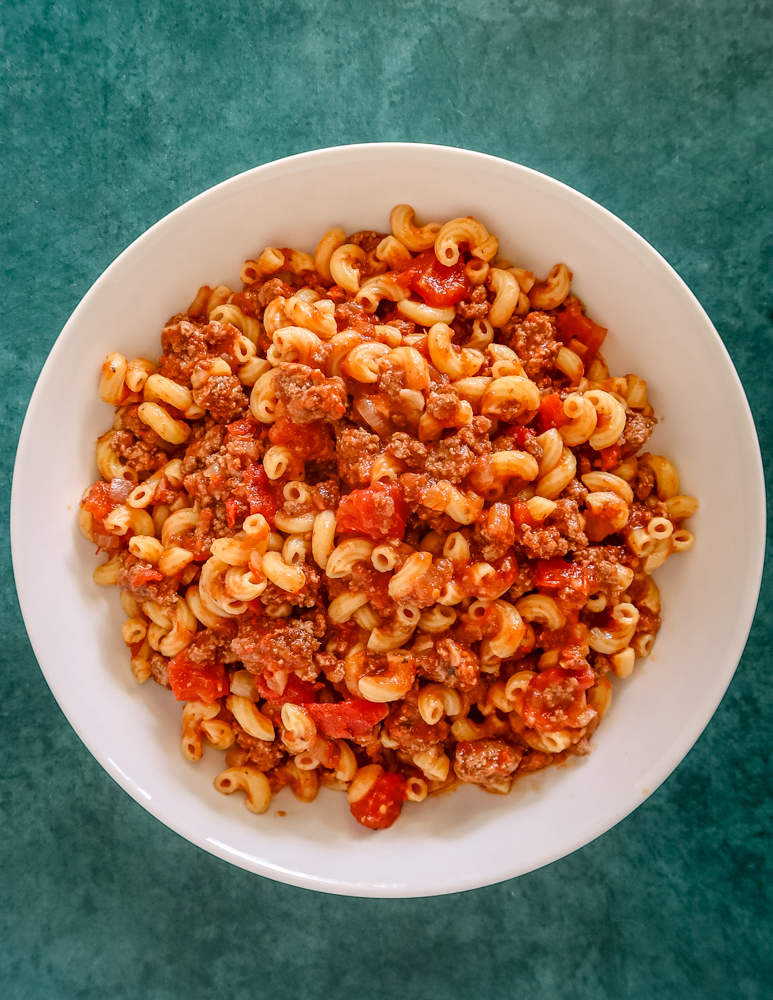
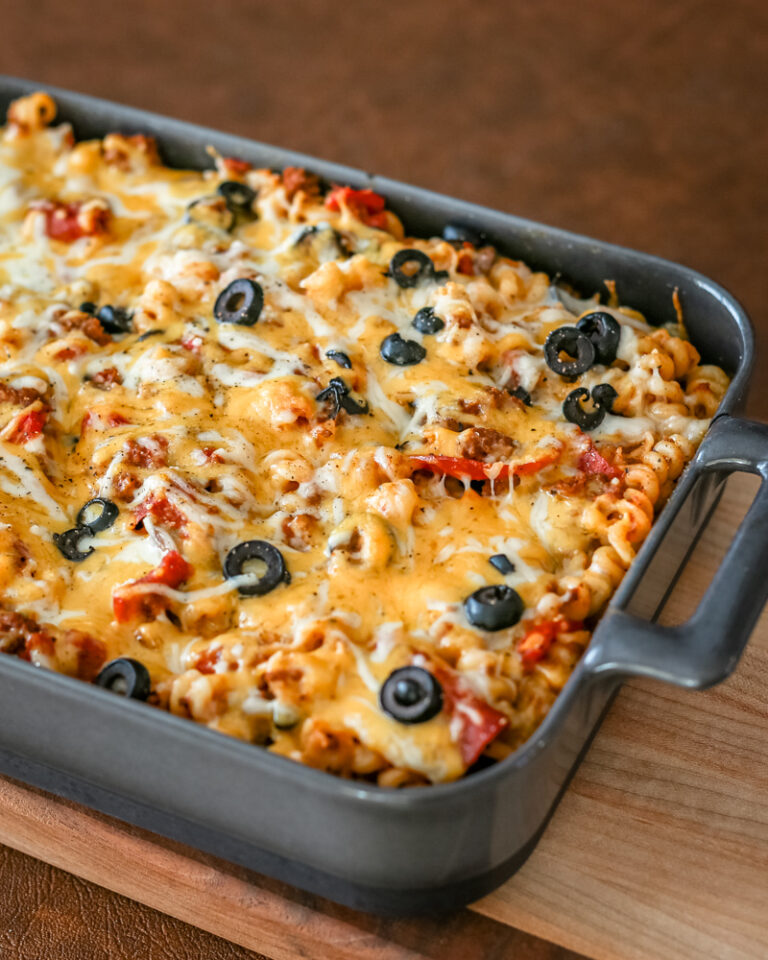
This beef and noodle dish, similar to American chop suey, is a one-pot meal that can be enjoyed any night of the week. Everything cooks in one pan—from the bacon and beef to the noodles and sauce—so you get a complete meal without juggling multiple pots. The bacon adds smoky depth, while the tomatoes, broth, and Italian seasoning create a flavorful sauce that soaks into the noodles.
I add some Italian seasoning for flavor and a dash of crushed red pepper flakes for heat. You can use mozzarella, cheddar, or another cheese for topping, or omit the cheese. You can keep it simple with just beef, noodles, and cheese, or bump up the vegetables, spice, and toppings to match what your family likes. Leftovers reheat well, making this a good choice for meal prep or next-day lunches. Sprinkle with parsley or basil for a pop of color.
What You’ll Like About This Recipe
- One-pan convenience. Everything cooks in the same skillet, from rendering the bacon to simmering the noodles and melting the cheese. That means easy cleanup and less time at the sink, which is always a win on weeknights.
- Comforting flavor and texture. You get smoky bacon, savory ground beef, tender egg noodles, and a tomato-based sauce that’s rich without being heavy. The melted mozzarella on top adds just enough cheesiness to make it feel like a cozy casserole cooked right on the stovetop.
- Family-friendly and flexible. The basic flavors—beef, tomatoes, noodles, and Italian seasoning—tend to appeal to kids and adults alike. You can keep the crushed red pepper mild or leave it out, then offer hot sauce at the table for those who like more heat.
- Easy to customize. This skillet is a natural base for add-ins like extra vegetables, different cheeses, or flavor twists. You can lean Italian, make it a bit more Tex-Mex, or swap the pasta shape and still have a reliable, forgiving dish.
Ingredient Notes
- Ground beef – An 85–90% lean blend gives you enough fat for flavor without making the dish greasy. If you use a fattier grind, you may want to spoon off some drippings before adding the vegetables.
- Onion and bell peppers – These aromatics build a sweet, savory base for the sauce and add color and texture. You can use all green pepper, all red pepper, or swap in yellow or orange bell pepper if that’s what you have.
- Garlic – Fresh minced garlic deepens the flavor of the tomato sauce and works well with the Italian seasoning. If you only have garlic powder, add it with the dried seasonings instead of sautéing it.
- Egg noodles – Medium or wide egg noodles cook right in the sauce, absorbing flavor from the broth and tomatoes. Other short pasta shapes can work, but you may need to adjust the liquid and cooking time slightly.
- Beef broth – Provides savory depth and enough liquid for the noodles to cook through. Low-sodium broth lets you control the salt, especially if your bacon is salty.
- Diced tomatoes and tomato sauce – The combination gives you both texture and body in the sauce. Fire-roasted tomatoes will add a subtle smoky note, while plain diced tomatoes keep the flavor classic.
- Italian seasoning – A convenient blend of dried herbs like oregano, basil, and thyme that seasons the whole skillet. If you don’t have a mix, use a combination of your favorite dried Italian herbs.
- Salt, pepper, and crushed red pepper flakes – These balance and brighten the dish. The crushed red pepper flakes are optional; adjust or omit them depending on how spicy you like things.
- Mozzarella cheese – Melts into a gooey, stretchy topping that makes the skillet feel like a stovetop casserole. You can use part-skim or whole-milk mozzarella, or substitute another melting cheese such as provolone or a pizza blend.
Steps to Make Beef and Noodle Skillet
- Start by cooking the bacon in a large, deep skillet over medium heat until it’s crisp and browned, stirring occasionally so it cooks evenly without burning. Transfer the bacon to a paper towel-lined plate and leave the drippings in the skillet.
- Add the ground beef and chopped onion to the hot drippings. Cook over medium to medium-high heat, breaking the beef up with a spatula and stirring often, until the meat loses its pink color and the onion starts to soften.
- Stir in the chopped green and red bell peppers and the minced garlic. Continue cooking for a few more minutes, stirring frequently, until the peppers begin to soften and the garlic is fragrant but not browned.
- Scatter the uncooked egg noodles over the beef mixture, then pour in the beef broth, diced tomatoes with their juice, and tomato sauce. Sprinkle the Italian seasoning, salt, pepper, and crushed red pepper flakes (if using) evenly over the top.
- Stir everything together, making sure the noodles are nestled down into the liquid as much as possible so they’ll cook evenly. Bring the mixture just up to a simmer over medium heat.
- Once it’s simmering, reduce the heat to low, cover the skillet, and let the noodles cook gently, stirring once or twice during cooking to prevent sticking. Cook until the noodles are tender and most of the liquid has been absorbed, adding a splash of extra broth or water if the skillet looks dry before the pasta is done.
- Taste the mixture and adjust the seasonings, adding a bit more salt, pepper, or Italian seasoning as needed. Sprinkle the shredded mozzarella evenly over the top of the skillet.
- Cover the pan again and let it sit over low heat for a minute or two, just until the cheese melts into a bubbly, gooey layer. Top with the reserved bacon before serving to keep it crisp.
Beef and Noodle Skillet Tips
- Making sure the skillet is large enough helps prevent overcrowding and gives the noodles enough room to cook evenly in the sauce. A deep, wide skillet or sauté pan works best.
- Browning the beef thoroughly before adding liquids develops extra flavor; cook until you see some browned bits on the bottom of the pan, then loosen them when you add the broth and tomatoes.
- Layering the noodles into the liquid rather than leaving them piled on top helps them cook evenly and prevents dry, undercooked pieces on the surface. Press them gently down into the sauce with a spatula.
- Checking the liquid level during simmering is important with one-pan pastas. If the sauce is thick but the noodles still have too much bite, stir in a small amount of hot water or broth and continue cooking.
Recipe Variations
- Make it extra cheesy. Use the full 2 cups of mozzarella and stir a handful directly into the skillet before sprinkling the rest on top. This gives the noodles a creamy, cheesy coating similar to a baked casserole, just without turning on the oven.
- Turn up the heat. Increase the crushed red pepper flakes, add a pinch of cayenne, or stir in a spoonful of your favorite hot sauce during simmering. The tomato base carries heat well, so you can easily adjust the spice level to match your taste.
- Add more vegetables. Stir in extra veggies such as sliced mushrooms, zucchini, or baby spinach. Mushrooms and zucchini can go in with the bell peppers, while spinach can be added toward the end just until wilted. This is an easy way to stretch the meal and add color.
Serving Suggestions
- Serve with garlic bread or a crusty baguette to mop up the sauce.
- Add a green salad or roasted vegetables to round out the meal.
- Pair with red wine, iced tea, or sparkling water with lemon.
- Include pickles, hot sauce, or Parmesan for extra table toppings.
How to Store
- Refrigerate: Let the skillet cool to room temperature, then transfer leftovers to an airtight container and refrigerate for up to 3 to 4 days. If possible, store the bacon separately so it stays a bit crisper when reheated.
- Reheat: Warm portions gently in a covered skillet over low heat with a splash of water or broth, stirring occasionally until heated through. You can also reheat in the microwave, stirring once or twice to ensure the noodles heat evenly without drying out.
- Freeze: For longer storage, cool the dish completely, portion it into freezer-safe containers, and freeze for up to about 2 months. The noodles will soften slightly after freezing and thawing, but the flavors hold up very well.
- Refresh: If the noodles look a little dry after storage, stir in a small amount of broth or tomato sauce while reheating, and sprinkle a bit of fresh cheese over the top to bring back moisture and a freshly-cooked feel.
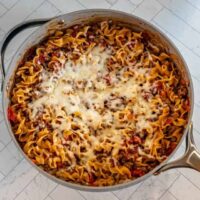
Beef and Noodle Skillet
Ingredients
- 4 strips bacon, diced
- 1 pound ground beef, 85 to 90 percent
- ½ cup onion, chopped
- ¼ cup green bell pepper, chopped
- ¼ cup red bell pepper, chopped
- 1 teaspoon garlic, minced
- 8 ounces egg noodles, medium or wide, uncooked
- 1 ½ cups beef broth, plus more as needed
- 1 14.5-ounce can tomatoes , diced, with juice
- 8 ounces tomato sauce
- 1 teaspoon Italian seasoning
- ½ teaspoon salt, or to taste
- ¼ teaspoon pepper
- Dash crushed red pepper flakes, optional
- 1 to 2 cups mozzarella cheese, shredded , optional
Instructions
- Place the bacon in a large skillet and place it over medium heat. Fry the bacon, turning frequently, until crisp, about 4 to 6 minutes. Remove the bacon to a paper towel-lined plate and set aside.
- Add the ground beef and onions to the drippings in the skillet. Cook the beef, breaking it up and stirring, for 4 minutes. Add the chopped peppers and garlic and continue cooking for 3 minutes longer or until the beef is no longer pink.
- Add the noodles, beef broth, tomatoes, tomato sauce, Italian seasoning, 1/2 teaspoon of salt, pepper, and crushed red pepper flakes. Bring to a simmer and reduce the heat to low. Cover the pan and simmer for 15 to 20 minutes or until the noodles are tender and most of the liquid has been absorbed. Check and add extra broth if needed. Taste and adjust the seasonings.
- Top with mozzarella cheese, cover the pan, and let it cook for a minute or two, just until the cheese is melted.
Nutrition
Disclaimer:
Our nutritional information is based on a third-party application that analyzes the ingredients list to determine the values. The information is meant to be helpful, but should be considered an estimate. Values may differ depending on measurements, brands, serving variations, and database availability.