Whole Roasted Chicken Recipe
Whether for Sunday dinner or everyday meal, a roasted chicken is a perfect solution. Use leftovers to make sandwiches, salads, or casseroles.

This post may contain affiliate links. See our Privacy Policy.
A whole roasted chicken is one of those meals that never goes out of style. It feels special enough for Sunday dinner, but it’s simple enough to pull together on a weeknight with just a few basic ingredients. This version relies on melted butter or rich duck fat, plenty of kosher salt and freshly ground black pepper, and a generous handful of garlic and fresh herbs to do the heavy lifting. As the chicken roasts, the skin turns golden and crisp while the meat stays tender and juicy, and the garlic and herbs perfume the whole kitchen. It’s the kind of meal you can bring to the table with a platter of roasted vegetables or mashed potatoes and feel like you’ve really cooked, without a lot of fuss. The simple pan gravy is a plus, but entirely optional.
Another reason to roast a whole chicken is how far it will take you after dinner is over. The first night, carve it into neat pieces and spoon a bit of those flavorful pan drippings over the top. The next day, leftover slices tuck nicely into sandwiches, or you can shred the meat for salads, tacos, soups, and casseroles. If you like to cook ahead, you can even roast the chicken earlier in the day, let it rest, and serve it at room temperature with a simple pan sauce or vinaigrette. And don’t forget the bones—simmer the carcass with a few vegetables and herbs for an easy homemade stock that turns one simple roasted chicken into the base for several more comforting meals.
What You’ll Like About This Recipe
Reliable, classic method. This is a straightforward roasting technique that doesn’t rely on tricks or special equipment, making it easy to repeat with consistent results.
Clear doneness guidance. Temperature, visual cues, and texture all work together so you know exactly when the chicken is safely cooked and at its best.
Juicy meat with well-seasoned skin. Butter or duck fat helps protect the breast meat while encouraging even browning and flavor.
Subtle aromatics throughout. Garlic and herbs placed in the cavity gently perfume the chicken as it roasts without overpowering it.
Excellent base for gravy. The rendered fat and browned bits in the pan create the foundation for a simple, flavorful gravy.
Ingredient Notes
- Whole roasting chicken – A chicken in the 5- to 6-pound range roasts more evenly than very small birds and stays juicy without drying out. Look for one labeled “roaster” or “fryer-roaster” for best results.
- Butter or duck fat – Butter adds classic flavor and browning, while duck fat produces especially crisp skin and rich drippings. Either works well; the choice depends on how indulgent you want the finished dish to be and what you have on hand.
- Kosher salt – Coarse salt seasons more evenly and helps draw moisture to the surface, which improves browning and skin texture. I use Diamond Kosher Salt.
- Freshly ground black pepper – Fresh grinding gives a cleaner, more aromatic flavor that holds up during roasting.
- Garlic cloves – Left whole and placed in the cavity, garlic gently steams and flavors the meat without becoming harsh or bitter.
- Fresh herbs – Thyme and rosemary are especially good for roasting because they tolerate heat well and release aroma slowly; chives add a mild onion note. You can use whole sprigs or leaves.
Steps to Make Whole Roasted Chicken
- Prepare the oven and roasting pan.
- Clean the chicken, dry it thoroughly, and place it breast-side up in the pan.
- Rub the chicken all over with butter or duck fat and season generously inside and out.
- Add the garlic and herbs to the cavity and tie the legs together.
- Roast until the chicken is golden and fully cooked through.
- Rest the chicken briefly before carving.
- While the chicken rests, separate the fat from the pan drippings and use the drippings to make a simple gravy.
- Carve the chicken and serve with the gravy, if desired.
Pro Tips
- How to check for doneness. Insert an instant-read thermometer into the thickest part of the thigh without touching bone; it should read at least 165°F. As a visual check, the juices should run clear when the thigh is pierced, and the leg should move freely in the joint.
- Protect the breast meat. If the skin is browning too quickly before the chicken is done, loosely tent the breast with foil.
- Let it rest. Resting allows juices to redistribute, resulting in moister meat and cleaner slices.
- Plan for gravy. Don’t discard the pan drippings—they’re full of flavor and ideal for a simple gravy.
Recipe Variations
- Dry-brined chicken. Season the chicken with salt a day ahead and refrigerate uncovered. This improves seasoning throughout and helps create crisper skin.
- Lemon-herb roast. Add a halved lemon to the cavity for subtle brightness that balances the richness of the meat.
- Vegetable-enhanced drippings. Roast onions, carrots, or celery in the pan to deepen flavor for gravy or pan sauce.
- Garlic-forward version. Add extra garlic cloves under the skin for a stronger roasted garlic presence.
Serving Suggestions
- Serve with mashed potatoes or roasted potatoes to absorb the pan juices.
- Pair with green beans, carrots, or Brussels sprouts for balance.
- Add a simple pan gravy made from the drippings for a traditional presentation.
- Choose crusty bread or dinner rolls to round out the meal.
How to Store
Refrigerate. Store leftover chicken in an airtight container for up to 4 days. Remove meat from the bones for easier storage and quicker reheating.
Freeze. Package portions in freezer-safe containers or bags for up to 3 months. Label with the date.
Reheat. Warm gently in a covered dish to prevent drying. Add a splash of broth if reheating sliced or shredded meat.
Frequently Asked Questions
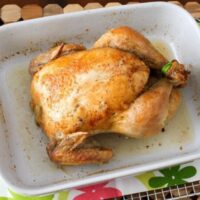
Whole Roasted Chicken Recipe
Ingredients
- 6 pounds whole chicken, about 5 to 6 pounds
- 2 tablespoons melted butter, or duck fat
- Kosher salt and freshly ground black pepper
- 6 cloves garlic
- Fresh herbs, e.g., thyme, chives, rosemary
For the Optional Gravy
- Pan drippings
- 3 tablespoons all-purpose flour
- 1 ½ cups chicken broth, warm, or more
- Kosher salt and freshly round black pepper, to taste
Instructions
- Heat the oven to 375 F.
- Remove the giblets and rinse out the cavity. Trim and discard any large pieces of fat around the cavity. Pat the chicken dry and place in a roasting pan or baking dish large enough to hold the chicken.
- Rub the chicken all over with the melted butter or duck fat. Sprinkle generously inside and out with kosher salt and freshly ground black pepper.
- Peel the garlic cloves and put them in the cavity. Tie the legs together.
- Roast the chicken for about 1 hour and 40 minutes, or about 20 minutes per pound.
- The minimum safe temperature for chicken is 165°F. Check with an Instant-read thermometer inserted into the thickest part of the thigh, not touching bone.
- Remove the chicken from the oven and tent it loosely with foil. Let the chicken rest for about 10 minutes before carving and serving.
Pan Gravy
- Pour the pan drippings into a heatproof measuring cup or fat separator and let the fat rise to the top.
- Spoon off 3 tablespoons of fat and return it to the roasting pan. If you don't have 3 tablespoons, add a bit of butter or oil. Save the pan juices but discard any excess fat.
- Place the roasting pan over medium heat and whisk in the flour. Cook, stirring constantly, until the roux is smooth and light golden brown.
- Gradually whisk in the chicken broth along with any defatted drippings, and continue cooking until the gravy has thickened. If too thick, add more broth.
- Taste, add salt and pepper, and serve warm with the chicken.
Nutrition
Disclaimer:
Our nutritional information is based on a third-party application that analyzes the ingredients list to determine the values. The information is meant to be helpful, but should be considered an estimate. Values may differ depending on measurements, brands, serving variations, and database availability.