

This post may contain affiliate links. See our Privacy Policy.
Lemon scones are a bright and delicious way to start any morning. These scones are glazed with a thin lemon icing, doubling down on the lemon flavor. The scones can be served for breakfast or as a snack. The egg in these scones makes them rich and fluffy, and it adds to the leavening.
The scones are just the kind of treat that makes a morning feel a little more special. The dough comes together quickly, and the fresh lemon zest gives every bite a sunny lift. They’re finished with a simple lemon glaze that soaks into the warm scones, adding even more citrus flavor. Serve them for breakfast, brunch, or an afternoon snack with tea or coffee.
What You’ll Like About This Dish
Bursting with lemon. Fresh zest in the dough and a tangy glaze give these scones vibrant citrus flavor.
Tender, bakery-style texture. Cold butter and gentle mixing keep them soft and flaky.
Simple to make. Basic pantry ingredients come together in minutes for an easy homemade treat.
Perfect for any occasion. Great for breakfast, brunch, or a sweet pick-me-up.
Ingredient Notes
- Flour: All-purpose flour gives the scones structure and a tender crumb.
- Baking powder: Ensures the scones rise nicely.
- Sugar: Adds sweetness without overpowering the lemon flavor.
- Salt: A small amount enhances flavor balance.
- Lemon zest: Provides fresh, bright citrus notes throughout the scones.
- Butter: Cold, diced butter creates flaky layers when worked into the flour.
- Half-and-half: Adds richness and moisture to the dough.
- Egg: Helps bind the dough and contributes to tenderness.
- Vanilla extract: Adds warmth and depth of flavor.
- Lemon extract: Optional, but boosts the lemon profile.
- Confectioners’ sugar: Forms the base of the glaze.
- Melted butter: Adds smoothness and richness to the glaze.
- Lemon juice: Supplies the glaze’s tangy brightness.
- Additional lemon zest: Enhances the glaze with fresh lemon aroma.
Steps to Make Glazed Lemon Scones
- Prepare a parchment-lined baking sheet.
- Stir together the dry ingredients and lemon zest in a large bowl.
- Cut in the cold diced butter until the mixture resembles coarse crumbs.
- Whisk the half-and-half, egg, vanilla, and optional lemon extract in another bowl.
- Add the liquid mixture to the dry ingredients and gently bring the dough together.
- Turn the dough out, lightly knead, and shape into a circle or square.
- Cut the dough into scones and place them on the baking sheet.
- Refrigerate the unbaked scones for about 20 minutes.
- Preheat the oven and bake until lightly browned.
- Whisk the glaze ingredients until smooth.
- Brush the hot scones with glaze, then glaze again once cooled.
Tips for Glazed Lemon Scones
- Keep the butter cold for the flakiest texture.
- Refrigerating the shaped scones helps them hold their shape while baking.
- Adjust the glaze thickness with more sugar or lemon juice as needed.
- Brush the glaze on while the scones are warm so it absorbs beautifully.
Recipe Variations
- Lemon-blueberry scones. Fold fresh or frozen blueberries into the dough before shaping.
- Lemon-poppy seed. Add a tablespoon of poppy seeds to the dry ingredients.
- Vanilla glaze. Replace some of the lemon juice with vanilla extract for a softer citrus flavor.
- Orange twist. Swap the lemon zest and juice with orange zest and juice for a different citrus profile.
- Almond finish. Add a splash of almond extract to the glaze for a bakery-style touch.
Serving Suggestions
- Breakfast: Pair with fresh fruit, yogurt, or soft scrambled eggs.
- Brunch: Serve alongside quiche, frittata, or a breakfast casserole.
- Coffee break: Enjoy with hot tea, iced coffee, or a latte.
- Dessert: Warm slightly and serve with berries or a dollop of whipped cream.
How to Store Glazed Lemon Scones
Room temperature: Store cooled scones in an airtight container for up to 2 days.
Refrigerate: Keep in a sealed container for 3 to 4 days. Warm briefly before serving for best texture.
Freeze: Freeze unglazed scones for up to 2 months. Thaw and warm, then glaze just before serving.
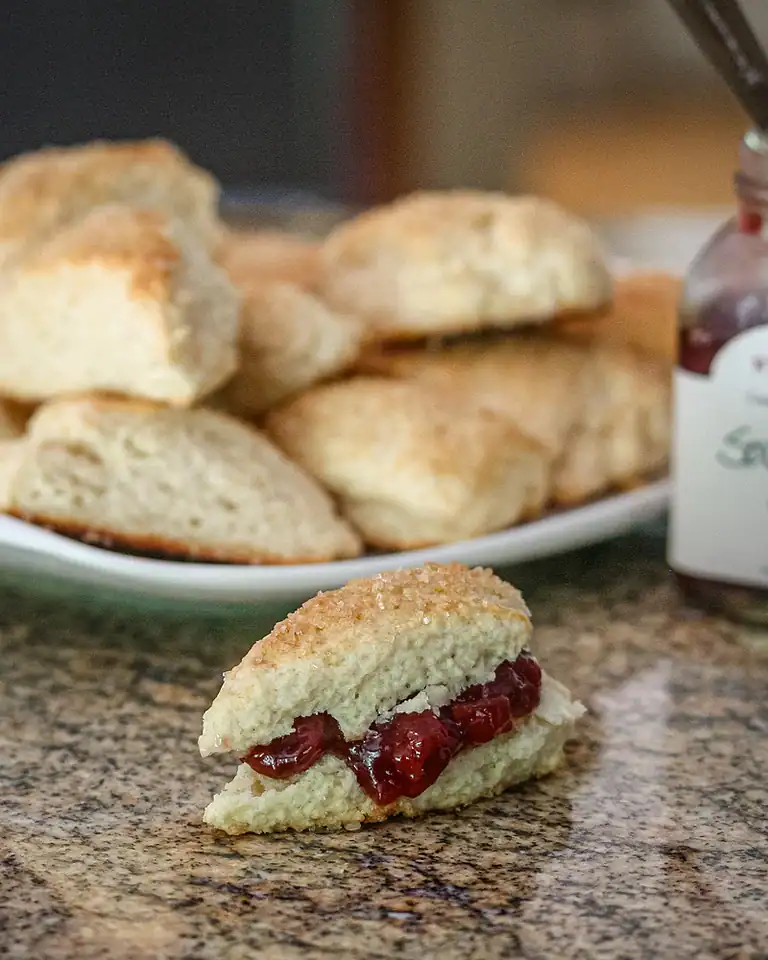
Serve the scones with lemon curd or your favorite jam or preserves.

Glazed Lemon Scones
Ingredients
- 2 ¼ cups all-purpose flour, 10 ounces
- 2 ½ tsp baking powder
- 5 tbsp granulated sugar
- ¼ tsp table salt
- 1 tbsp lemon zest
- 6 tbsp unsalted butter, cold, diced
- ⅔ cup half-and-half
- 1 large egg
- 1 tsp vanilla extract
- 1 tsp lemon extract (optional)
For the Glaze
- 1 cup confectioners' sugar
- 1 tbsp butter, melted
- 2 to 3 tbsp lemon juice
- 1 tsp finely grated lemon zest
Recommended Equipment
Instructions
- Line a large baking sheet with parchment paper.
- In a large bowl, combine the flour, baking powder, granulated sugar, salt, and lemon zest. Stir to combine thoroughly.2 1/4 cups all-purpose flour | 2 1/2 tsp baking powder | 5 tbsp granulated sugar | 1/4 tsp table salt | 1 tbsp lemon zest
- Add the cold diced butter to the flour mixture and work it in with your fingers, forks, or a pastry cutter. The mixture should have some crumbs the size of small peas.6 tbsp unsalted butter
- In a medium bowl, combine the half-and-half, egg, vanilla extract, and lemon extract, if using. Whisk to blend.2/3 cup half-and-half | 1 large egg | 1 tsp vanilla extract | 1 tsp lemon extract (optional)
- Add the egg mixture to the dry mixture and work it in until the ingredients are moistened. Avoid overworking.
- Turn the dough out onto a floured surface and knead just a few times to form a soft dough. Pat the dough into a circle or square about 1/2-inch thick and cut out scones with a biscuit cutter. Alternatively, use a knife to cut the dough into triangles or squares.
- Arrange the unbaked scones on the prepared baking sheet and refrigerate them for at least 20 minutes.
- While the scones are chilling, preheat the oven to 375°F.
- Bake the scones for about 15 to 18 minutes, until just lightly browned.
- Meanwhile, combine the confectioners' sugar, melted butter, 2 tablespoons of lemon juice, and lemon zest in a small bowl. Whisk until smooth. It should be thin enough to brush over the scones. Add more lemon juice if necessary for a thinner glaze.1 cup confectioners' sugar | 1 tbsp butter | 2 to 3 tbsp lemon juice | 1 tsp finely grated lemon zest
- Remove the scones to a rack and brush the glaze over the hot scones. Brush with the glaze a second time after the scones have cooled.
Nutrition
Disclaimer:
Our nutritional information is based on a third-party application that analyzes the ingredients list to determine the values. The information is meant to be helpful, but should be considered an estimate. Values may differ depending on measurements, brands, serving variations, and database availability.